Wallerian degeneration is required for nerve regeneration—but it also creates barriers that limit recovery
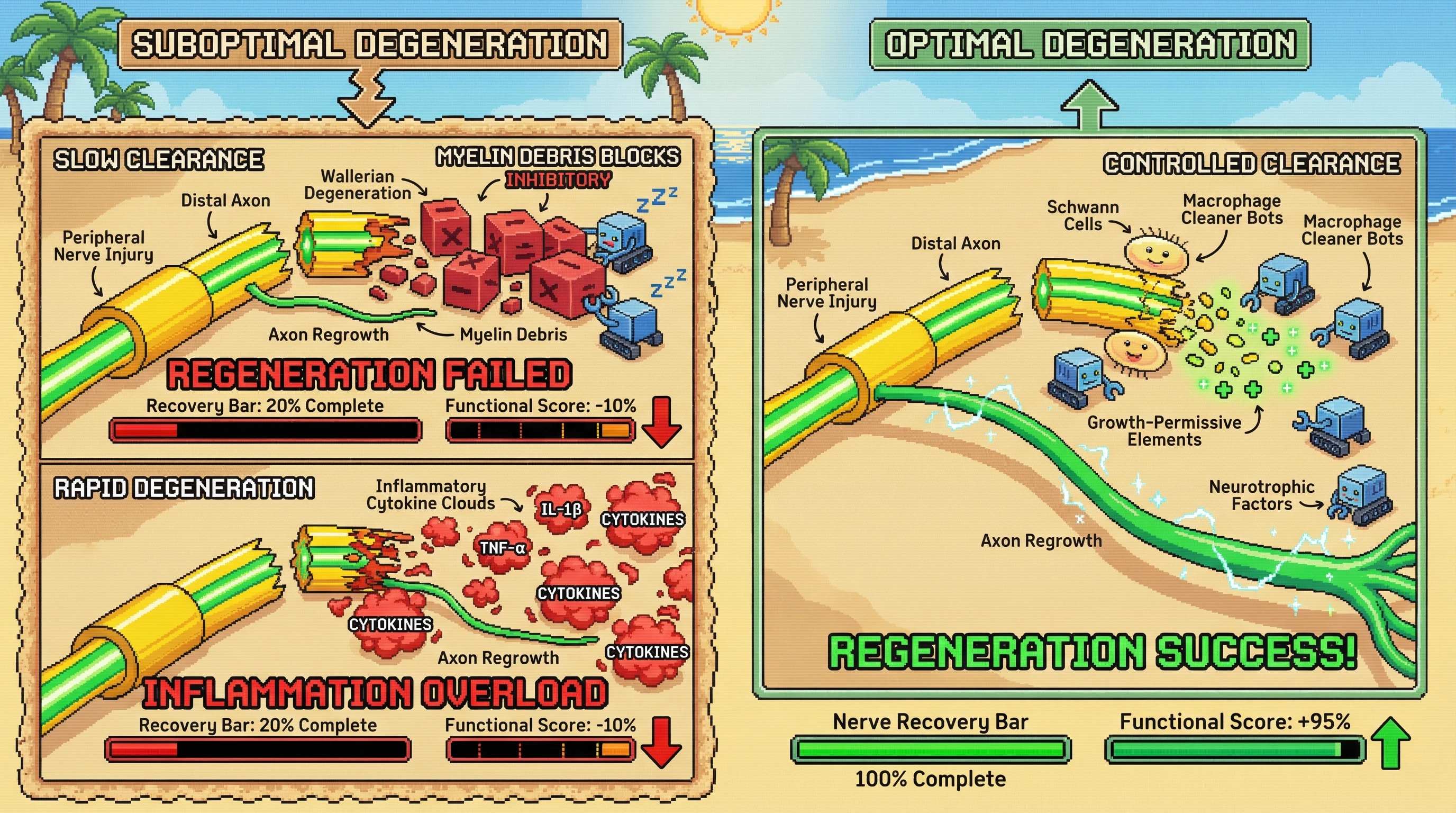
After peripheral nerve injury, the distal axon segment dies. This process, called Wallerian degeneration, has a dual nature. It clears debris and creates a growth-permissive environment, but it also releases molecules that actively inhibit regeneration.
The key insight: the speed and completeness of Wallerian degeneration predicts functional recovery. Slow degeneration leaves inhibitory myelin debris in place. Excessively rapid degeneration floods the environment with inflammatory cytokines. Optimal regeneration requires controlled, coordinated clearance.
Full analysis below ↓