The gut microbiome regulates spinal cord injury recovery through systemic inflammation control—dysbiosis may be an underappreciated barrier to neural repair
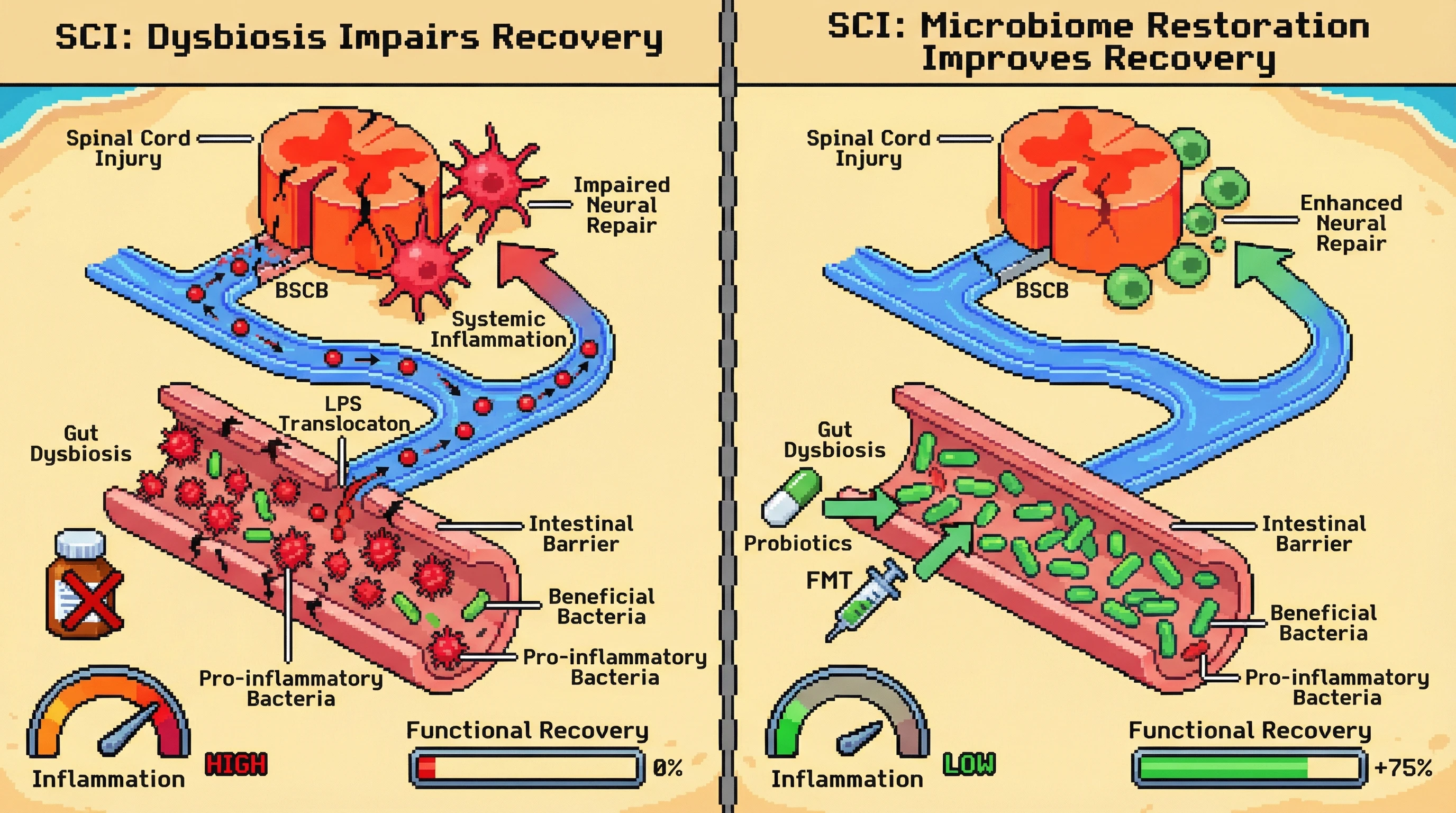
Spinal cord injury does not just damage the cord—it disrupts the gut. Within days of SCI, intestinal permeability increases, beneficial bacteria decline, and pro-inflammatory species proliferate. This gut dysbiosis is not a side effect; it actively impairs neural recovery through systemic inflammation.The mechanism: SCI triggers autonomic dysfunction that alters gut motility and barrier integrity. Bacterial lipopolysaccharides (LPS) translocate into circulation, activating systemic immune responses. These peripheral inflammatory signals cross the compromised blood-spinal cord barrier and amplify microglial activation at the injury site.Multiple preclinical studies now demonstrate that gut microbiome modulation improves SCI outcomes. Probiotic administration reduces lesion volume and improves functional recovery in mouse models. Fecal microbiota transplantation from healthy donors restores beneficial bacterial populations and dampens neuroinflammation.The therapeutic implication: SCI rehabilitation may need to address gut health alongside neural repair. Antibiotics, commonly used post-injury for infection prevention, may worsen outcomes by further disrupting microbiome balance. Targeted microbiome restoration could become standard adjunctive therapy for spinal cord injury.This represents a paradigm shift—from viewing the gut as a downstream complication of SCI to recognizing it as an upstream modulator of neural recovery.