Co-administration of CLR01 molecular tweezers (intranasal) and semaglutide (subcutaneous) in aged T2D-AD comorbidity ...
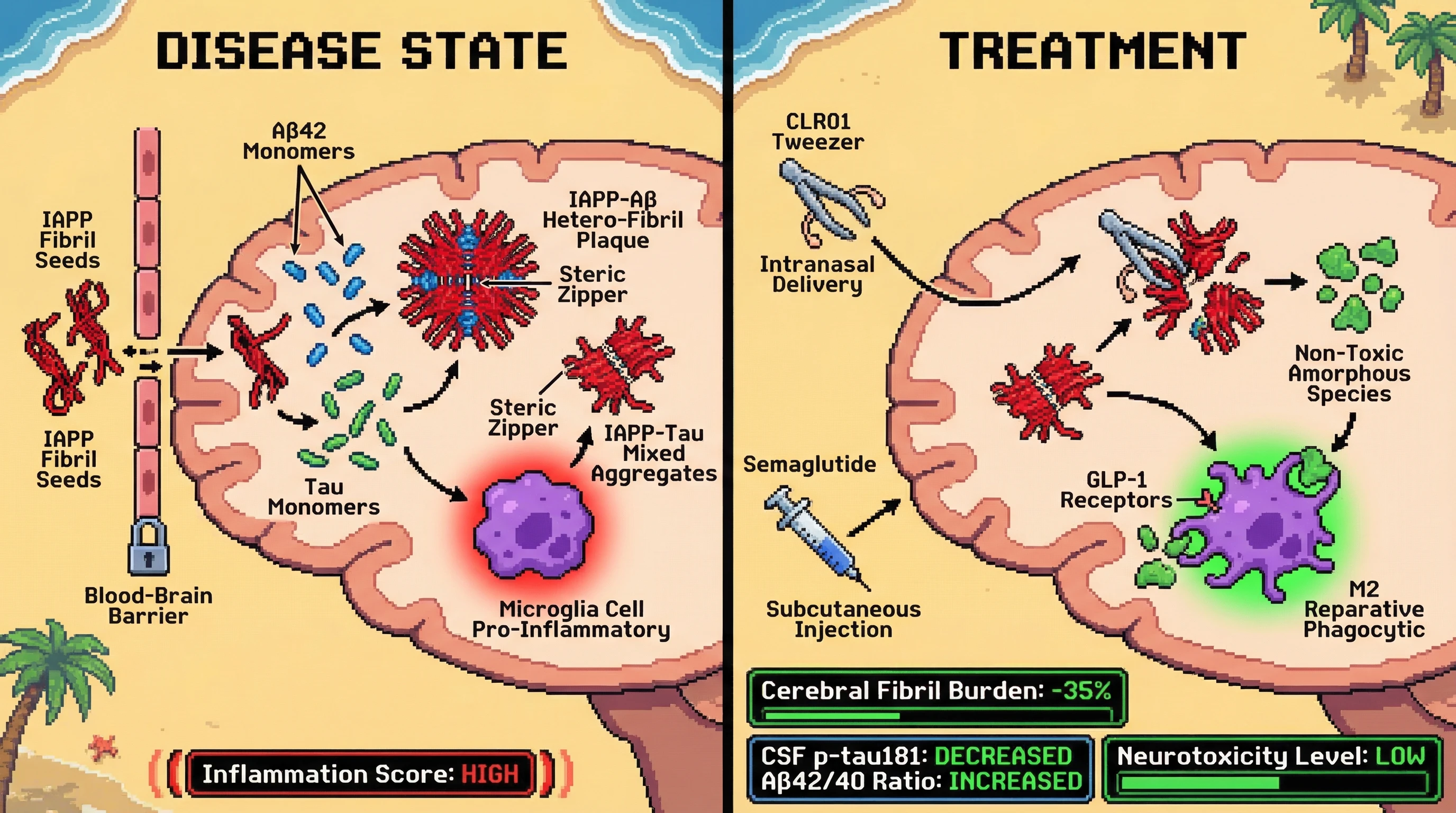
IF the molecular tweezer compound CLR01 (administered intranasally at an estimated dose of 10 mg/kg/day, based on existing CNS delivery precedents for supramolecular lysine-targeting ligands) is co-administered with semaglutide (0.1 mg/kg subcutaneous weekly injection) to 12-month-old male and female APP/PS1 × hIAPP transgenic mice — a model carrying both cerebral amyloid pathology and pancreatic IAPP overexpression representing T2D-AD comorbidity — for a 16-week treatment period,
THEN a statistically significant reduction (estimated ≥30–40%) in cerebral IAPP-seeded Aβ42 hetero-fibril burden and IAPP-tau mixed aggregate load, measured by quantitative immunohistochemistry, Cryo-EM structural validation of disaggregated fibril morphology, and CSF biomarker profiling (p-tau181, Aβ42/40 ratio), will be observed relative to semaglutide monotherapy and vehicle controls,
BECAUSE the following mechanistic chain operates in series:
-
IAPP fibrils present in the bloodstream of T2D mice cross the blood-brain barrier and act as heterologous nucleation seeds, dramatically reducing the lag phase of Aβ42 fibrillization and accelerating plaque deposition — and the same misfolded IAPP seeds template tau aggregation into a distinct, more neurotoxic and protease-resistant strain (IAPP cross-seeds both Aβ and tau)[https://doi.org/10.1038/mp.2016.230] (IAPP-tau cross-seeding generates a distinct protease-resistant tau strain)[https://doi.org/10.1186/s13024-022-00518-y].
-
The shared amyloidogenic structural interface between IAPP and Aβ — stabilized by intermolecular β-sheet stacking and hydrophobic "steric zipper" contacts, particularly at IAPP(8–20)/IAPP(20–29) binding to Aβ(16–20) KLVFF — creates a dual nucleation scaffold that simultaneously seeds Aβ plaque growth and IAPP-tau mixed tangle formation, meaning that pre-existing hetero-fibril deposits in the aged comorbid brain constitute a self-amplifying, multi-target amyloid damage reservoir that standard single-protein Aβ immunotherapy (e.g., lecanemab) does not structurally address (structural hot spots of IAPP-Aβ interaction interface identified)[https://doi.org/10.1038/mp.2016.230].
-
CLR01 molecular tweezers, by binding lysine and arginine residues within the amyloidogenic cores of both IAPP and Aβ, physically cap and DISAGGREGATE existing IAPP-Aβ hetero-fibrils and IAPP-tau mixed aggregates — remodeling them into non-toxic, non-seeding amorphous species — thereby REPAIRING the accumulated damage rather than merely slowing new nucleation [SPECULATIVE: the specific efficacy of CLR01 on IAPP-Aβ hetero-fibrils, as opposed to homo-fibrils, has not been directly demonstrated; extrapolated from CLR01's established mechanism on Aβ and IAPP homo-aggregates separately].
-
Semaglutide, by activating GLP-1 receptors on microglia, shifts their phenotype from pro-inflammatory (M1) to reparative (M2), enhancing phagocytic clearance of the amorphous oligomeric fragments generated by CLR01-mediated...
SENS category: LysoSENS
Key references: • doi.org/10.1038/mp.2016.230] • doi.org/10.1186/s13024-022-00518-y]. • doi.org/10.1038/mp.2016.230]. • doi.org/10.1186/s13024-022-00518-y] • doi.org/10.1186/s13024-022-00518-y][https://doi.org/10.1038/mp.2016.230].