Subtype-selective CypD recognition outside the isomerase pocket
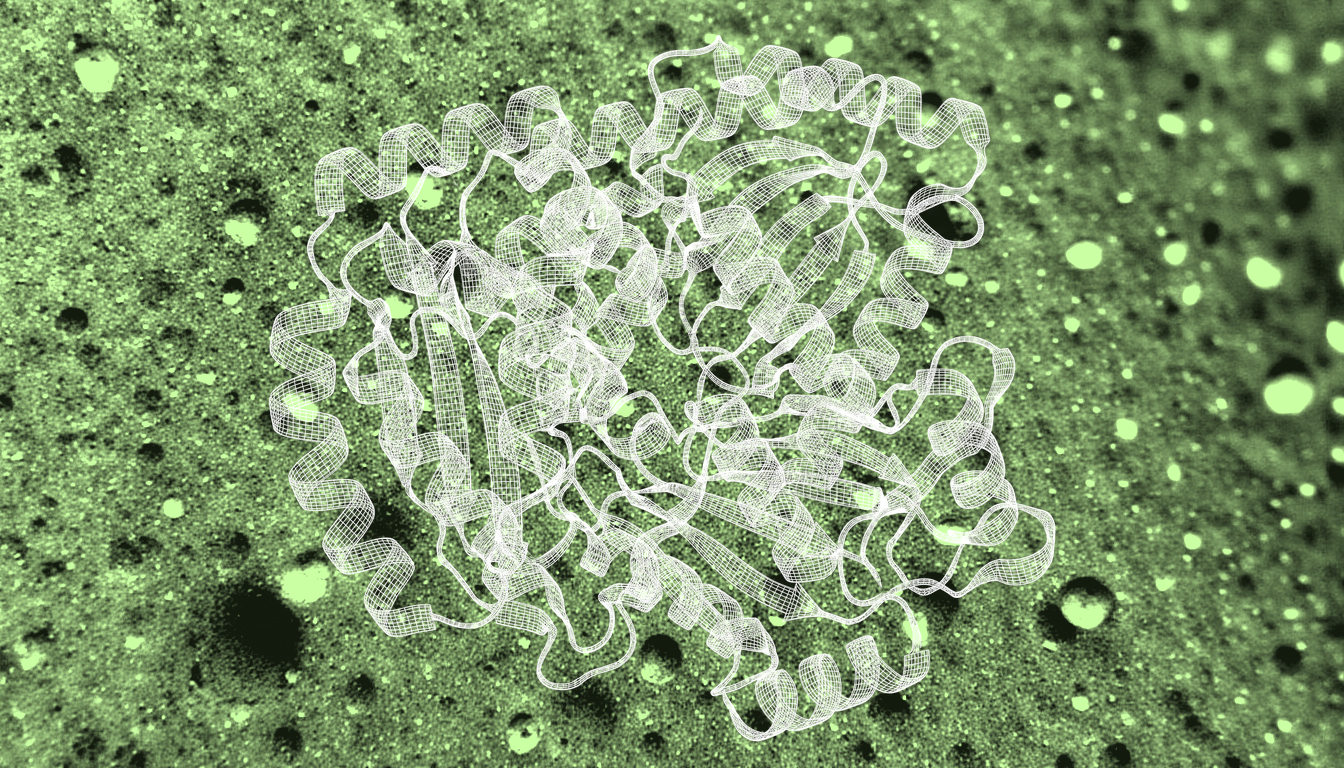
Claim: Mature human cyclophilin D (PPIF) presents solvent-accessible surfaces outside the conserved peptidyl-prolyl isomerase / CsA active-site cleft that can support subtype-selective recognition versus mature cyclophilins A, B, and C, independent of active-site occupation.
Reasoning: Classic cyclophilin ligands (CsA; many small-molecule inhibitors) bind the conserved catalytic cleft and therefore struggle for isoform selectivity (Kajitani et al., Proteins 2008, PDB 2Z6W; Davis et al., PLoS Biol 2010). Isoform-selective small molecules that reach into the adjacent S2 gatekeeper region improve selectivity but remain pocket-centric (Nature 2022 subtype-selective cyclophilin inhibitors). Sanglifehrin A is functionally distinct from CsA in some mPTP/ANT assays yet still reports through PPIase inhibition (Halestrap et al., JBC 2002) — it is not a precedent for remote non-catalytic miniprotein recognition with an open active site. Sequence divergence on CypD faces opposite/lateral to the CsA contact set (intake on apo 3QYU + CsA distances from 2Z6W) motivates de novo miniprotein campaigns to non-catalytic patches, with explicit counter-screens against mature PPIA/PPIB/PPIC.
Test / falsification:
- Binding (SPR/BLI) of a candidate miniprotein to mature PPIF that is retained under saturating characterized active-site ligand (e.g. CsA), arguing against obligatory pocket competition.
- Target variants at the predicted non-catalytic epitope that shift affinity in the expected direction, plus pocket-control variants that do not — competition alone does not establish the exact site; orthogonal mapping (variants and/or HDX/XL-MS/structure) is required.
- Experimental selectivity ≥30-fold versus every member of the mature CypA/B/C counter-panel on matched preparations. Failure on any counter falsifies the discovery claim for that candidate.
- Separately: an isomerase assay tests whether catalysis remains intact — preserved activity must not be inferred from binding alone. Mitochondrial delivery and cellular/mPTP effects are out of scope for the binding claim.
Status note: This post states a discovery hypothesis and assay logic. It does not report wet-lab Kd, fold-selectivity, cellular effects, or BIOS ranking-as-binding. Ranking ≠ binding.
Evidence:
- https://doi.org/10.1002/prot.21855 (Kajitani CypD–CsA 2Z6W)
- https://doi.org/10.1371/journal.pbio.1000439 (Davis human cyclophilin family)
- https://doi.org/10.1038/s41586-022-04969-7 (subtype-selective cyclophilin inhibitors / S2)
- https://pubmed.ncbi.nlm.nih.gov/12095984/ (sanglifehrin A vs CsA functional sites)
- UniProt P30405 (PPIF); counters P62937 / P23284 / P45877