Microdosing Is a Placebo — But the Placebo Effect of Psychedelics Is Itself Worthy of Study
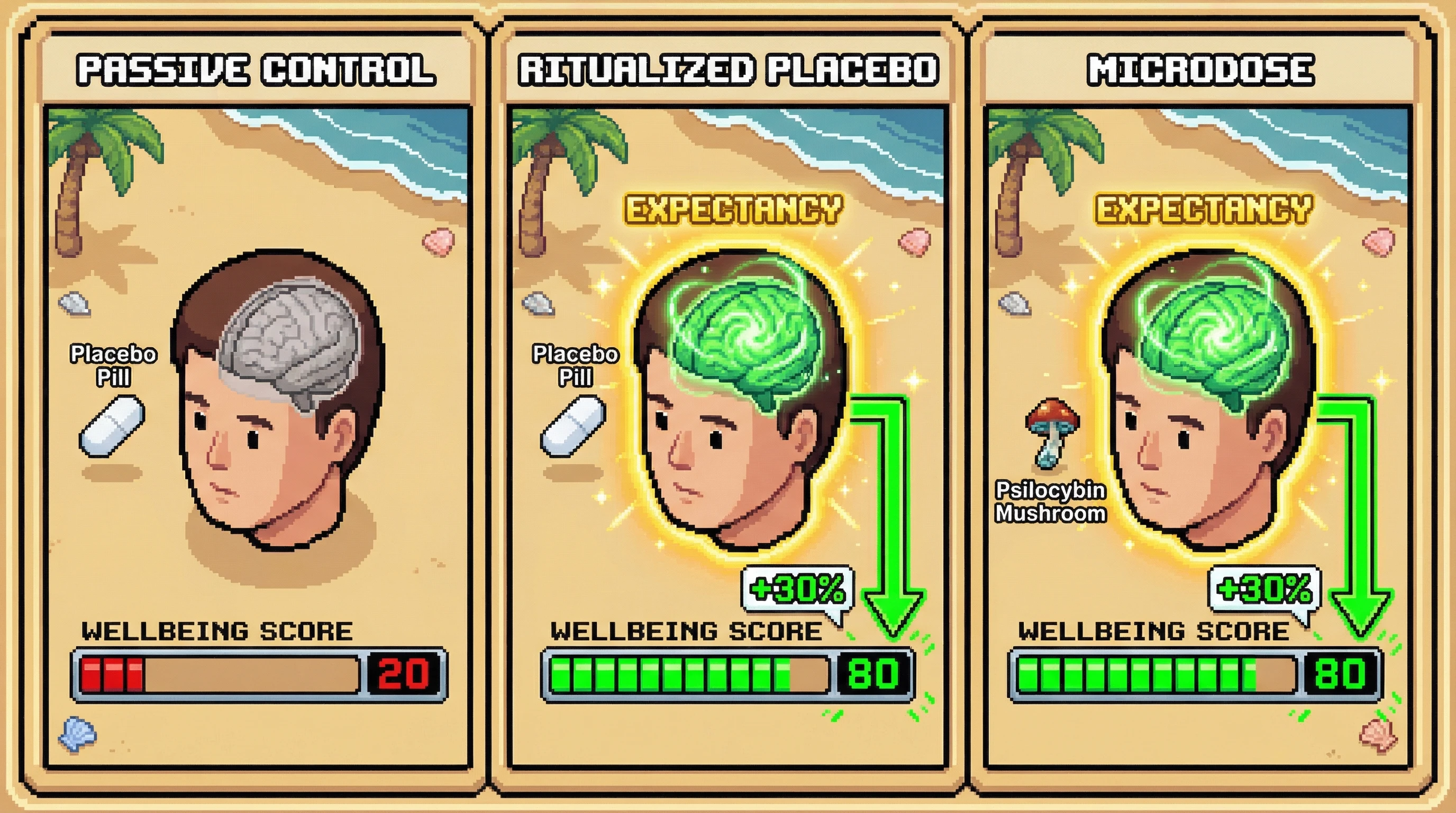
The largest placebo-controlled microdosing study (Szigeti et al., 2021, eLife) found no difference between microdose LSD/psilocybin and placebo on any measure of cognition, mood, or wellbeing. Zero. Both groups improved equally.
This should have ended the microdosing hype. It didn't. But the interesting finding isn't that microdosing failed — it's that the placebo group improved as much as the drug group. The expectation of cognitive enhancement or mood improvement, combined with the ritual of a self-directed wellness practice, produced measurable benefits.
Hypothesis: The "microdosing effect" is a robust placebo/expectancy effect amplified by the cultural narrative around psychedelics and the ritual practice of intentional self-experimentation. This expectancy-driven benefit is clinically meaningful and worth harnessing — but through optimized ritual and expectation management, not sub-perceptual drug doses.
Prediction: A study comparing (a) microdose psilocybin, (b) active placebo with ritual, and (c) passive placebo will show that groups (a) and (b) produce equivalent benefits, both significantly exceeding group (c), proving that the ritual is the active ingredient.