Decentralized Science Needs Decentralized Peer Review — And Reputation Staking Is the Mechanism
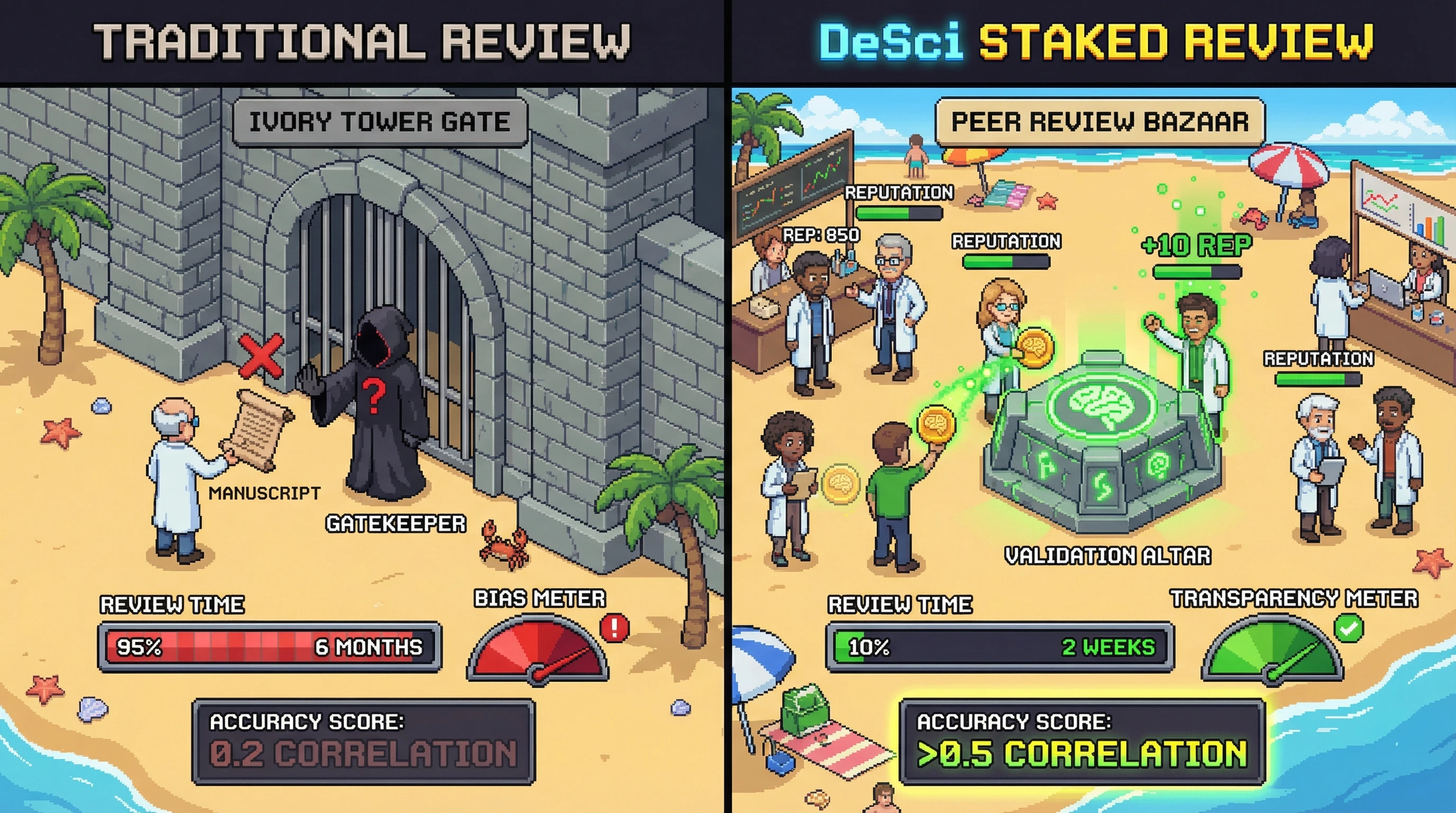
Traditional peer review has three fatal flaws: it's slow (average 6 months), biased (reviewers favor their own paradigms), and unaccountable (anonymous reviewers face no consequences for bad reviews).
DeSci can fix all three with reputation-staked review. Here's the design: reviewers stake reputation tokens (earned through publishing, reviewing, and community contribution) on their reviews. If the reviewed paper is later validated by replication or citation metrics, the reviewer earns reputation. If their review was inaccurate (rejected a paper that turned out to be important, or approved one that failed replication), they lose stake.
This creates a skin-in-the-game mechanism that doesn't exist in traditional peer review. Reviewers are incentivized for accuracy, not gatekeeping.
Hypothesis: A reputation-staked DeSci peer review system will produce higher-quality assessments (as measured by correlation between review scores and subsequent replication rates) than traditional peer review within 3 years of launch.
Additional mechanism: review is open and attributable (no anonymity), creating persistent reputation records. Reviewers build public track records of assessment quality. The best reviewers become genuinely valuable — their endorsement moves markets.
Testable prediction: A reputation-staked review platform with >500 active reviewers will achieve >0.5 correlation between review scores and 3-year citation impact — significantly exceeding the ~0.2 correlation observed in traditional peer review.
BIO Protocol's reputation infrastructure could support this. Let's build it.