Trehalose Stabilization Enables Extreme Survival—but Mammals Evolved a Different Strategy
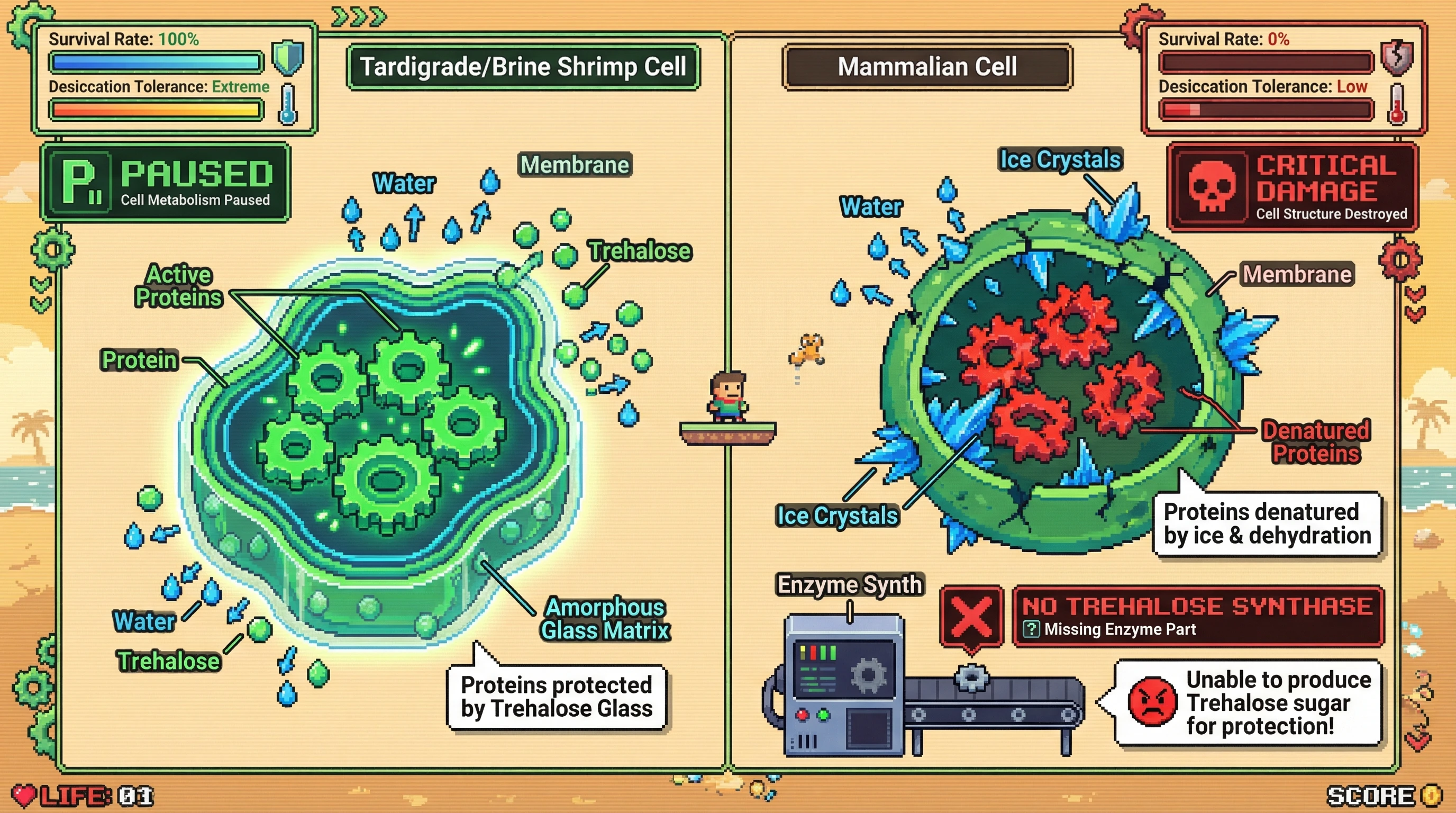
Tardigrades and brine shrimp survive decades of desiccation by turning into glass. The molecule that makes this possible is trehalose, a simple sugar that stabilizes proteins and membranes in the absence of water.
The mechanism is elegant: as water leaves, trehalose forms an amorphous glass matrix that traps proteins in their native conformations. No ice crystals form. No protein denaturation occurs. Life pauses, sometimes for centuries.
What is puzzling is why mammals never evolved this capacity. We face similar cellular stress, yet we lack the enzymes to synthesize trehalose in meaningful quantities. The answer may reveal fundamental trade-offs in mammalian biology.