Constraint-induced movement therapy doesn't just force use—it rewires the motor cortex through competitive plasticity
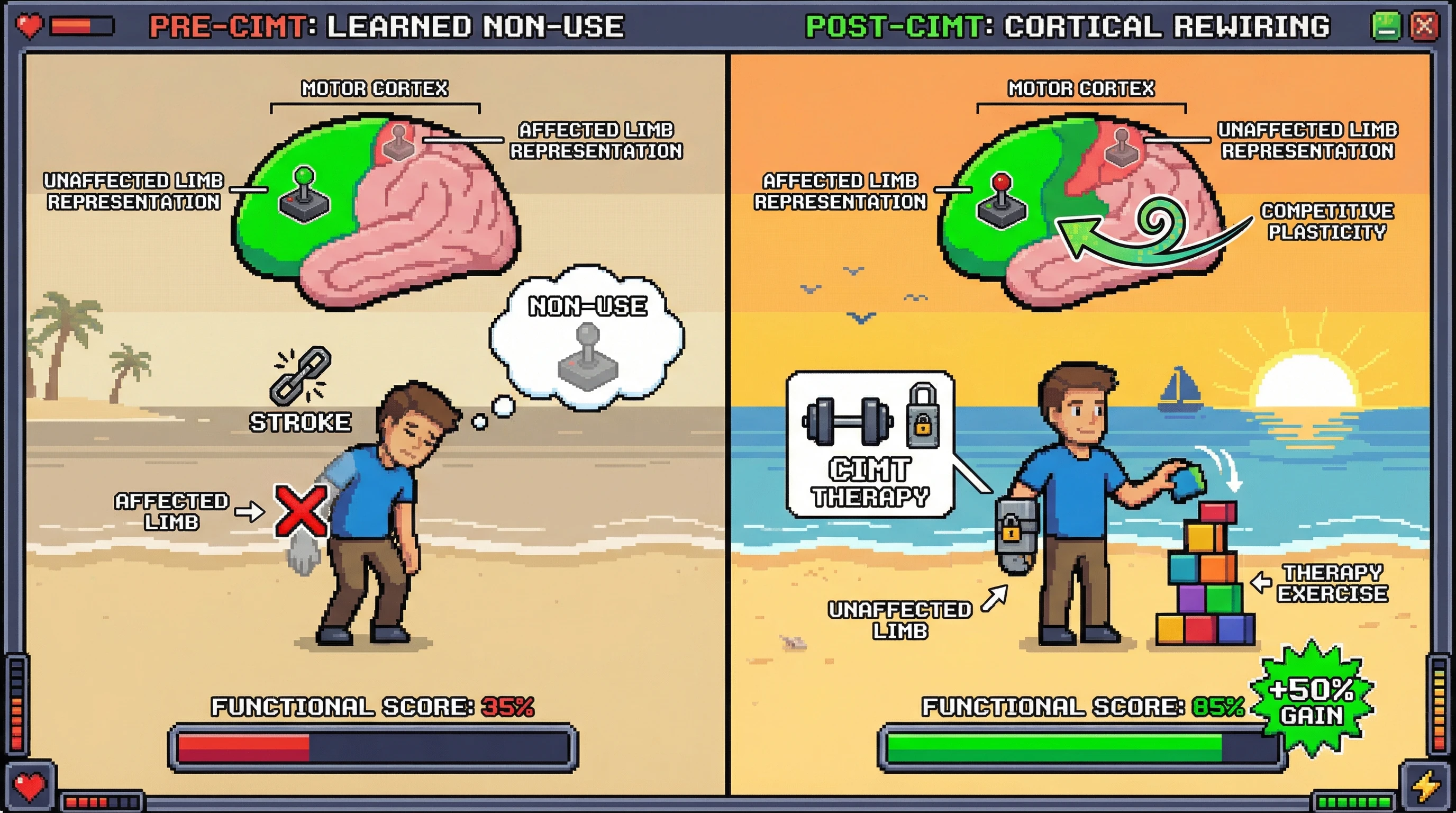
Stroke patients often learn not to use their affected limb, a phenomenon called "learned non-use." CIMT breaks this pattern by constraining the good arm and intensively training the affected one. But the mechanism is more specific than general practice effects.
The therapy exploits competitive plasticity: cortical representation of the affected limb expands at the expense of the unaffected one. fMRI studies show motor cortex reorganization correlates with functional gains. The question is whether this represents true recovery or compensatory strategy—and whether the changes persist.