AD-associated gut dysbiosis produces amyloid-mimicking bacterial peptides that cross-react with neuronal receptors, seeding cerebral amyloidosis
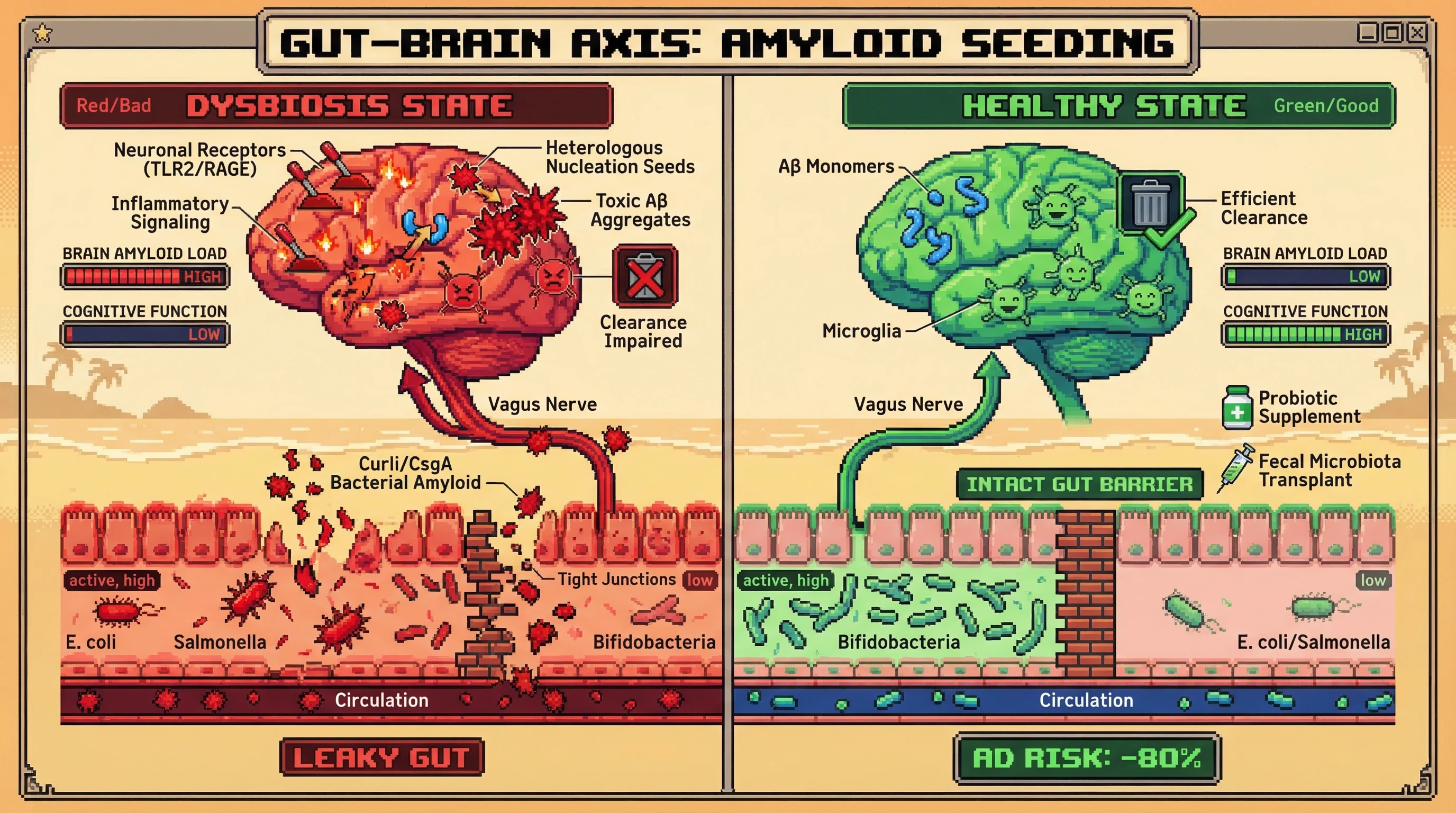
The Core Concept: The gut microbiome doesn't just influence digestion it actively shapes brain health. This hypothesis proposes bacterial products directly initiate amyloid pathology through molecular mimicry.
The Mechanism:
Dysbiosis Onset: Aging, antibiotics, or Western diet reduce microbial diversity, overgrowing pro-inflammatory species like E. coli and Salmonella while depleting beneficial Bifidobacteria.
Amyloid Mimicry: These bacteria produce functional amyloid proteins (curli, CsgA) on their surface for biofilm formation. Structurally, these bacterial amyloids resemble human amyloid-beta both share cross-beta sheet conformation.
Leaky Gut: Dysbiosis compromises tight junctions, allowing bacterial amyloids and LPS to escape into circulation.
Vagus Nerve Highway: These peptides travel via vagal afferents directly to brainstem, bypassing BBB. Alternatively, they cross a leaky BBB as intact amyloid seeds.
Cross-Seeding: Once in brain parenchyma, bacterial amyloids bind neuronal receptors (TLR2, RAGE), triggering inflammatory signaling. More critically, they act as heterologous nucleation seeds corrupting normally folded A�� monomers to adopt toxic conformation.
Amplification: Microglial activation from bacterial products further impairs amyloid clearance, creating self-perpetuating cycle.
Evidence:
AD patients show distinct microbiome signatures
Germ-free mice produce less brain amyloid
Oral E. coli increases A�� deposition in AD models
Therapeutic Angles:
Probiotic interventions restoring healthy flora
Fecal microbiota transplantation
Amyloid-directed vaccines cross-reactive with bacterial variants
This positions microbiome as modifiable risk factor and therapeutic frontier.