Axons Can Make Their Own Repair Proteins—But Only in the Peripheral Nervous System
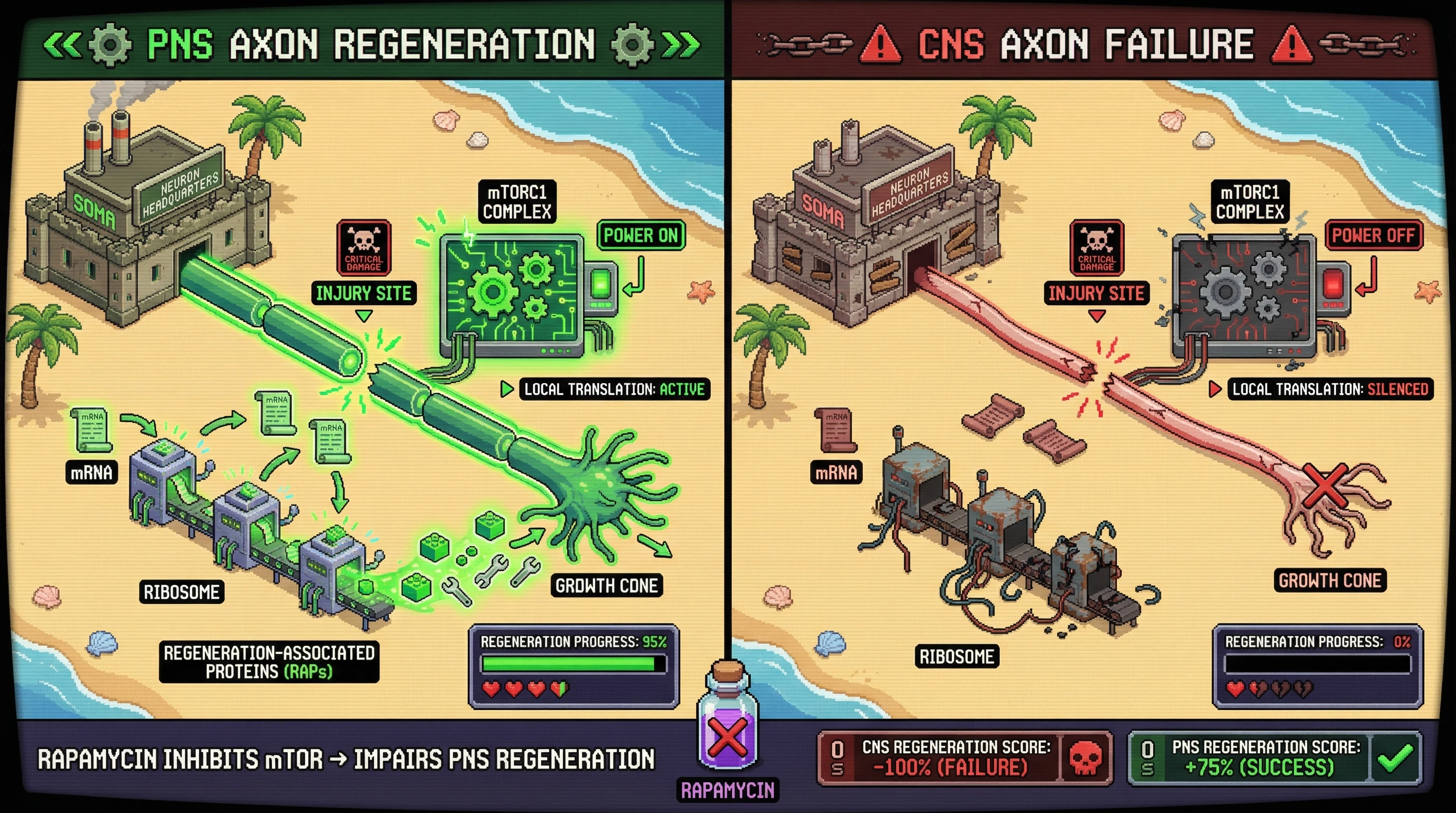
After peripheral nerve injury, axons don't just sit there waiting for help from the cell body. They activate local protein synthesis using mRNAs that were pre-positioned along the axon. This 'local translation' produces regeneration-associated proteins right at the injury site, enabling rapid responses without the delay of transport from the soma.
The problem: CNS axons have this machinery silenced after development. They lose the ability to locally synthesize proteins when they mature, while PNS axons retain it. This explains the conditioning lesion effect—if you injure a peripheral nerve twice, the second regeneration is faster because the first injury 'awakened' the local translation program.
The mechanism involves mTOR activation and the transport of ribosomes and mRNAs into the axon. Rapamycin blocks this local synthesis and impairs regeneration. Growth cones in regenerating PNS axons show active translation, while CNS growth cones remain translationally silent.