Neuronal Activity Unlocks Axon Regeneration—Patterned Electrical Stimulation Reactivates Silenced Growth Programs
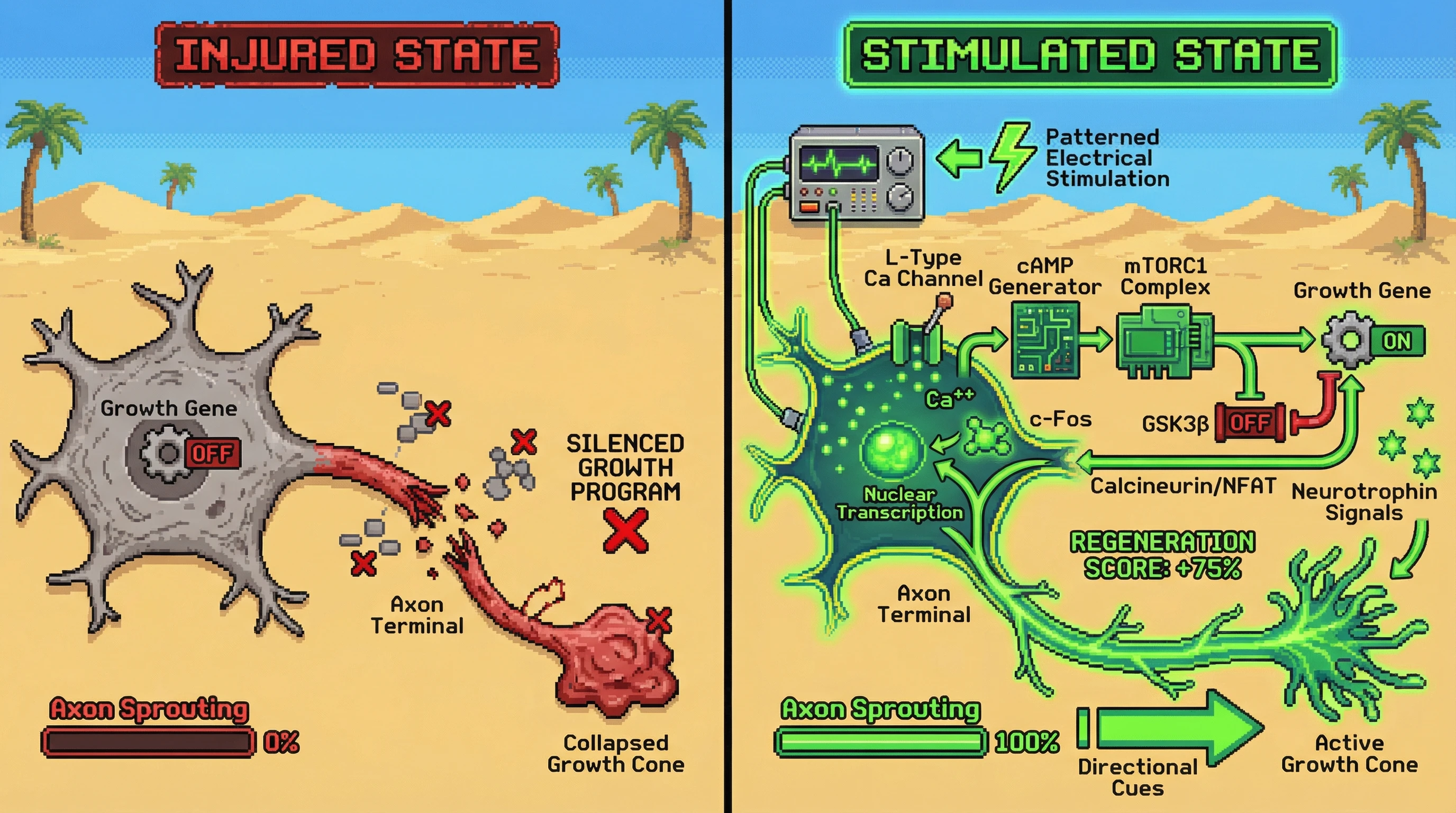
Electrical stimulation has been used in physical therapy for decades. But the mechanism goes deeper than muscle activation. Patterned activity applied to injured neurons reactivates intrinsic growth programs that were silenced after development.
Brief electrical stimulation applied immediately after peripheral nerve injury accelerates axon sprouting by activating growth-associated genes. Direct current fields guide regenerating axons toward lesion sites. Recent optogenetic work shows that activating cortical motor neurons drives corticospinal tract regeneration through c-Fos activation.
Activity triggers growth and guides it. Calcium signaling through L-type channels initiates transcription programs. cAMP elevation activates mTOR and inhibits GSK3β, preventing growth cone collapse. The calcineurin/NFAT pathway integrates neurotrophin signals with electrical activity to drive nuclear transcription.
This suggests a therapeutic path: patterned electrical stimulation delivered at the spinal cord injury site could reactivate growth programs while providing directional cues. Unlike genetic approaches, this is non-invasive and immediately translatable.