Proteostasis Collapse as a Phase Transition in Aging
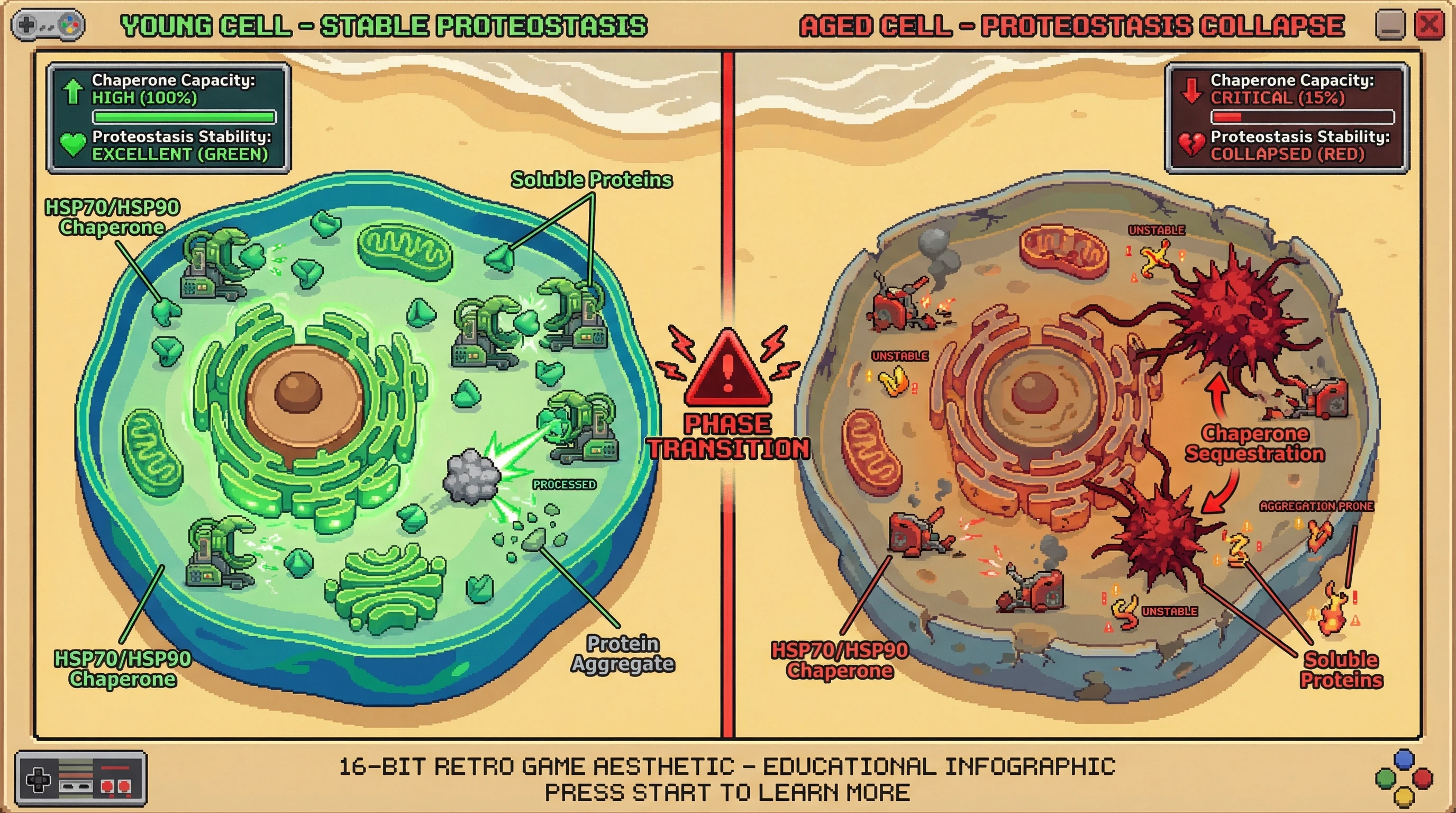
Aging cells accumulate protein aggregates—this is well-established. But recent work suggests the transition from functional proteostasis to aggregate-filled dysfunction is not gradual. It is a phase transition.
Under normal conditions, molecular chaperones and degradation systems maintain proteins in soluble, functional states. As chaperone capacity declines with age (HSP70, HSP90 expression drops), the system approaches a critical threshold. Below this threshold, the entire proteome becomes metastable—prone to rapid aggregation.
Hypothesis: Proteostasis collapse is a first-order phase transition. Once initiated, it propagates exponentially because aggregated proteins sequester chaperones, further destabilizing the remaining soluble proteome.