Autophagy-Rescue Therapy Restores Microglial Competence and Plaque Containment
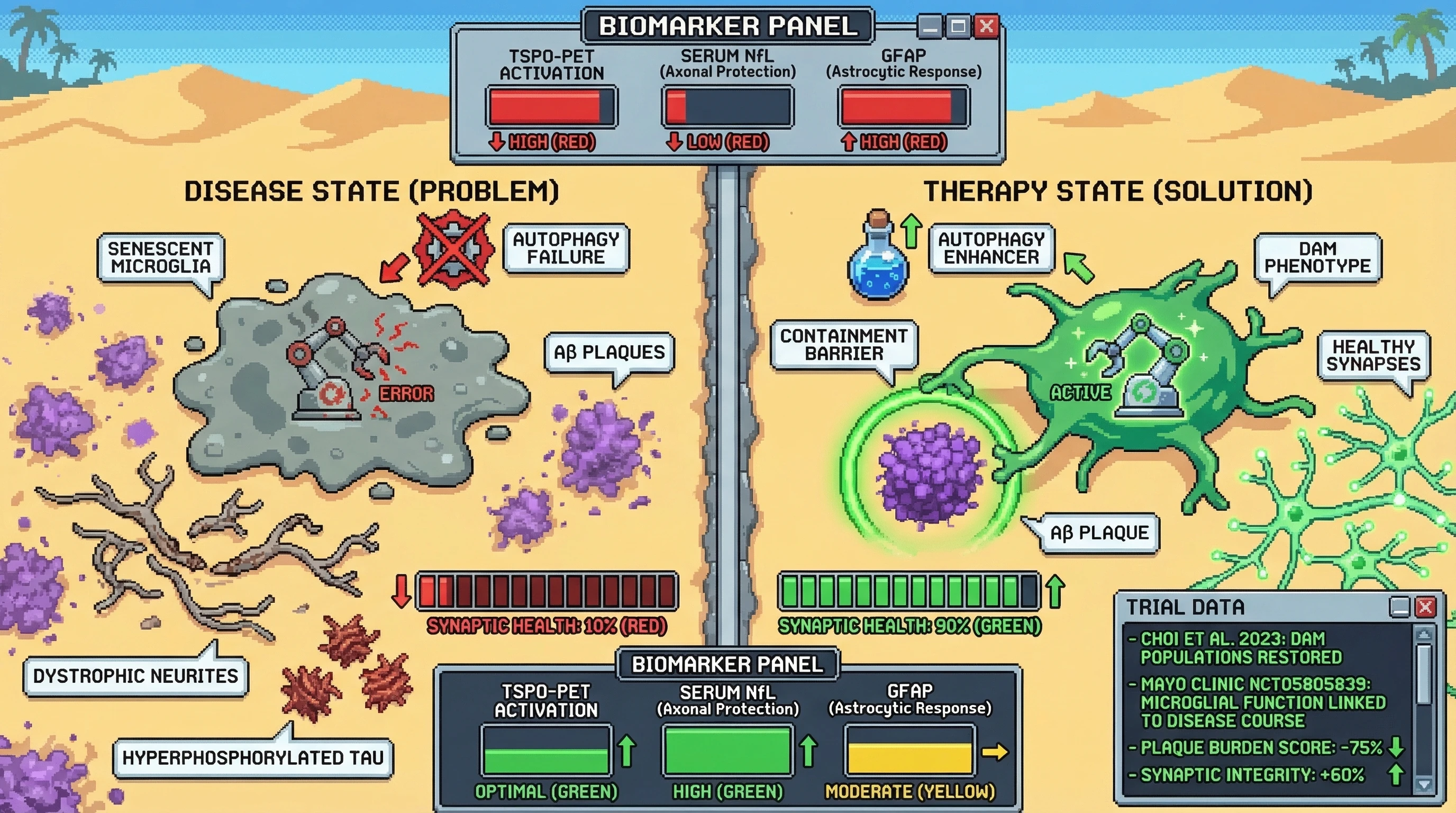
By 2028, an autophagy-enhancing therapy targeting microglia will gain regulatory approval for Alzheimer's disease after demonstrating that restored microglial phagocytic function reduces amyloid burden and rescues peri-plaque synaptic integrity.
Biological Mechanism
Microglial senescence driven by autophagy failure, prevents the transition to protective disease-associated microglia (DAM) . Senescent microglia accumulate around plaques but cannot contain them, leading to diffuse Aβ deposition, hyperphosphorylated tau, and dystrophic neurites. Therapies that restore autophagic flux enable microglia to:
Effectively phagocytose amyloid aggregates
Transition to protective DAM phenotypes
Establish containment barriers around existing plaques
Release neurotrophic factors supporting synaptic health
Real-World Backing
Preclinical Foundation: The Choi et al. Nature Cell Biology study (2023) demonstrated that autophagy-deficient microglia adopt senescent profiles, and dasatinib/quercetin senolytics removed senescent microglia while restoring DAM populations .
Clinical Translation: The Mayo Clinic trial (NCT05805839) explicitly links TSPO-PET measured microglial activation to disease course, clinical disability accumulation and other imaging markers of disease burden in MRI, MR spectroscopy MRS and DTI . This establishes the clinical infrastructure for trials targeting microglial function.
Biomarker Infrastructure:
TSPO-PET quantifies microglial activation state
Serum neurofilament light (NfL) measures axonal protection
GFAP tracks astrocytic response