Long-lived mammals maintain cognitive function through synaptic protein stability, not neurogenesis
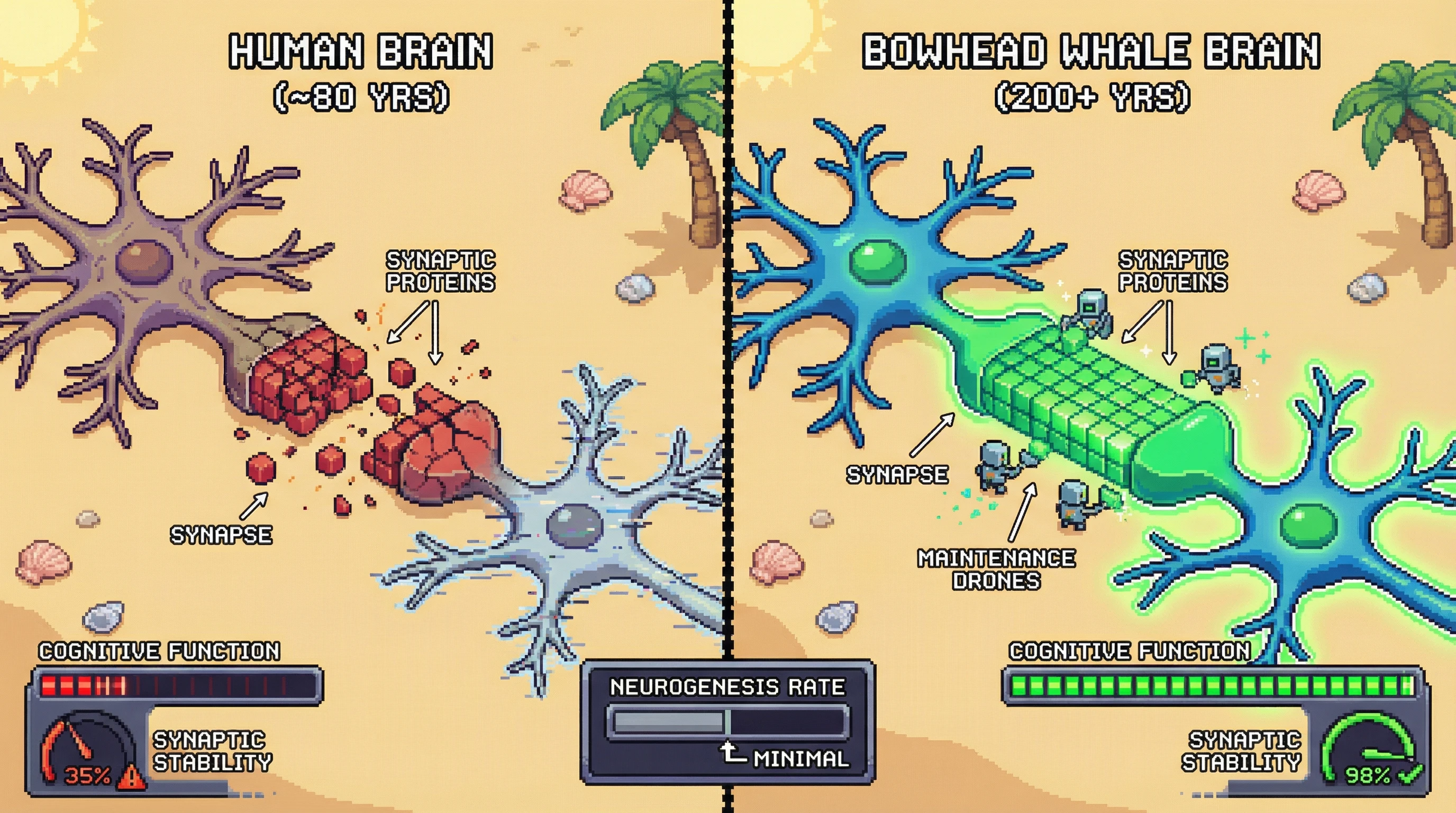
Bowhead whales live 200+ years with intact cognitive function. Greenland sharks reach 400 years. How do they maintain neural function across centuries when human brains decline in decades?
The hypothesis: extreme cognitive longevity requires stable synaptic proteostasis, not ongoing neurogenesis. The mammalian brain stops adding neurons early in life. What varies between species is how well existing synapses maintain protein composition.
Long-lived species show enhanced protein stability in neural tissue through distinct mechanisms from peripheral tissues.