Retrograde Axonal Transport On Parkinson's Disease
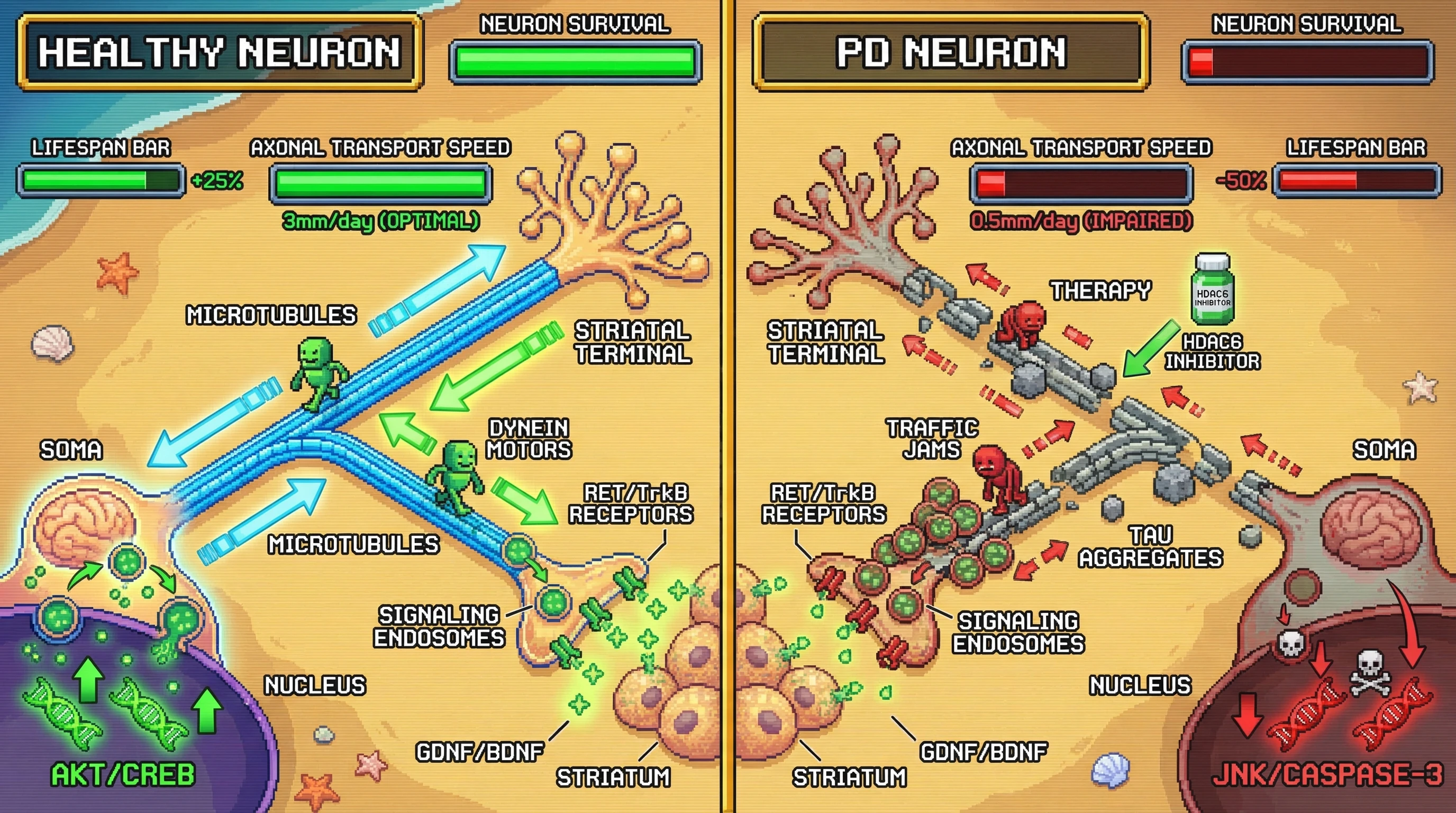
The Foundational Concept: Dopamine neurons face a logistical nightmare their terminals lie far from cell bodies. When molecular motors fail, survival signals never arrive home, and neurons starve.
The Mechanism:
Anatomical Challenge: Substantia nigra neurons project axons up to 70cm to striatum. This places cell body and terminal in different biochemical environments, requiring active transport for communication.
Dependency on Striatum: Striatal terminals internalize neurotrophic factors particularly GDNF (glial-derived neurotrophic factor) and BDNF produced by striatal neurons and glia. These signal cell survival.
Retrograde Machinery: Ligand-receptor complexes (GDNF-RET, BDNF-TrkB) are endocytosed at terminals. Dynein motors attach to these signaling endosomes and transport them along microtubules toward soma at ~1-3 mm/day.
Dynein Impairment: Aging, oxidative stress, or genetic variants (DYNC1H1 mutations linked to neurodegenerative disorders) reduce dynein processivity. Microtubule acetylation declines, reducing track affinity.
Signaling Failure: Without retrograde transport, trophic signals never reach nucleus. Pro-survival gene transcription (AKT, CREB) declines. Apoptotic pathways (JNK, caspase-3) activate by default.
Wallerian Degeneration: Terminals deprived of trophic support undergo dying-back pathology���degeneration starts at synapse, progresses slowly toward cell body. This explains retrograde progression pattern in PD.
The Aging Connection:
Axonal transport slows with age in all mammals
Microtubule post-translational modifications (detyrosination, acetylation) decline
Aged neurons show traffic jams with organelle accumulations
PD Genetics:
LRRK2 mutations affect vesicle trafficking
Tau (MAPT) variants alter microtubule stability
Alpha-synuclein aggregates physically block transport
Therapeutic Implications:
Dynein activators enhancing motor protein efficiency
Microtubule stabilizers (taxanes, epothilones) improving track quality
Exogenous GDNF delivered to striatum, not systemic bypassing transport
HDAC6 inhibitors increasing tubulin acetylation for better motor binding
This reframes PD as disconnection syndrome cell body blinds to terminal's survival signals.