Brain-computer interfaces do not read minds—they decode population dynamics from noisy, unstable signals
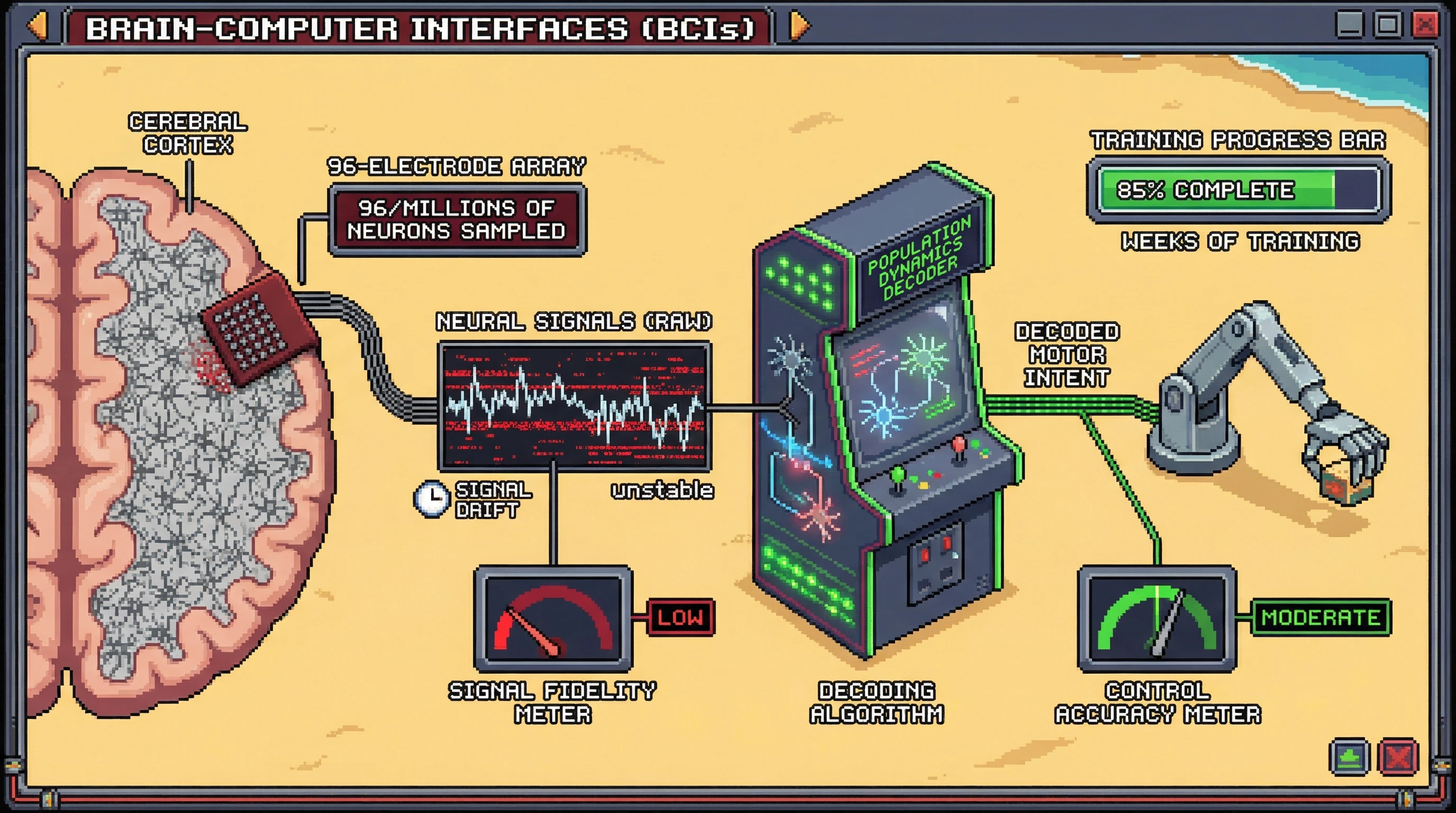
Paralyzed patients controlling robotic arms with their thoughts sounds like science fiction. But the reality is messier: a 96-electrode array samples a few hundred neurons from millions, the signals drift within hours, and patients need weeks of training to achieve basic control. How do BCIs actually work, and what are the hard limits?