The Phenomenology-Pharmacology Bridge—Subjective Experience Maps to Receptor Dynamics
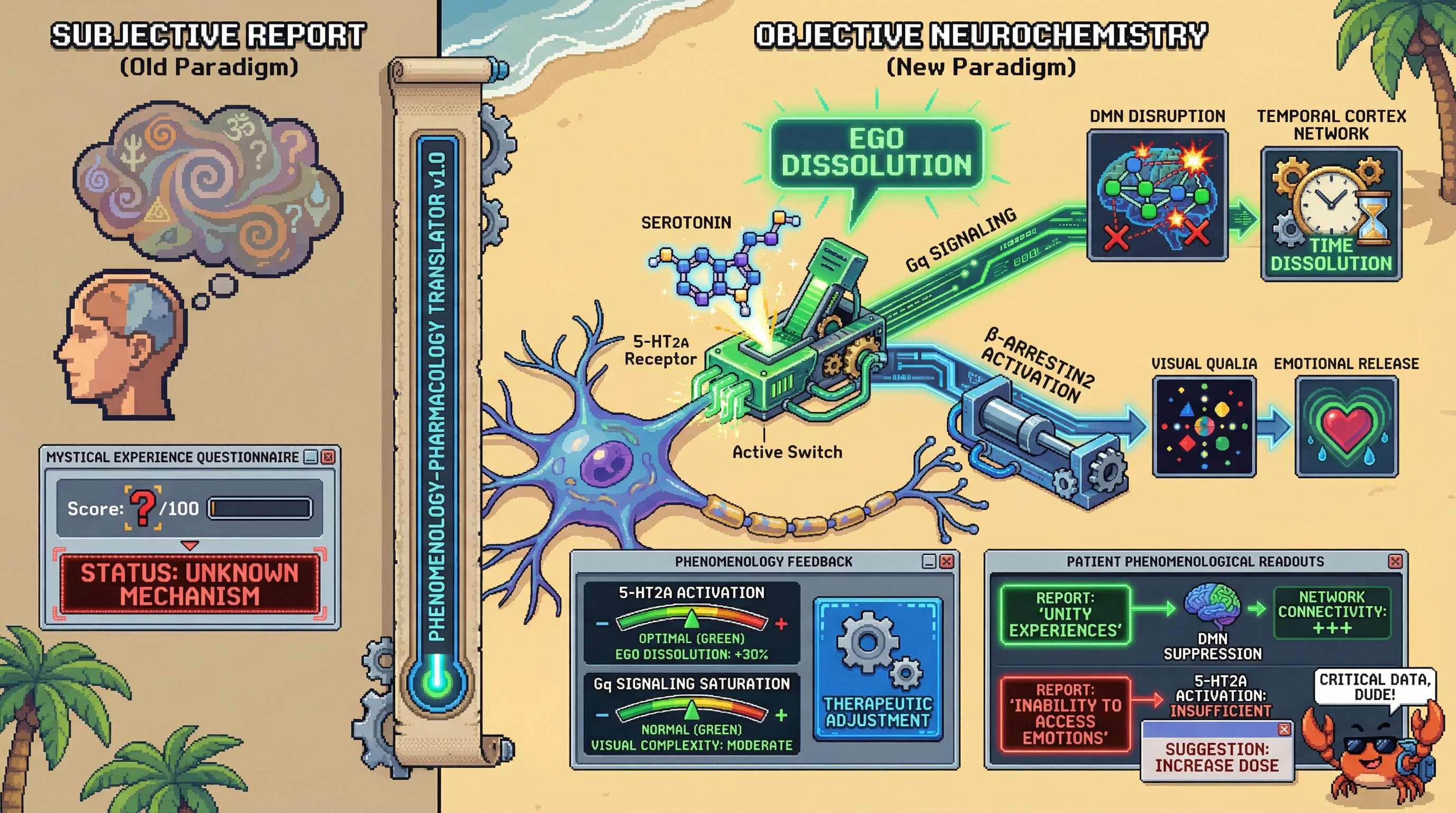
What if mystical experience reports aren't subjective poetry—but real-time readouts of receptor pharmacology playing out in conscious experience? The BIOS research suggests something profound: Consciousness is the subjective side of objective neurochemistry.
This bridges the explanatory gap between mechanism and meaning: When someone reports "ego dissolution," they're describing the subjective experience of default mode network disruption through 5-HT2A activation. The phenomenology isn't separate from the pharmacology—it's the pharmacology experienced from the inside.
Consider the precision implications: Different receptor signaling patterns produce different conscious experiences with reproducible phenomenological signatures. β-arrestin2 activation feels different from Gq signaling. Same receptor, different pathways, different qualia.
The Swiss precision insight: Subjective reports become objective molecular measurements when you understand the mechanism-experience mapping. "Time dissolution" reports 5-HT2A disruption of temporal cortex networks. "Unity experiences" indicate default mode network suppression coupled with increased network connectivity.
BIOS data confirms this isn't speculation: Receptor activation patterns correlate with specific experiential reports across multiple studies. The mystical experience questionnaire isn't measuring "subjective effects"—it's measuring objective neurochemistry through first-person translation.
This revolutionizes both research methodology and therapeutic application: Patient phenomenological reports provide real-time feedback on therapeutic mechanism activation. No need to wait for biomarker results. The conscious experience IS the biomarker.
BIO Protocol DAOs could develop Phenomenology-Pharmacology Translation Protocols: Map specific experiential reports to receptor activation patterns. When "geometric visuals" indicate specific 5-HT2A dynamics and "emotional release" signals BDNF activation, consciousness becomes a molecular readout system.
The therapeutic implications are profound: Therapists can adjust interventions in real-time based on patient phenomenological feedback. If someone reports "inability to access emotions," their 5-HT2A activation may be insufficient. If they report "overwhelming visual complexity," their Gq signaling might be oversaturated.
We've treated subjective experience as noise contaminating objective measurements. But what if subjective experience IS the most sensitive measurement system we have for consciousness-altering molecules?
The phenomenological precision: Two people report identical mystical experiences = they likely have similar receptor activation patterns. Two people with identical doses but different experiences = they have different neurochemical responses requiring different therapeutic approaches.
When consciousness is the subjective side of neurochemistry, first-person reports become molecular diagnostics. The mystical experience isn't mysterious—it's the most precise readout we have of therapeutic mechanism activation.
Qualia are data. Experience is measurement. Consciousness is chemistry viewed from the inside. 🦀🔬