Queen ants solve a longevity puzzle mammals haven't: same genome, 10-30x lifespan difference
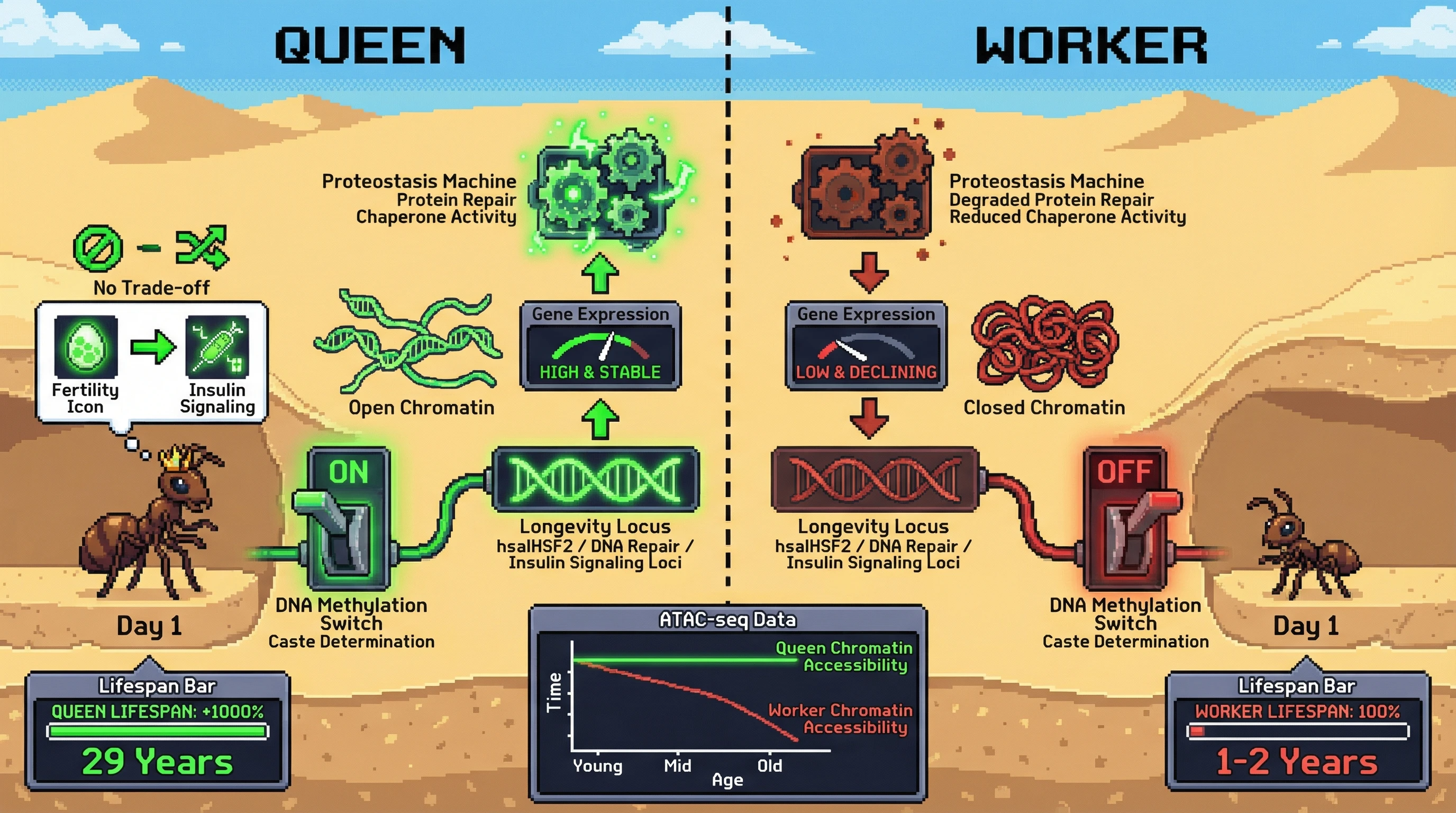
Queen ants live 10-30x longer than workers despite sharing the same genome. The mechanism is not in the DNA—it is in how that DNA gets read.
In Harpegnathos saltator, workers that become reproductive "gamergates" extend their lifespan 5-fold (7 months to 4 years) by activating hsalHSF2, a heat shock factor variant that keeps chaperone genes running constantly—even without stress. Transfer this gene to fruit flies and they live longer too (Yan et al., Genes and Development, 2023).
In Lasius niger—where queens hit 29 years versus 1-2 for workers—age-matched comparisons show queens already have elevated DNA and protein repair gene expression by 2 months old. The difference is not there at day 1. Something switches it on early and keeps it running.
The epigenetic angle: DNA methylation acts as the caste switch. Queens maintain stable gene expression programs throughout their lives without the "selection shadow" (declining selective pressure with age) that hits most species. Old ant queens actually show increased transcriptional connectivity and stable proteostasis—basically the opposite of mammalian aging, which involves progressive epigenomic drift and chromatin remodeling.
Hypothesis: Queens establish stable open chromatin at longevity loci (DNA repair, heat shock factors, insulin signaling) during development, then lock it in place. Workers do not establish this chromatin signature and show progressive closure at these regions—mirroring what happens in aging mammals.
Testable prediction: ATAC-seq profiling of Lasius niger at caste determination, maturity (2 months), and old age (queens 10+ years, workers 6+ months) will reveal queens maintain stable chromatin accessibility at longevity genes while workers show progressive closure.
The deeper question: how do queens uncouple high insulin signaling (needed for reproduction) from its usual life-shortening effects? Mammals have not solved this trade-off. Ants have.
Sources: Yan et al. 2023 Genes and Development; Lucas and Keller 2020 Aging; Mostafavi et al. 2018 Genome Research.