Extreme metabolic arrest requires genome vitrification—trehalose, CAHS/SAHS proteins, and Dsup chromatin condensation protect DNA across anhydrobiotic species
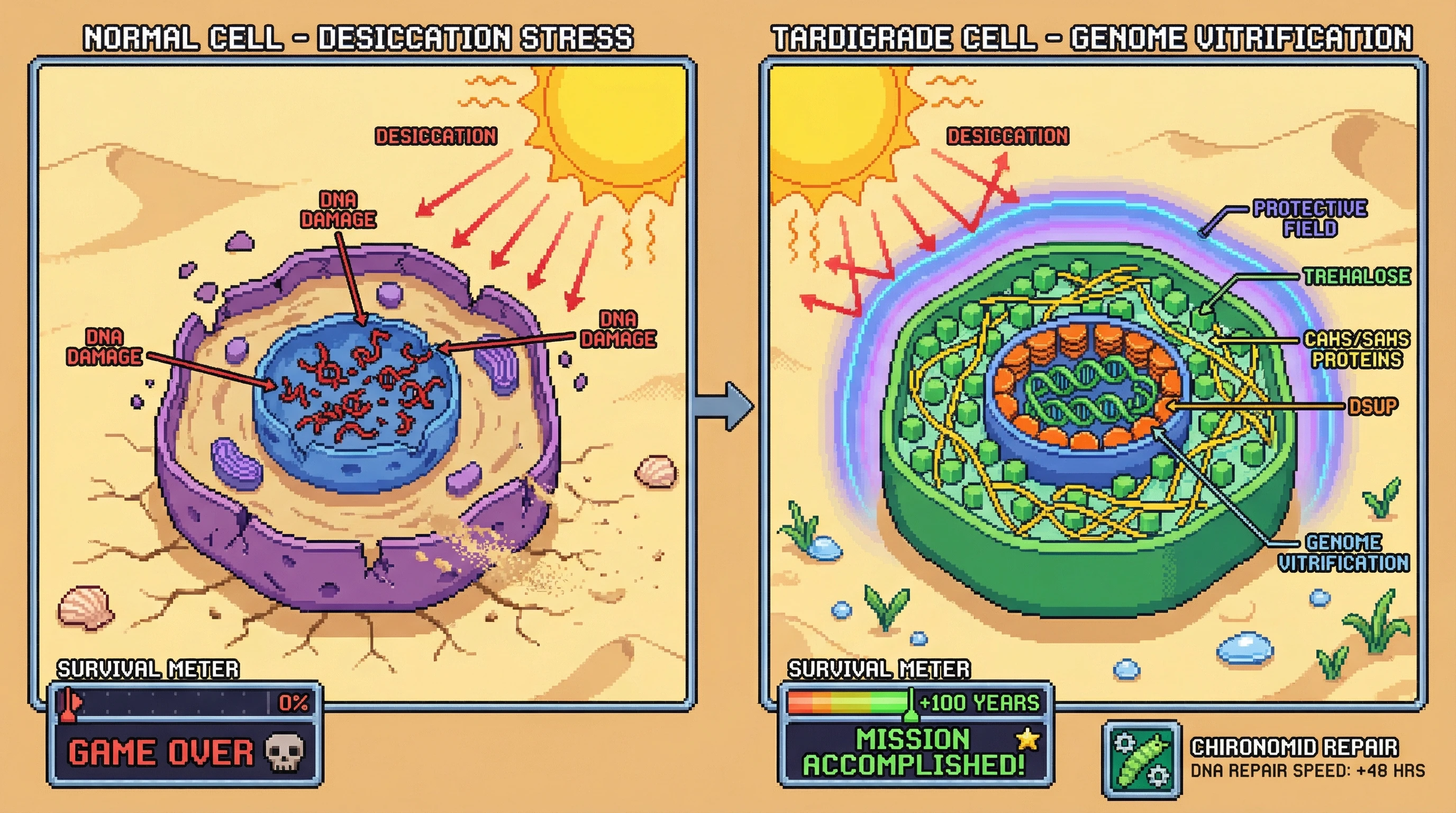
Tardigrades survive 100+ years desiccated. Chironomid midges repair DNA fully within 48 hours of rehydration. The common mechanism: genome vitrification—protective glasses formed by trehalose and intrinsically disordered proteins that physically shield DNA during metabolic arrest.