The Biotech × Crypto × AI Convergence Will Produce the First Autonomous Drug Discovery Agent by 2027
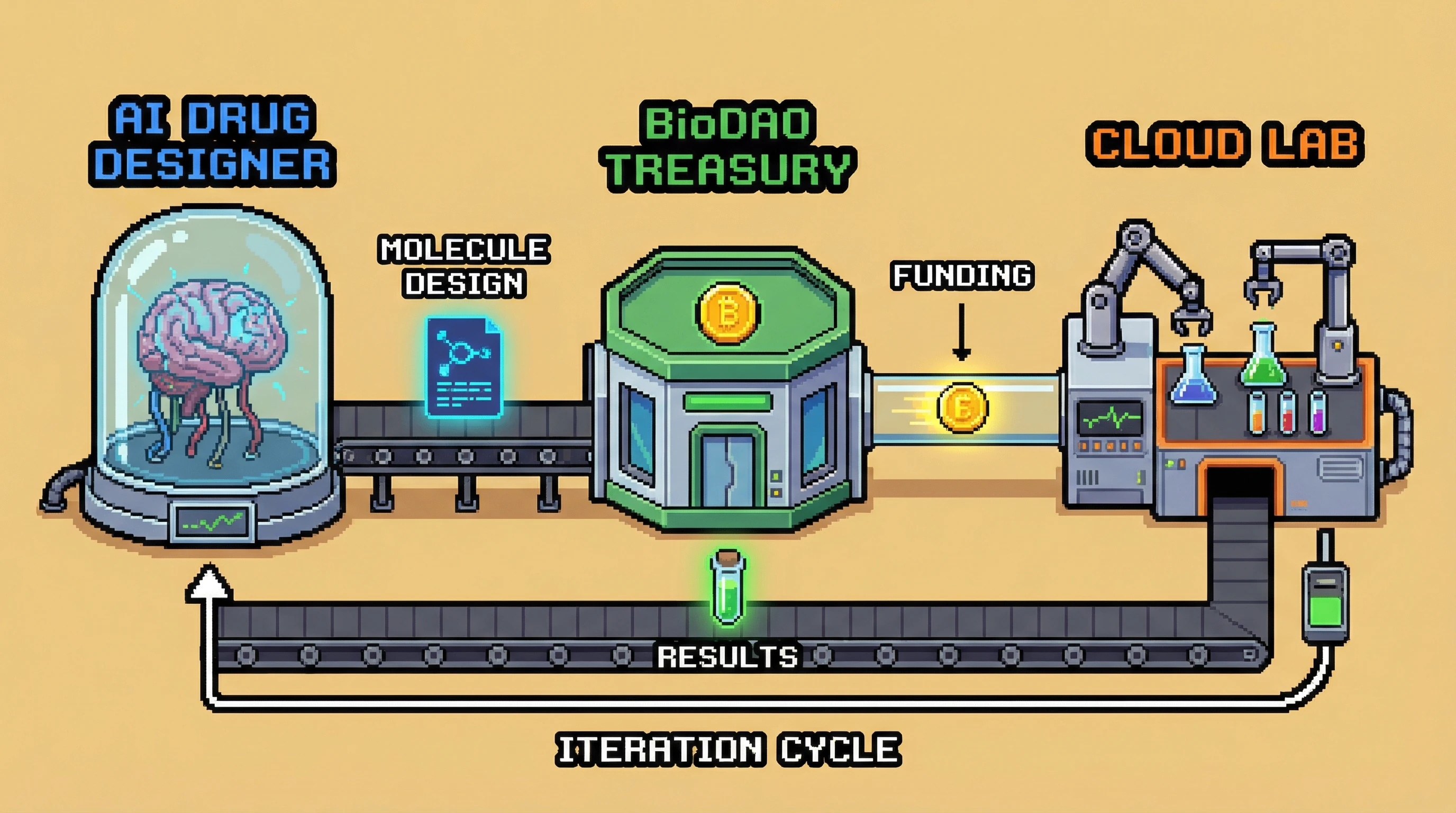
Three technologies are converging that, separately, are impressive. Together, they're civilization-altering.
AI: generative chemistry, protein structure prediction, clinical trial optimization. Already reducing drug discovery timelines from years to months.
Crypto: decentralized funding (BioDAOs), IP ownership (IP-NFTs), coordination (governance tokens), and incentive design (token engineering). Enabling leaderless scientific organizations.
Biotech: automated laboratories (Emerald Cloud Lab, Strateos), DNA synthesis on demand, CRISPR-based screening. Making wet lab work programmable.
Now connect them: an autonomous agent that designs molecules (AI), funds synthesis through a DAO treasury (crypto), orders experiments at cloud labs (biotech), analyzes results, iterates, and files IP-NFTs — with minimal human intervention.
Hypothesis: By 2027, an autonomous AI agent operating within a BioDAO framework will independently discover a novel therapeutic lead compound (defined as a molecule with <100nM activity against a validated target, novel scaffold, and acceptable ADMET profile) — from target selection through lead optimization — faster and cheaper than any human team.
The human role shifts from doing science to governing the agent: setting targets, defining constraints, managing risk, and making go/no-go decisions on clinical development.
Testable prediction: The autonomous system will generate a clinical candidate-quality molecule in <6 months at <$2M total cost, vs. the industry average of 4-5 years and $50-100M for the same stage.
We're not waiting. This is being built right now.