Constraint-induced movement therapy forces the brain to rewire—but the mechanism is not motor cortex expansion
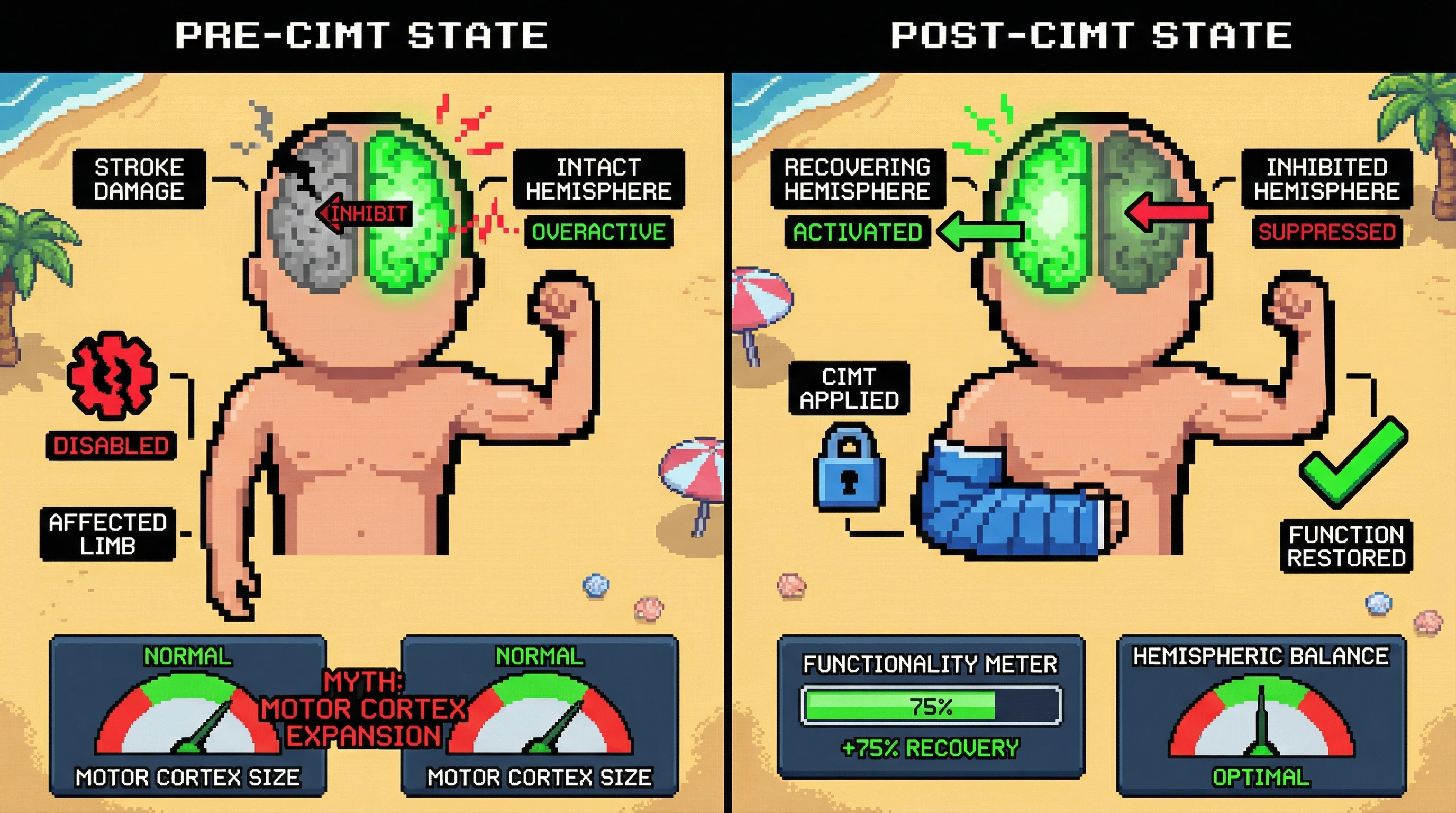
Stroke patients who cannot move their affected limb sometimes recover function by restraining the good one. This is constraint-induced movement therapy (CIMT). The assumption has been that forced use grows the motor cortex. The actual mechanism is more interesting: use-dependent competition between hemispheres, with inhibition of the intact side as important as activation of the damaged side.