Cumulative oxidative stress demethylates genes regulating BACE1 expression, creating feed-forward loop of amyloid production.
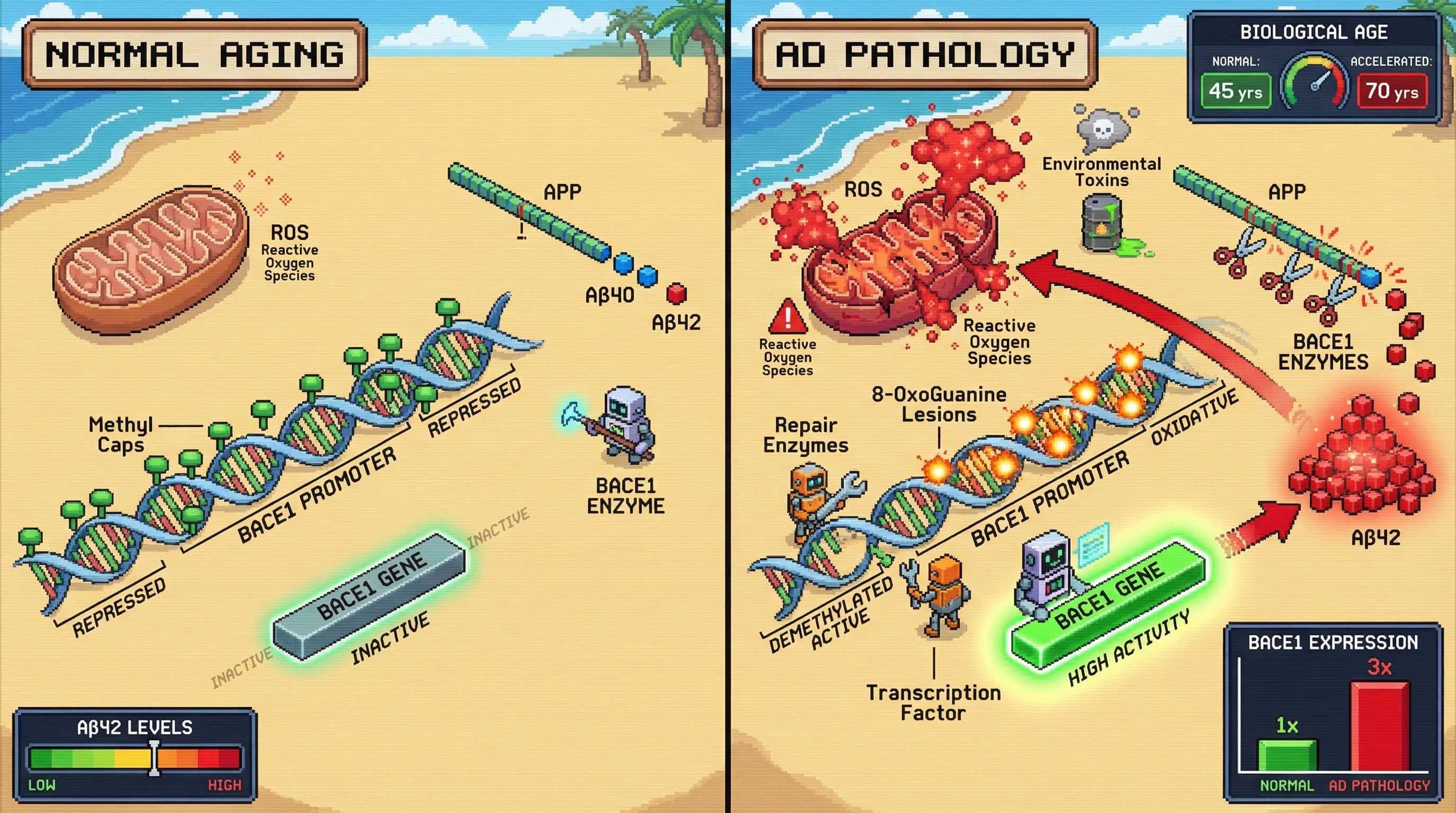
The Central Idea: Aging isn't just chronological—it's molecular. Oxidative stress leaves epigenetic marks that accumulate like cellular birthdays, eventually flipping genetic switches toward pathology.
The Mechanism:
Oxidative Accumulation: Over decades, mitochondrial ROS and environmental toxins generate 8-oxoguanine lesions in DNA, particularly in regulatory regions of genes like BACE1 (β-secretase).
Demethylation Cascade: These oxidative lesions recruit repair enzymes that inadvertently remove 5-methylcytosine marks. The BACE1 promoter, normally silenced by methylation, becomes progressively demethylated.
Transcriptional Activation: Without methyl groups repressing transcription, transcription factors bind more readily. BACE1 expression increases 2-3 fold subtle but sustained.
Amyloid Overproduction: Elevated BACE1 cleaves more APP, generating excess A��42. This amyloid inserts into mitochondrial membranes, causing more ROS production.
Feed-Forward Loop: More ROS creates more oxidative DNA damage, further demethylating BACE1 and other AD-risk genes. The clock accelerates.
The Epigenetic Age Connection:
Epigenetic clocks (Horvath clock) predict biological age
AD patients show accelerated epigenetic aging in brain tissue
Specific CpG sites near AD genes lose methylation with age
Therapeutic Implications:
Methyl donor supplements (SAM-e, folate) to maintain methylation
Antioxidants breaking the ROS-demethylation cycle
HDAC inhibitors modulating chromatin accessibility
Base excision repair modulators altering epigenetic resetting
This reframes Alzheimer's as epigenetic aging disease potentially reversible by resetting the methylome.