Low-dose NLRP3 inhibition reshapes the SASP to preserve immune recruitment while curbing systemic IL-6–driven immunosenescence
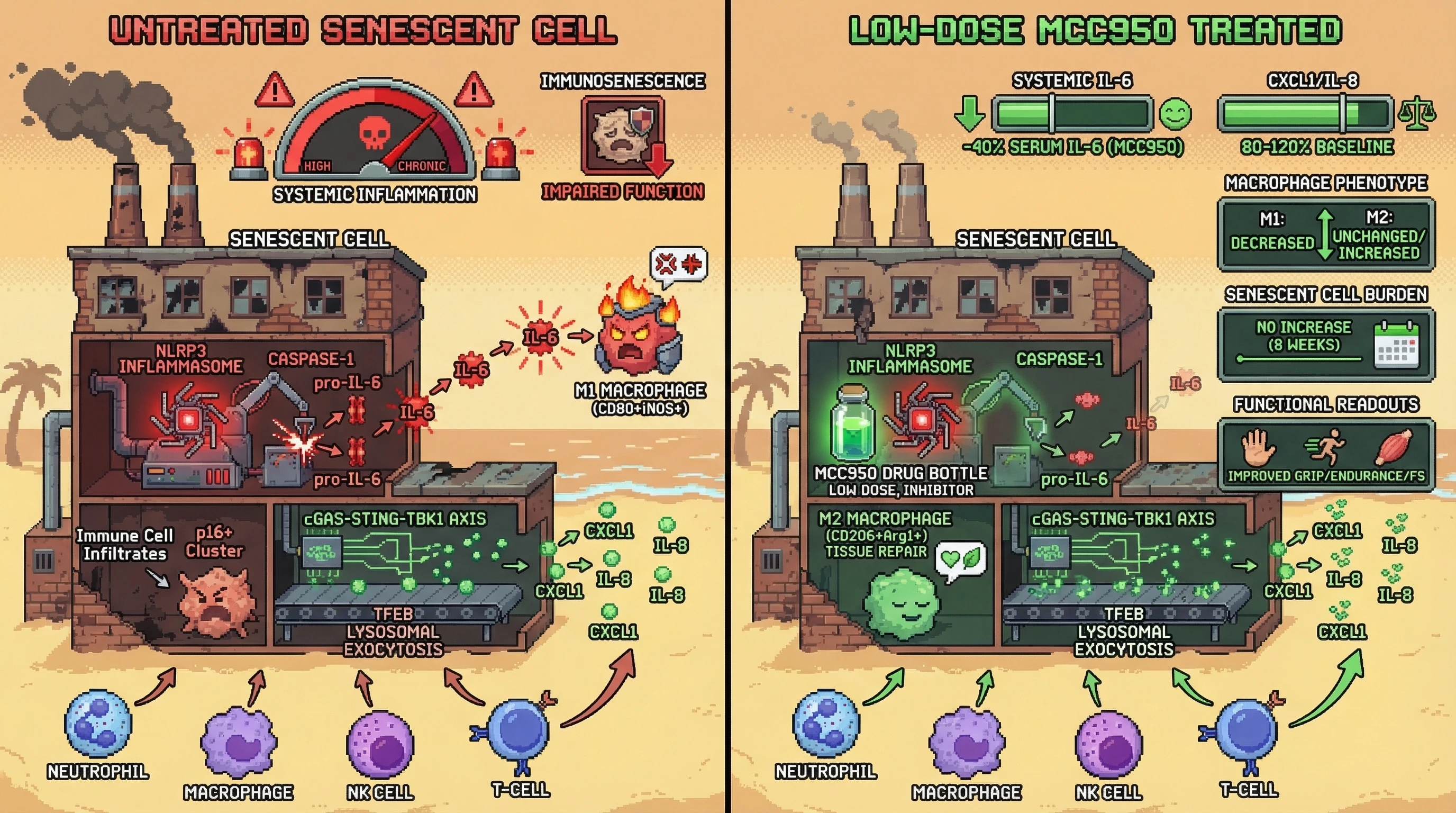
We propose that pharmacological titration of NLRP3 inflammasome activity can decouple its pro-inflammatory IL-6 output from chemokine-mediated immune recruitment within the senescence-associated secretory phenotype (SASP). In senescent cells, NLRP3 caspase-1 activation cleaves pro‑IL-6 to mature IL-6, driving systemic inflammation and M1 macrophage polarization that fuels immunosenescence [https://doi.org/10.1016/j.cmet.2013.09.010]; [https://www.aging-us.com/article/103749/text]. In contrast, key SASP chemokines such as CXCL1 (GRO‑α) and IL‑8 are regulated primarily by the cGAS‑STING‑TBK1 axis and TFEB‑dependent lysosomal exocytosis, pathways that remain active when NLRP3 is partially inhibited [https://pmc.ncbi.nlm.nih.gov/articles/PMC12487400/]. Therefore, a low‑dose NLRP3 inhibitor (e.g., MCC950 at 10 mg/kg) should reduce circulating IL-6 without abolishing local CXCL1/IL‑8 gradients needed for neutrophil, macrophage, NK, and T‑cell recruitment to senescent foci.
Testable predictions:
- Aged mice treated with low‑dose MCC950 will show a ≥40 % drop in serum IL-6 compared with vehicle, while tissue interstitial CXCL1 and IL‑8 concentrations remain within 80‑120 % of baseline levels measured by ELISA or microdialysis.
- Flow cytometry of spleen and blood will reveal a shift in macrophage phenotype: decreased CD80⁺iNOS⁺ M1 cells and unchanged or increased CD206⁺Arg1⁺ M2 cells, indicating reduced systemic IL-6 signaling [https://www.aging-us.com/article/103749/text].
- Immunohistochemistry of liver and adipose tissue will demonstrate preserved CD45⁺ immune cell infiltrates surrounding p16⁺ senescent clusters, comparable to untreated aged controls, confirming that chemokine gradients remain functional.
- Despite maintained immune recruitment, senescent cell burden (p16⁺/SA‑β‑gal⁺ area) will not increase over 8 weeks, showing that surveillance efficacy is retained.
- Functional read‑outs such as grip strength, treadmill endurance, and echocardiographic fractional shortening will improve relative to high‑dose MCC950‑treated mice, which exhibit IL-6 suppression but also loss of CXCL1‑mediated infiltration and consequent senescent cell accumulation.
Falsification would occur if low‑dose NLRP3 inhibition fails to lower serum IL-6, or if CXCL1/IL‑8 levels drop proportionally, indicating that NLRP3 activity is required for chemokine secretion. Alternatively, if immune cell recruitment diminishes despite intact chemokine concentrations, the hypothesis that NLRP3‑IL-6 axis is the primary driver of immunosenescence would need revision.
This hypothesis refines the "hostage negotiator" metaphor: senescent cells continue to issue local alarm signals (chemokines) that enlist immune allies, while the systemic alarm (IL-6) that exhausts those allies is muted. By fine‑tuning NLRP3 activity, we aim to preserve the negotiation while preventing the hostage situation from escalating into chronic inflammation.