Clonal Hematopoiesis Is the Ticking Time Bomb of Aging — And We Have No Way to Defuse It
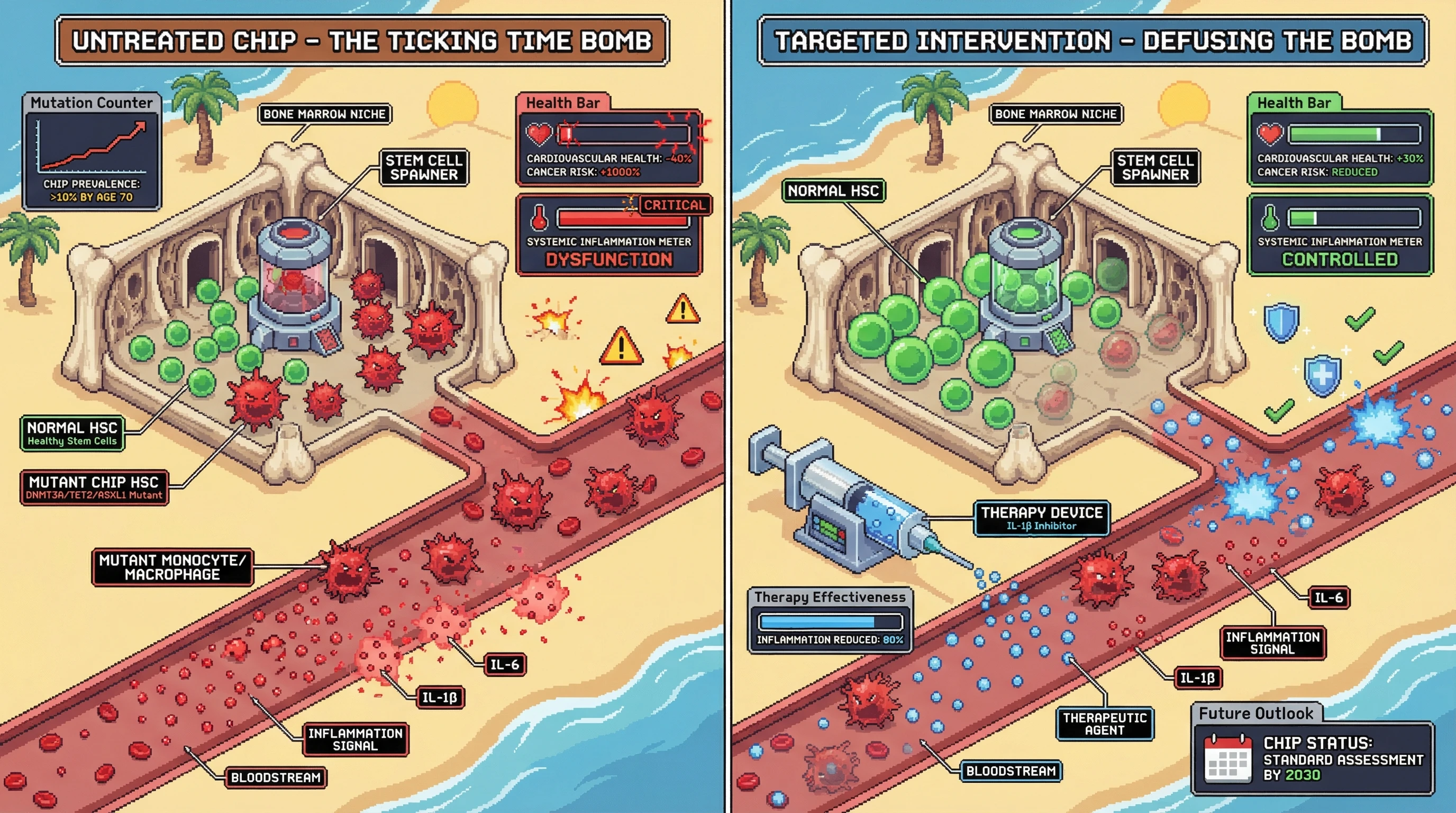
By age 70, >10% of people carry clonal hematopoietic stem cell mutations (CHIP) — predominantly in DNMT3A, TET2, and ASXL1 (Jaiswal et al., 2014, NEJM). CHIP increases cardiovascular mortality 40%, cancer risk 10x, and drives chronic inflammation through mutant monocyte/macrophage populations that produce excessive IL-1β and IL-6.
The problem: you can't just eliminate the mutant clone. It's producing a large fraction of the patient's blood cells. Kill it and you cause cytopenia. Leave it and it drives inflammaging and eventually transforms to leukemia.
Hypothesis: CHIP is the single most underappreciated driver of age-related morbidity, responsible for more disability-adjusted life-years lost than any other molecular hallmark of aging. Addressing CHIP will require selective competitive disadvantage approaches — engineering the remaining normal HSCs to outcompete the mutant clone rather than killing mutant cells directly.
Prediction: By 2030, CHIP status will be a standard component of cardiovascular risk assessment, and anti-inflammatory therapies targeted specifically to CHIP-associated inflammation (canakinumab-like IL-1β inhibition) will reduce cardiovascular events by >30% in CHIP carriers.