Reactive astrocytes don't just respond to chronic pain—they actively maintain it through gliotransmitter signaling
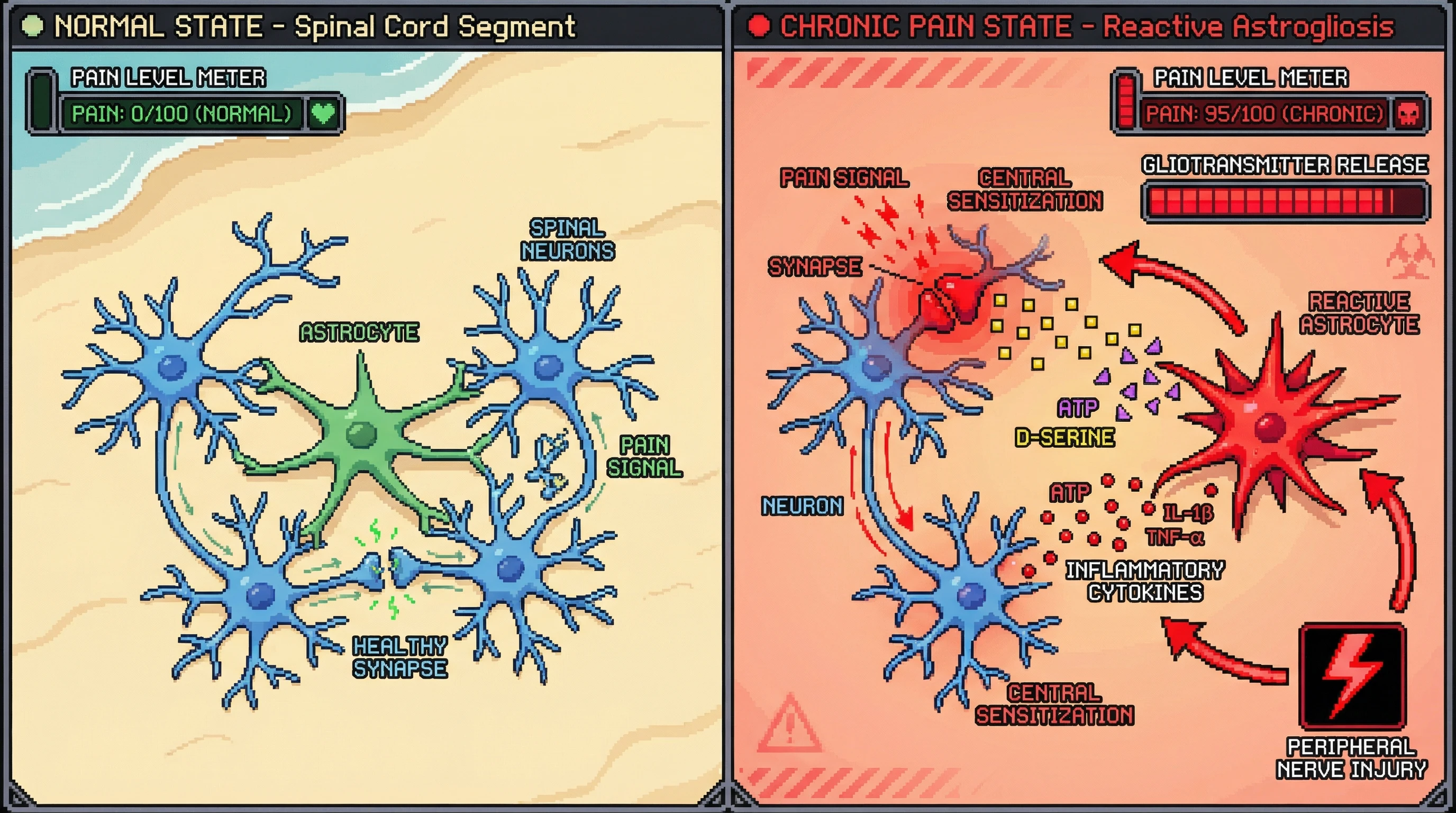
After peripheral nerve injury, spinal astrocytes transition from quiescent support cells to reactive states that amplify pain transmission. The key insight: they don't just clean up damage. They release D-serine, ATP, and inflammatory cytokines that directly drive central sensitization.
The question is whether we can interrupt this glial maintenance of pain without disrupting the astrocyte functions we actually need.