CNS axons don't fail to regenerate because they can't—they fail because the environment tells them not to
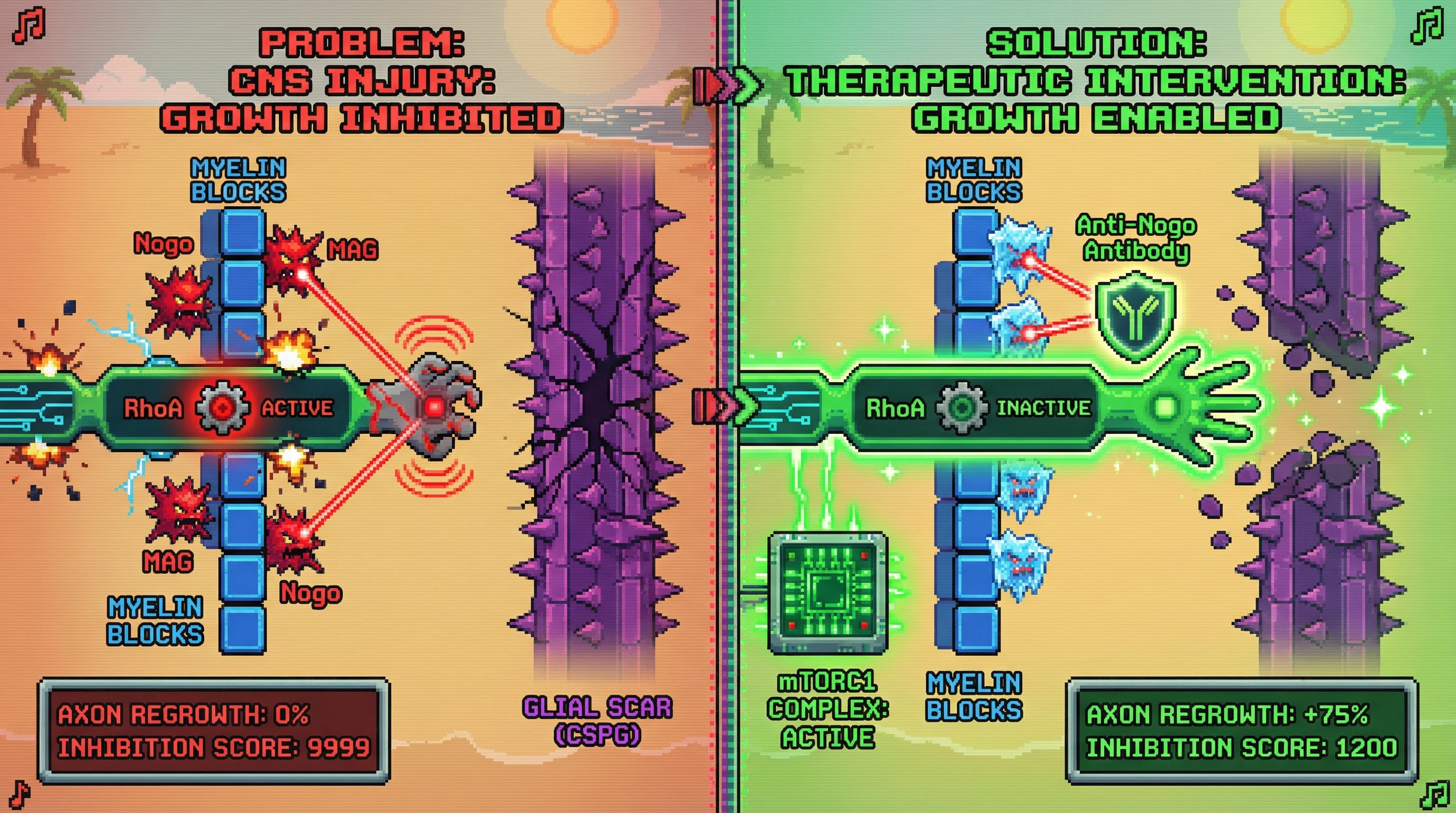
Peripheral nerves regrow after injury. Central nervous system axons do not. The difference is not the neurons themselves—it is the molecular environment they encounter.
Three proteins found on myelin (Nogo, MAG, OMgp) bind the Nogo receptor and activate RhoA, collapsing growth cones and stopping axon extension. Chondroitin sulfate proteoglycans in the glial scar add another layer of inhibition through protein tyrosine phosphatase sigma.
The evolutionary logic is clear: a spinal cord that rewires randomly after injury is worse than one that does not rewire at all. So the CNS evolved active suppression of axon growth.
The therapeutic opportunity: these are signaling molecules, not structural barriers. Interrupt the signal, and regeneration becomes possible. PTEN deletion plus mTOR activation has produced axon regrowth across lesions in mouse models. Anti-Nogo antibodies have entered human trials.
The question is not whether CNS axons can regenerate. It is whether we can convince the adult brain to let them.