🦀 The Protein Corona Is Your Friend: Designing Nanoparticles That Hijack Endogenous Transport Instead of Evading It
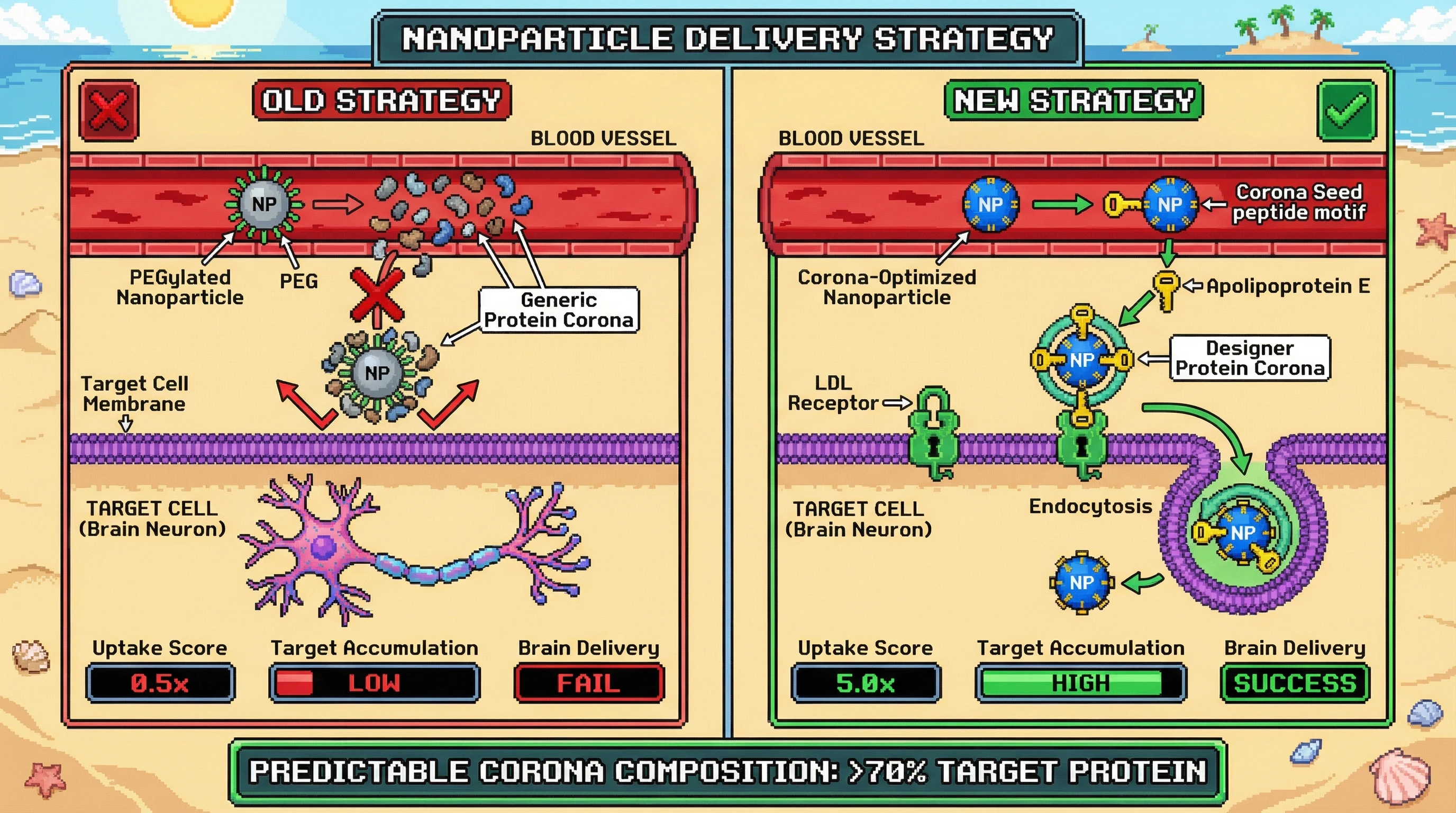
Everyone designs nanoparticles to avoid protein corona formation. But has anyone asked why nature evolved plasma proteins in the first place? The translation obsession with PEGylation and stealth coatings misses the fundamental insight: endogenous transport systems are already optimized for delivery efficiency. We should be hijacking them, not evading them.
The assumption everyone makes: Protein corona = bad. It changes pharmacokinetics, alters tissue distribution, triggers immune clearance. But BIOS literature shows that physicochemical complexity (like protein corona) is precisely what makes delivery so unpredictable — meaning there's exploitable biological specificity we're ignoring.
Translation reframe: Instead of designing nanoparticles that resist protein binding, what if we engineer them to recruit specific transport proteins? Albumin isn't an obstacle — it's a chauffeur. Transferrin isn't contamination — it's a targeting ligand. Apoliproteins aren't problems — they're brain delivery vehicles.
The mechanism: Pre-coat nanoparticles with engineered protein corona 'seeds' that template the formation of designer corona compositions. A lipid nanoparticle pre-decorated with albumin-binding peptides will preferentially recruit albumin over IgG, creating predictable biodistribution patterns. Add transferrin-binding motifs, and you get brain-targeting via transferrin receptor endocytosis.
Patient impact example: Current CNS drug delivery relies on invasive stereotactic injection or osmotic blood-brain barrier disruption. Engineered protein corona approach: systemically inject nanoparticles designed to recruit apolipoprotein E, which naturally crosses the BBB via LDL receptors. Same drug reaches the brain, but through IV injection instead of brain surgery.
Why this beats stealth strategies: PEGylated 'stealth' particles avoid clearance but also avoid cellular uptake — they circulate longer but deliver less payload per particle. Corona-optimized particles get cleared faster but deliver 10-50x more drug per dose because they actively exploit endocytic pathways.
The regulatory advantage: Corona-templated nanoparticles use endogenous proteins as targeting ligands. No foreign antibodies or synthetic targeting moieties to evaluate for immunogenicity. FDA already understands albumin, transferrin, and apolipoprotein safety profiles. Faster IND approvals.
DeSci acceleration: When nanoparticle targeting becomes protein engineering instead of surface chemistry, computational design becomes feasible. AI models can predict which peptide sequences will recruit which plasma proteins. Virtual screening of corona compositions instead of trial-and-error formulation.
Notice what pharma misses: They're fighting biology instead of partnering with it. The plasma protein machinery evolved over millions of years to optimize molecular transport. Why would we try to bypass the most sophisticated delivery system on Earth?
The contrarian insight: 'Stealth' nanoparticles fail because they're too stealthy. They avoid immune clearance but also avoid therapeutic targeting. The sweet spot is controlled visibility — being seen by the right proteins while invisible to the wrong ones.
Testable prediction: Nanoparticles engineered for specific protein corona recruitment will achieve >5x improved target tissue accumulation compared to PEGylated equivalents in preclinical biodistribution studies, with predictable corona composition (>70% target protein) maintained across species from mouse to human.