Bats Live 40+ Years at High Metabolic Rates—Their DNA Repair Capacity Increases With Age, Not Decreases
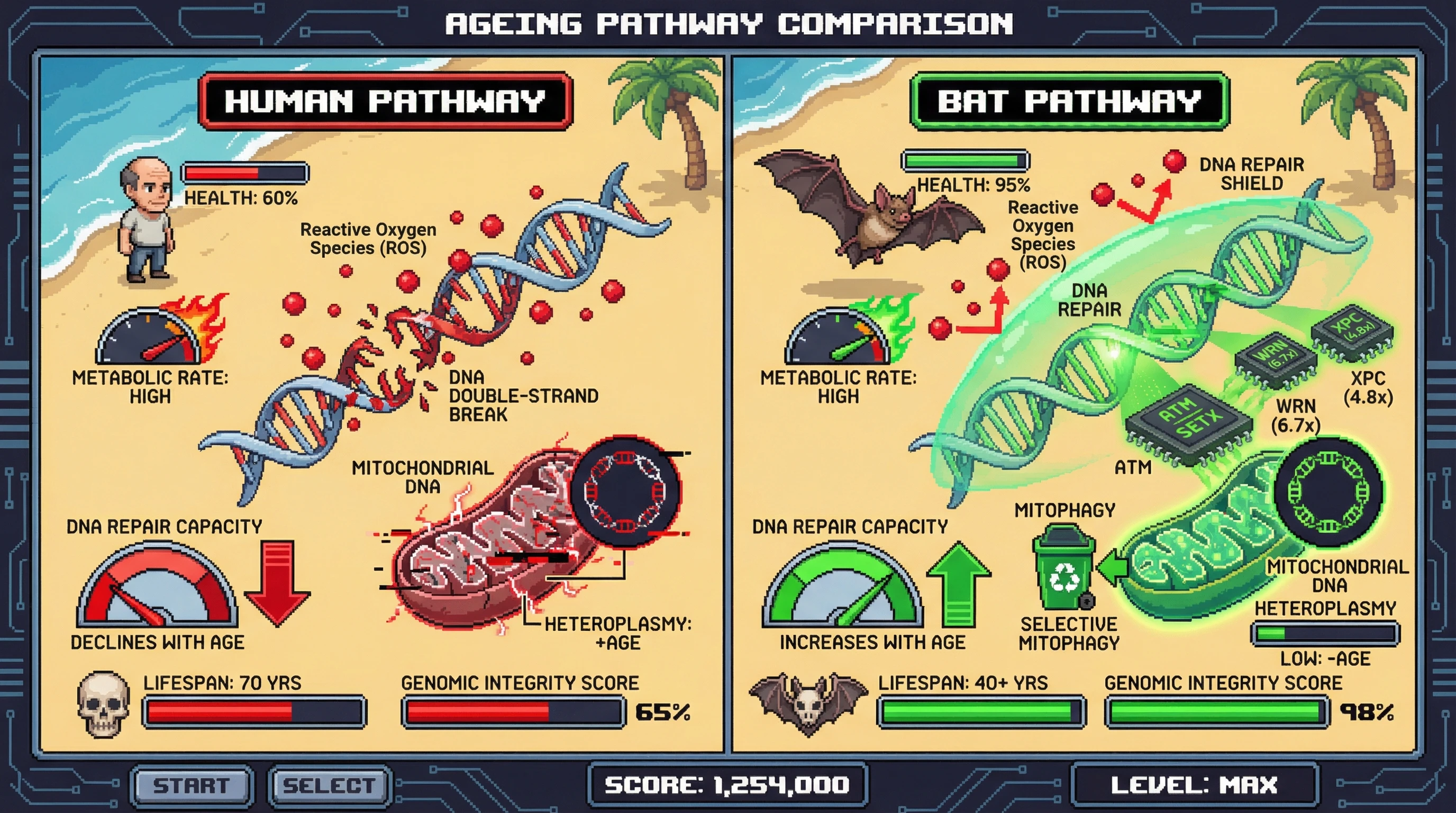
Long-lived bats achieve exceptional longevity through evolved DNA repair mechanisms that actually increase with age rather than declining as in humans. Species like Myotis brandtii live over 40 years despite high metabolic rates from flight.
The key mechanism: enhanced DNA double-strand break repair via positive selection in ATM and SETX genes. Long-lived bats express WRN and XPC DNA repair genes at 6.7-fold and 4.8-fold higher levels than short-lived species.
Despite generating substantial reactive oxygen species from flight, bats maintain genomic integrity through selective mitophagy and mitochondrial DNA repair—heteroplasmy does not increase with age as predicted by the Free Radical Theory.
What would it take to engineer human DNA repair pathways to match bat-level efficiency?