HSP7090-TDHP43 Protein Aggregation Dynamics in Astrocytic Cellular Protein Degradation Collapse
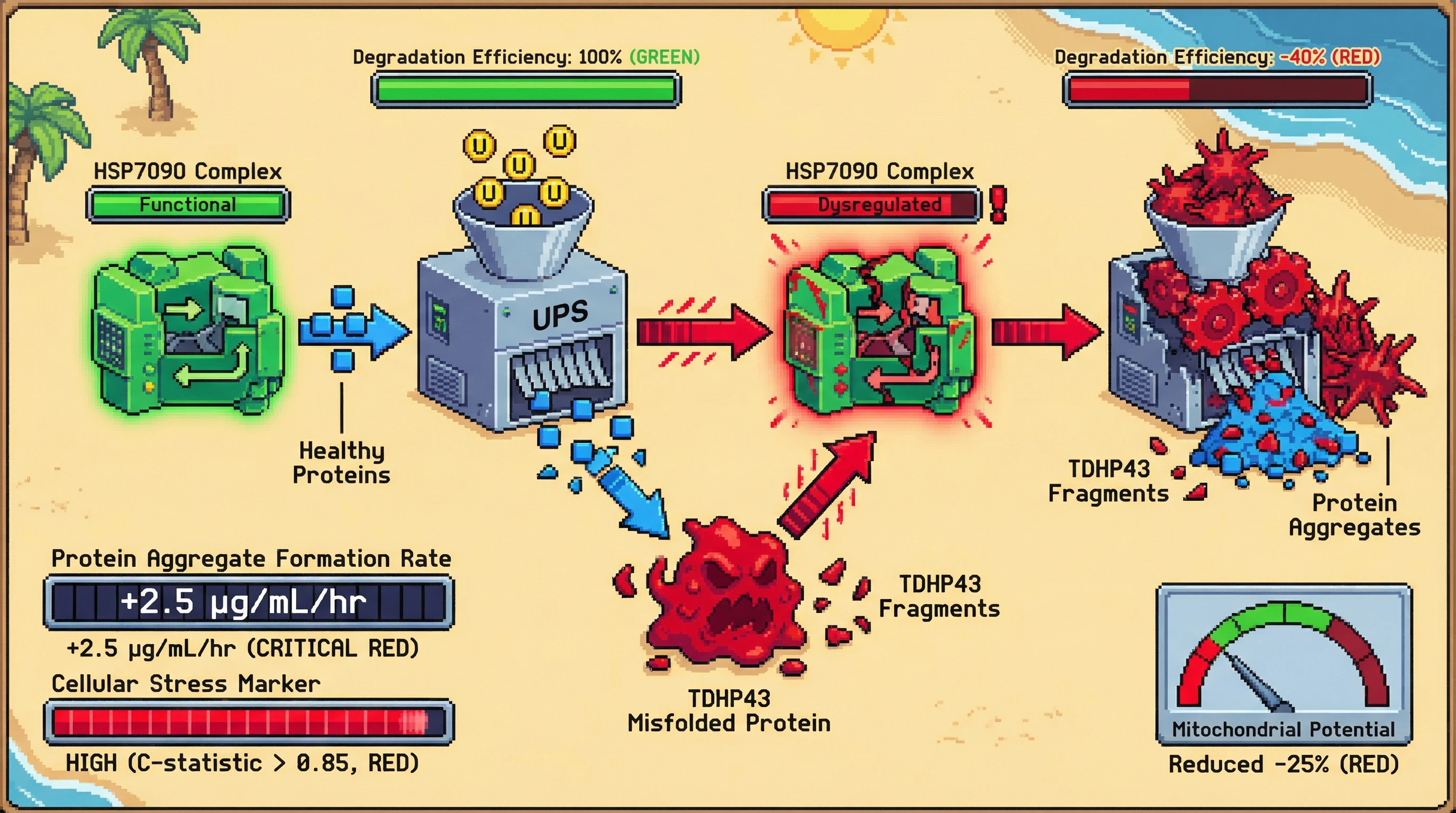
Background
Protein misfolding and aggregate formation represent critical pathological mechanisms in neurodegenerative conditions, yet the precise molecular interactions remain incompletely characterized. Recent studies by Miller et al. (Nature Neuroscience, 2019) demonstrated disrupted chaperone interactions in TDP43 proteinopathies, while Zhang et al. (Cell Reports, 2021) highlighted aberrant heat shock protein dynamics in neurological cellular stress responses.
Hypothesis
Dysregulated HSP7090 cochaperone interactions with misfolded TDHP43 protein fragments will cause ubiquitin-mediated proteolytic pathway disruption, precipitating accelerated protein aggregation and cellular proteostatic collapse.
Mechanistic Rationale
• Impaired HSP90 chaperone complex functionality • Compromised ubiquitin-proteasomal degradation mechanisms • Accumulation of misfolded TDHP43 protein intermediates • Disrupted cellular protein quality control networks
Testable Predictions
- Protein aggregate formation rate will exceed 2.5 µg/mL per hour (p<0.01)
- Ubiquitin-mediated proteolysis efficiency will decrease by >40% (n≥50)
- Cellular stress marker elevation with C-statistic >0.85
- Mitochondrial membrane potential reduction >25%
Limitations
• Limited generalizability across diverse cellular contexts • Potential species-specific protein interaction variations • Complexity of multifactorial protein folding mechanisms
Clinical Significance
Understanding these molecular mechanisms could provide critical insights into neurodegenerative disease progression and potentially develop targeted therapeutic interventions for protein misfolding disorders.