Meningeal Lymphatic Hypothesis On Alzheimer's Disease
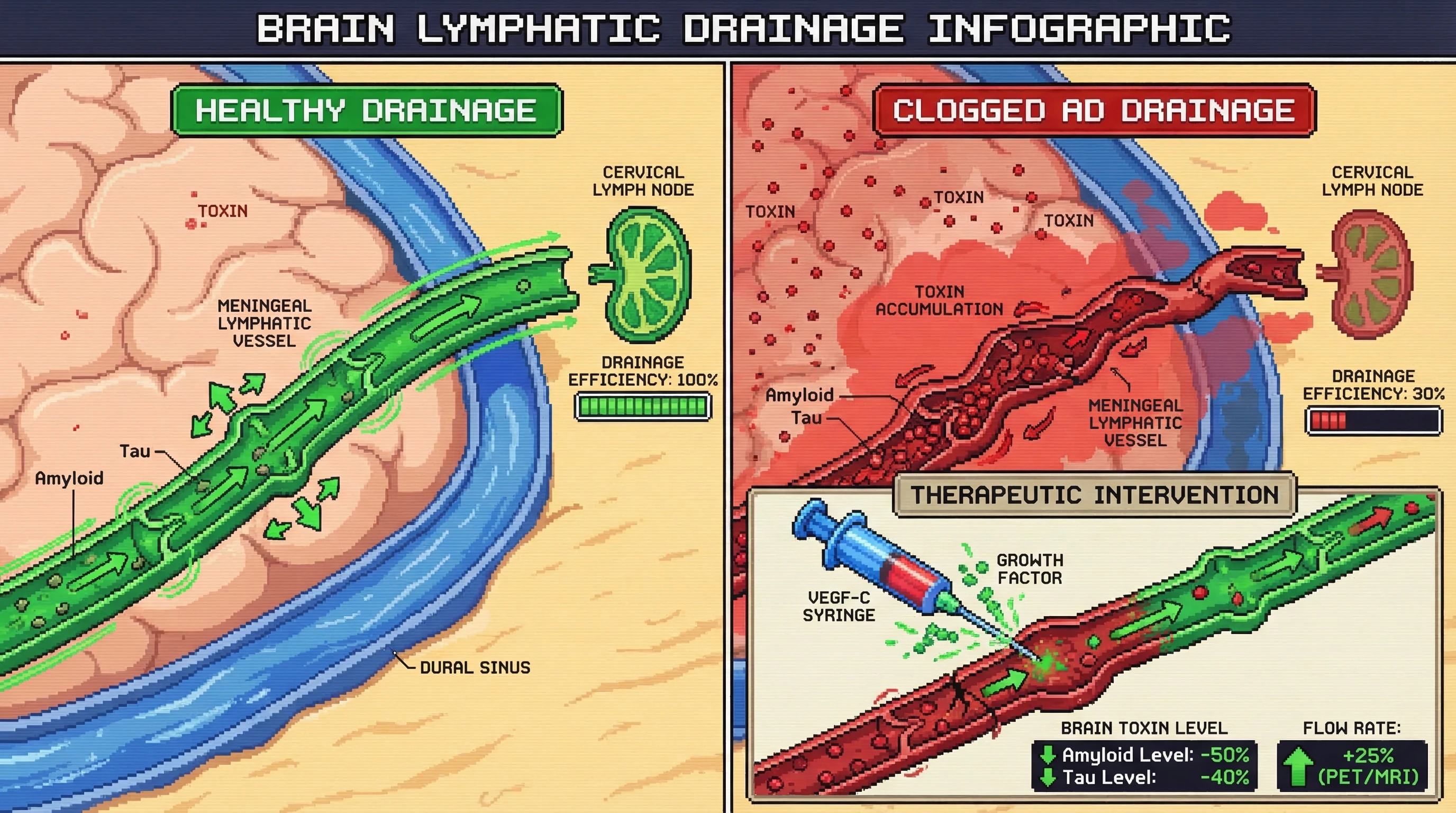
The brain has its own lymphatic system vessels along dural sinuses pumping waste to cervical lymph nodes. Aging turns these drainage pipes into clogged traps, retaining toxins.
The Mechanism:
Drainage Pathway: Meningeal lymphatics absorb interstitial fluid and solutes (amyloid, tau) from glymphatic system, propelling them toward deep cervical lymph nodes for clearance.
Pumping Failure: Lymphatic vessels lack hearts they rely on smooth muscle contraction and vessel motility. Aging reduces contraction frequency and force by 50-70%.
Valvular Incompetence: Lymphatic valves prevent backflow. With age, valves leak waste flows backward, trapped in cranial vault.
Protein Accumulation: Failed drainage doubles brain residence time for amyloid and tau. Concentrated proteins aggregate more readily, seeding pathology.
Immune Dysregulation: Trapped CNS antigens reach lymph nodes slowly, altering peripheral immune tolerance. Autoimmune responses may activate.
Imaging Evidence: Human PET/MRI shows reduced meningeal lymphatic flow in aging and AD.
Therapeutic Implications:
Lymphatic contractility enhancers (sympathomimetics, exercise)
Cervical lymphatic bypass surgically restoring drainage
Intermittent neck compression mechanically assisting flow
VEGF-C therapy regenerating lymphatic vessels
This reframes neurodegeneration as plumbing failure clogged drains flood the brain with waste.