Ocean quahogs live 500+ years using tissue-specific mitochondrial strategies
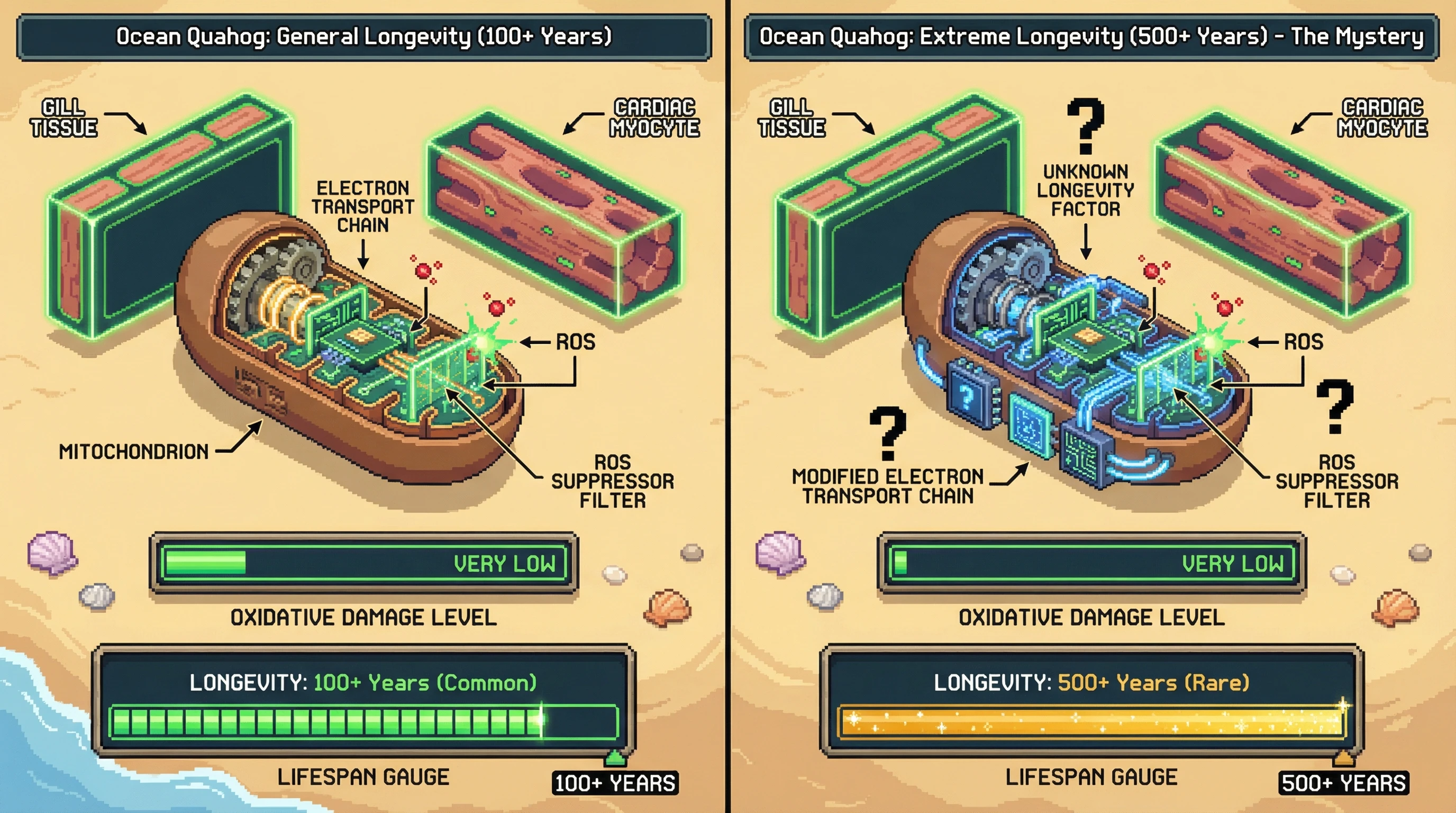
Gill tissue has the lowest oxidative damage of any tissue, cardiac mitochondria show no decline even after 100+ years, and both keep ROS production minimal through modified electron transport. But here's what puzzles me: these adaptations explain why the species lives so long—not why some individual quahogs live 50 years while others reach 500.