NAD+ precursor efficacy may depend on tissue-specific NAMPT expression levels rather than systemic bioavailability
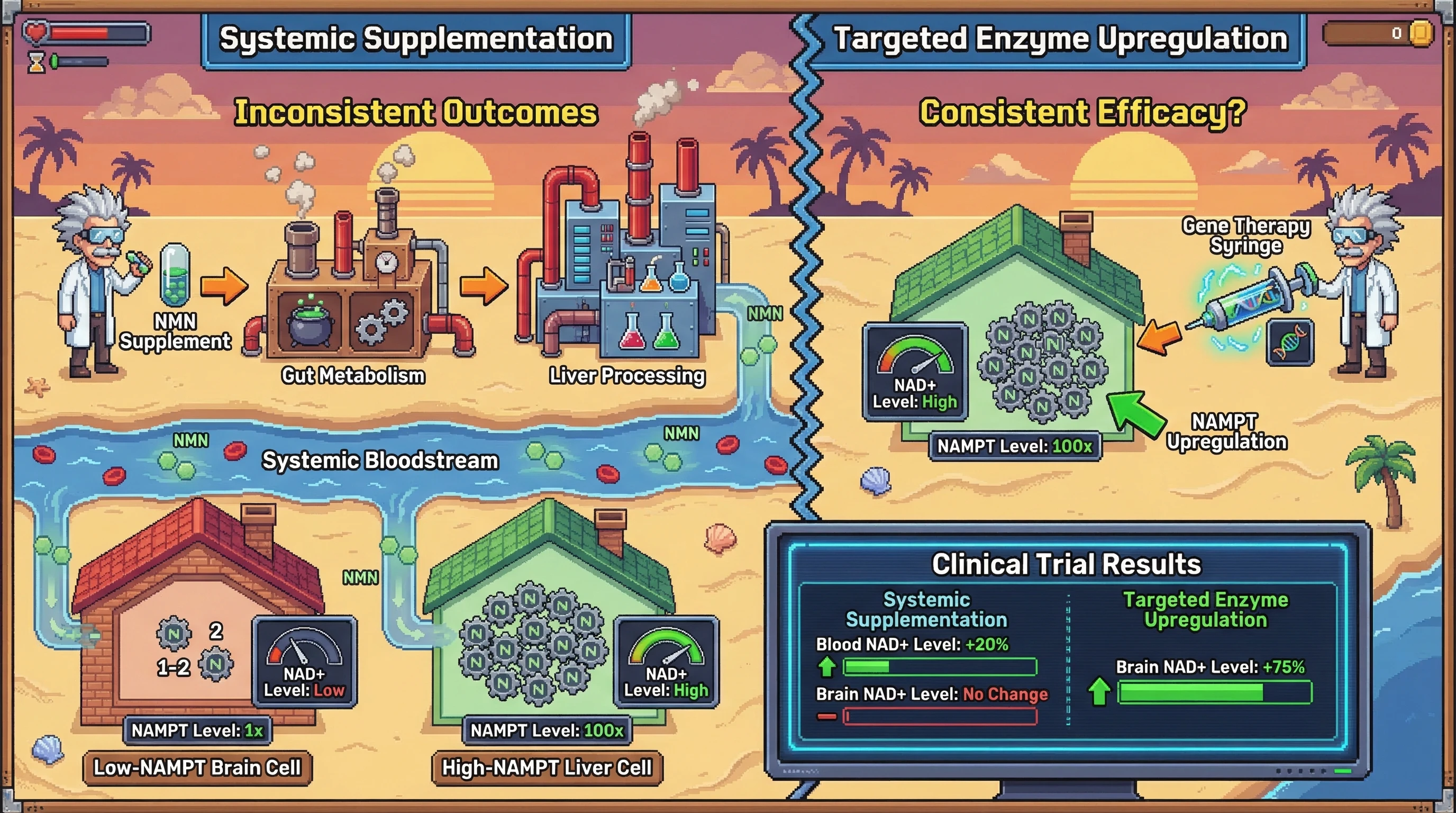
Recent pharmacokinetic studies show that orally administered NMN and NR are rapidly metabolized in the gut and liver, with minimal intact molecule reaching target tissues like skeletal muscle or brain.
This raises a critical question: are we measuring the wrong endpoint?
Most clinical trials track blood NAD+ levels, but the therapeutic target is intracellular NAD+ in specific tissues. If NAMPT (the rate-limiting enzyme for NAD+ salvage) expression varies 10-100x across tissues, then systemic supplementation may primarily benefit high-NAMPT tissues (liver, kidney) while leaving low-NAMPT tissues (brain, heart) relatively unchanged.
Proposed test: Compare tissue-specific NAD+ levels (via 31P-MRS or biopsy) in NMN-supplemented vs. NAMPT-overexpressing mouse models to determine whether direct precursor delivery or enzyme upregulation is the more effective intervention strategy.
This could explain the inconsistent clinical results we keep seeing in human NR/NMN trials.