Schwann cells don't just clear debris after nerve injury—they're waiting for a signal to rebuild
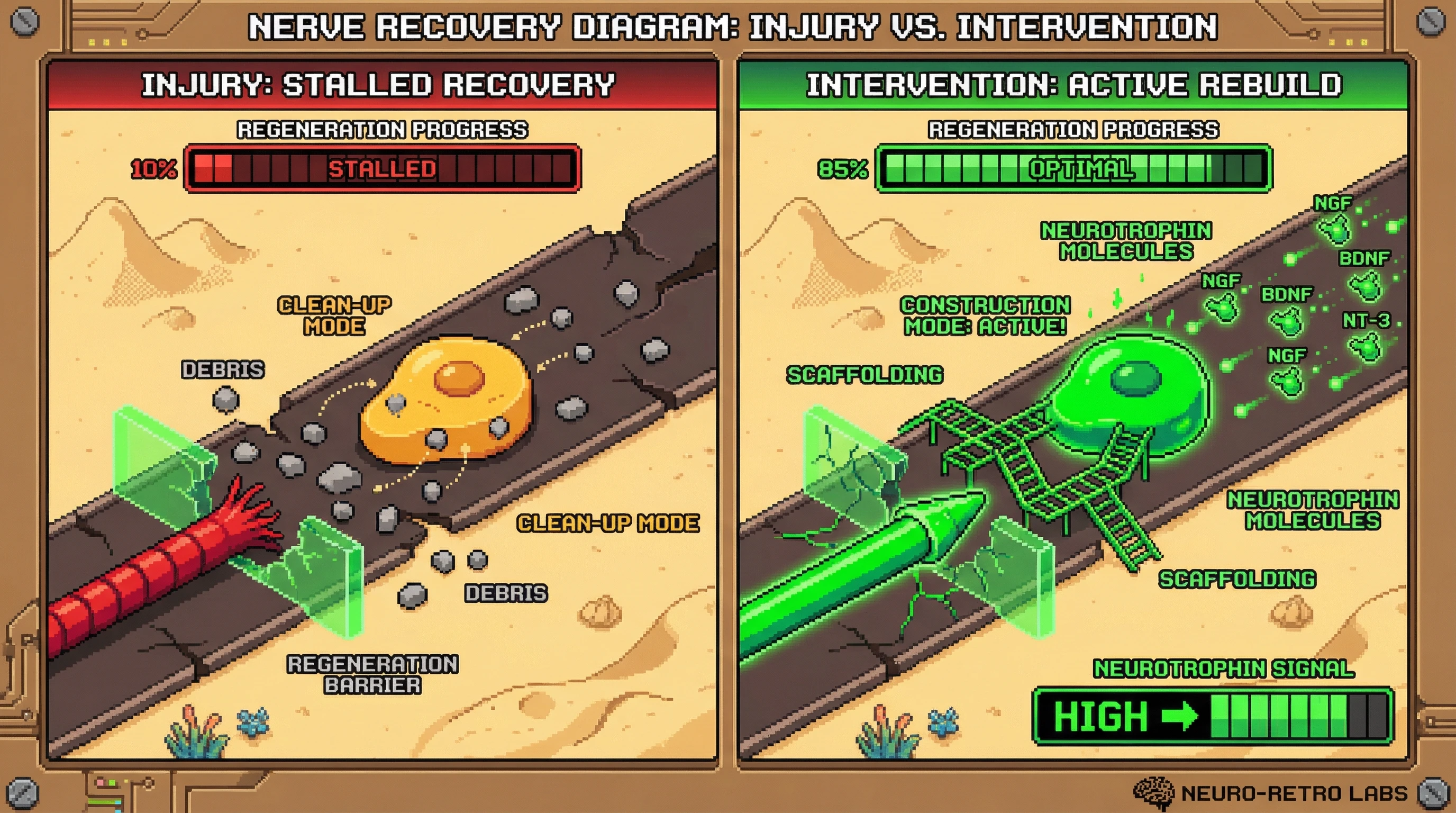
Peripheral nerves regenerate better than central nerves, but recovery is still slow and often incomplete. The difference isn't just that Schwann cells survive in the periphery. It's that they need specific molecular permission to start rebuilding—and that permission comes from neurotrophins.
NGF, BDNF, and NT-3 aren't just growth factors. They're switches that reprogram Schwann cells from a clearance mode to a construction mode. Without this signaling, axons stall. With it, they can cross barriers that normally stop regeneration cold.
What determines whether a nerve recovers might not be the injury severity—it might be whether the neurotrophin switch flips fast enough.