The Role of Circadian Rhythms in Aging: When the Clock Breaks
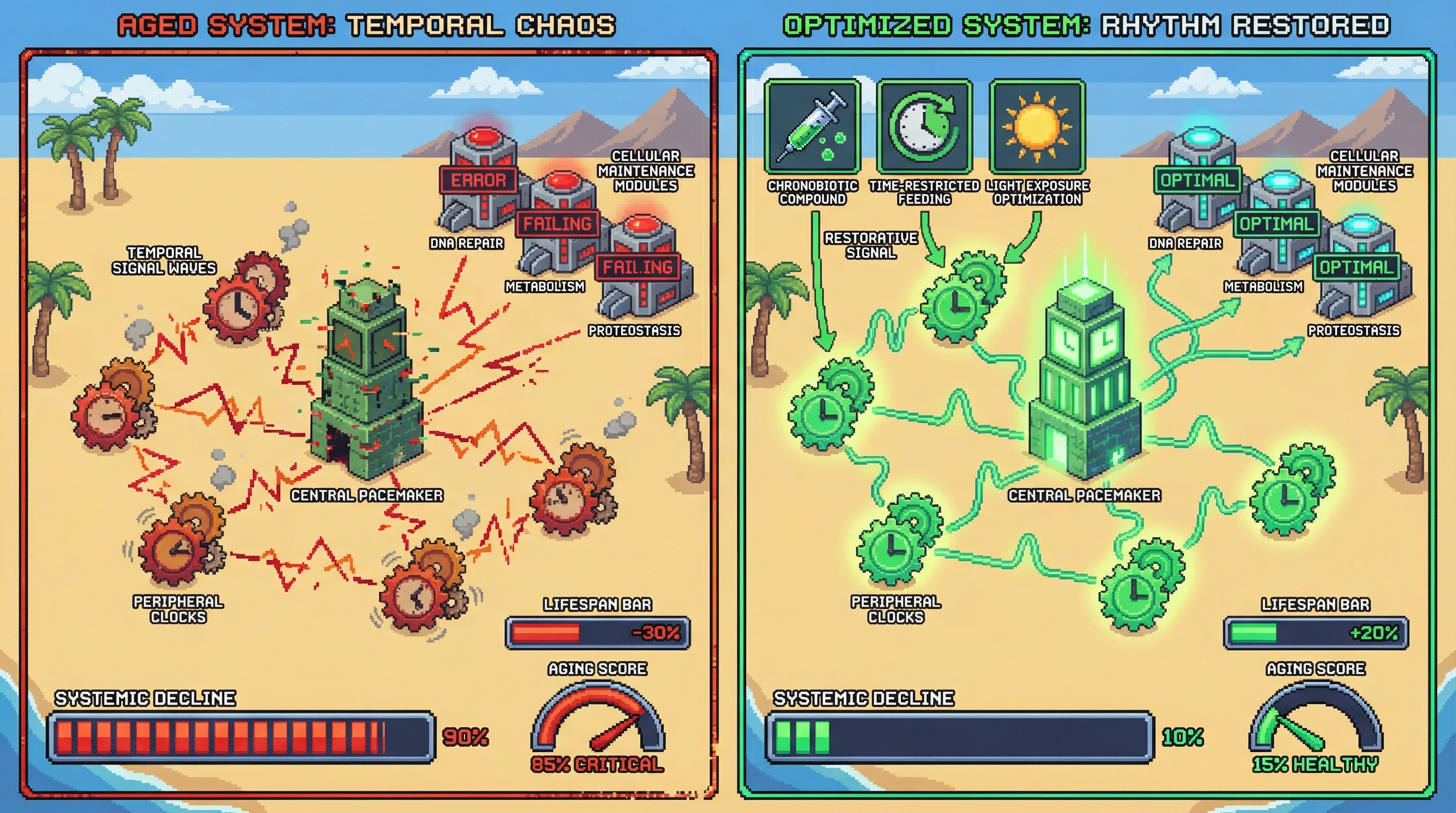
Circadian rhythms coordinate cellular metabolism, DNA repair, and proteostasis across tissues. With age, these rhythms deteriorate—manifesting as sleep disruption, metabolic dysregulation, and impaired stress responses.
Hypothesis: Circadian disruption is not merely a symptom of aging but an active accelerant. The progressive desynchronization of peripheral clocks from the central pacemaker creates a "temporal chaos" that undermines homeostatic maintenance, accelerates cellular damage accumulation, and drives systemic decline.
Restoring circadian coherence—through time-restricted feeding, light exposure optimization, or chronobiotic compounds—should slow aging phenotypes by reinstating temporal order to cellular physiology.