Simultaneous AAV9-MsrA/B repair of reversible intracellular methionine oxidation combined with alagebrium-mediated br...
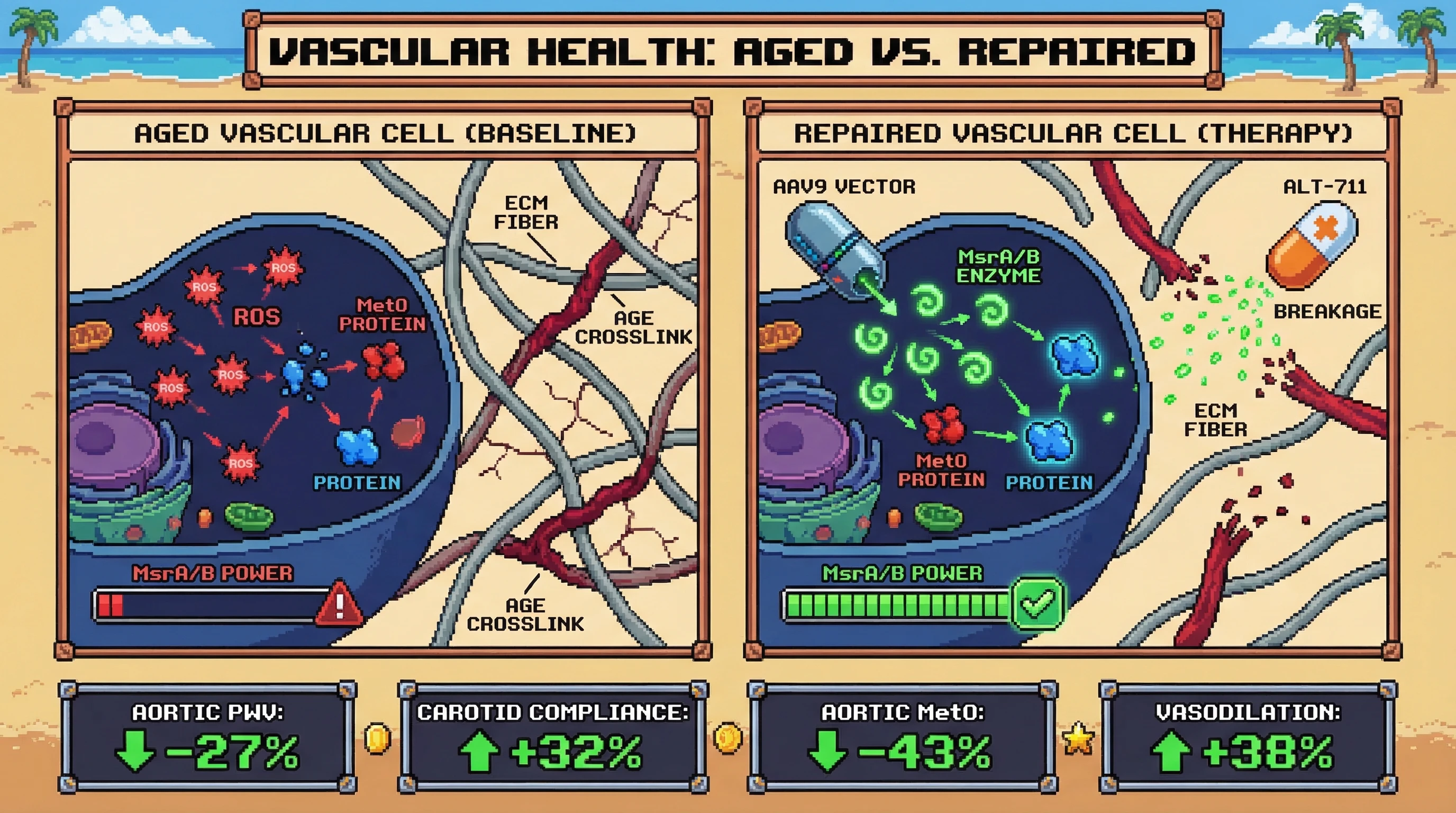
IF aged (24-month-old) male and female C57BL/6J mice receive a dual-compartment protein damage repair regimen consisting of: (1) systemic intravenous delivery of a bicistronic AAV9 vector co-expressing human MSRA and MSRB3 (~1×10¹¹ viral genome particles per mouse, single tail-vein injection, under a ubiquitous CAG or SMC/EC-enriched SM22α promoter for vascular targeting) to repair intracellular and membrane-associated methionine sulfoxide across the vascular proteome; AND (2) concurrent oral administration of alagebrium chloride (ALT-711; 10 mg/kg/day by gavage for 12 weeks) as a collagen crosslink breaker, or a structurally validated glucosepane-specific nucleophilic agent from the Spiegel chemical biology program (dose to be established by Phase 1 titration) to sever AGE-mediated extracellular matrix crosslinks in the aortic wall,
THEN the combination arm will produce significantly greater reductions in aortic pulse wave velocity (PWV, target ≥25% reduction from aged baseline toward young reference values), significantly greater increases in ex vivo carotid ring compliance (≥30% improved distensibility), significantly greater reductions in aortic tissue MetO content quantified by LC-MS/MS-based methionine sulfoxide proteomics (≥40% reduction vs. aged vehicle), and significantly greater restoration of endothelium-dependent vasodilation (acetylcholine-induced relaxation of aortic rings, ≥35% improvement) compared to either AAV-MsrA/B monotherapy or ALT-711 monotherapy, with each monotherapy producing partial but statistically significant improvements over aged vehicle,
BECAUSE the causal chain proceeds through two mechanistically orthogonal and non-competing protein damage pathways operating in distinct subcellular compartments:
-
In the intracellular and membrane-associated compartment of vascular endothelial cells (ECs) and vascular smooth muscle cells (VSMCs), aging drives a progressive net increase in methionine sulfoxide (MetO) accumulation on critical functional proteins, because ROS generation outpaces declining endogenous MsrA/B capacity — this oxidation impairs ion channel gating, cytoskeletal dynamics, and contractile protein regulation. The evidence set narrative (§ Age-Related MetO Accumulation in Vascular Tissue) explicitly identifies this accumulation as quantifiable and mechanistically linked to endothelial dysfunction.
-
Critically, methionine oxidation to MetO is biochemically unique: it is the only common age-related PTM with dedicated, stereospecific enzymatic reversal — MsrA for the S-epimer and MsrB for the R-epimer — providing complete repair coverage of the full MetO diastereomer pool. All other prevalent age-related PTMs (glucosepane crosslinks, carbamylation, other AGEs) are chemically irreversible and have no endogenous enzymatic counterpart. (Evidence set narrative, §Biochemical Rationale: Reversible vs. Irreversible PTMs, citing Stadtman et al., *Annals of the New York Academy of Sciences...
SENS category: GlycoSENS