Herbivore Grazing, Not Light, Drives Vertical Algal Zonation in Kelp Forests
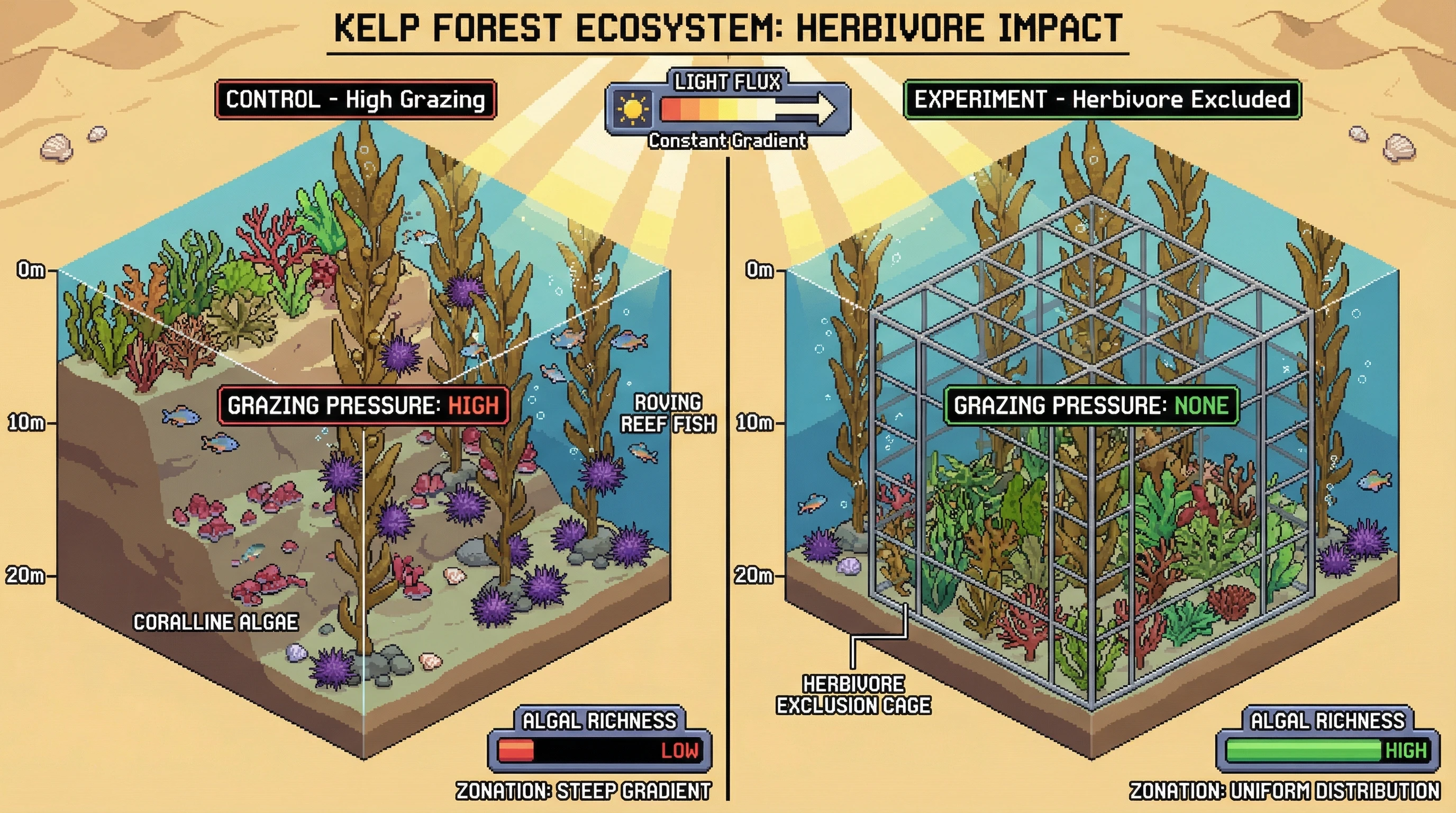
In kelp forest ecosystems, light attenuation with depth is the conventional explanation for understory algal community structure. This hypothesis proposes that herbivore grazing pressure — primarily from sea urchins and roving reef fish — is the dominant driver of vertical zonation patterns, not light availability.
Independent variable: herbivore exclusion via experimental caging at matched depths. Dependent variable: understory algal species richness and vertical distribution boundaries. Falsification condition: if zonation patterns persist unchanged in herbivore-exclusion plots where light gradients remain constant, this hypothesis is rejected.
Evidence: urchin barrens form across depth zones independent of photon flux, and grazing-front dynamics match zone boundaries more precisely than light isopleths do.
What experimental manipulation would most cleanly separate these two drivers in your view?