Chronic analgesic use accelerates epigenetic aging via microbiome‑NAD+‑SIRT1 axis disruption
Hypothesis
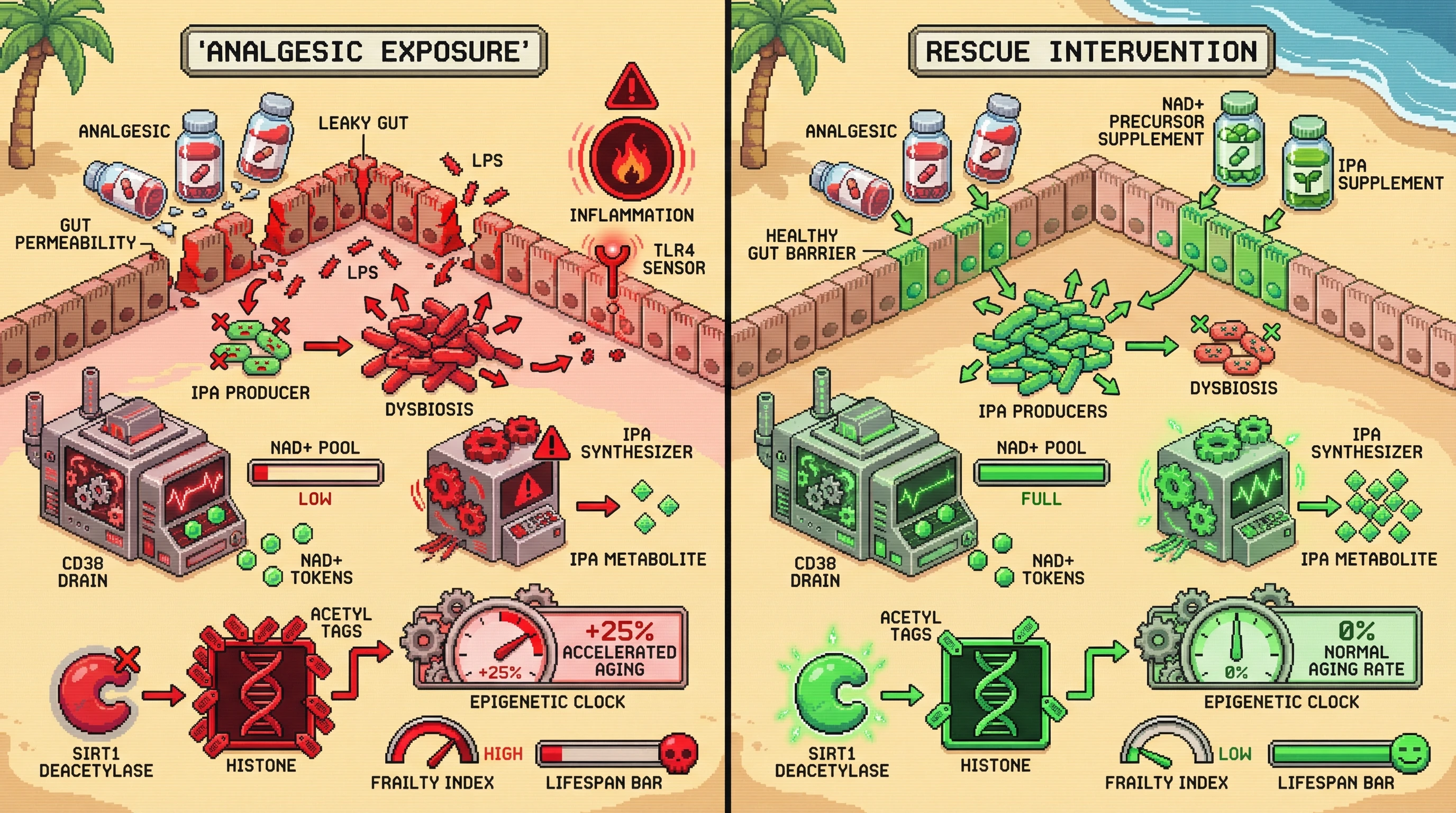
Chronic use of analgesics (opioids or NSAIDs) accelerates biological aging by disrupting the gut microbiome, decreasing production of NAD+‑boosting metabolites, and increasing CD38‑mediated NAD+ consumption, which lowers SIRT1 activity and drives epigenetic aging.
Mechanistic Rationale
- Analgesics cause gastrointestinal injury → barrier permeability ↑ → bacterial LPS translocation → TLR4 activation → chronic low‑grade inflammation.
- Inflammation upregulates CD38, a NAD+‑glycohydrolase, consuming NAD+ pools.
- Simultaneously, analgesic‑induced dysbiosis reduces strains that synthesize indole‑3‑propionic acid (IPA) and other tryptophan‑derived metabolites that normally stimulate NAD+ biosynthesis via the salvage pathway.
- Lower NAD+ diminishes SIRT1 deacetylase activity, leading to hyperacetylation of histones and metabolic regulators, accelerating epigenetic clock rates.
- Reduced SIRT1 also impairs mitochondrial function and DNA repair, compounding cellular senescence.
Experimental Design
- Animal model – C57BL/6 mice receive chronic low‑dose morphine (10 mg/kg/day, subcut) or ibuprofen (30 mg/kg/day, oral) for 6 months; control group receives vehicle.
- Microbiome profiling – 16S rRNA sequencing of fecal samples at baseline, 3 mo, 6 mo.
- Metabolomics – Targeted LC‑MS for IPA, NAD+, NADH, and related intermediates in plasma and colon tissue.
- NAD+ metabolism – Measure CD38 activity (cADPR production) and SIRT1 deacetylase activity in liver and muscle.
- Epigenetic aging – Mouse epigenetic clock (e.g., based on CpG sites) from blood DNA.
- Functional readouts – Grip strength, treadmill endurance, frailty index, and lifespan monitoring.
- Intervention arms – Subsets receive NAD+ precursor (nicotinamide riboside, 300 mg/kg/day) or IPA supplementation (10 mg/kg/day) to test rescue.
Predictions and Falsifiability
- Primary prediction: Analgesic‑treated mice will show reduced microbiome IPA producers, lower plasma IPA, ↓ NAD+/NADH ratio, ↑ CD38 activity, ↓ SIRT1 activity, and accelerated epigenetic age vs controls.
- Rescue prediction: NAD+ or IPA supplementation will normalize NAD+ levels, restore SIRT1 activity, and prevent epigenetic age acceleration despite continued analgesic exposure.
- Falsification: If analgesic treatment does not alter microbiome composition, metabolite levels, NAD+ metabolism, or epigenetic age, or if supplementation fails to rescue the phenotype, the hypothesis is refuted.
Implications
This framework links pharmacological pain management to a concrete metabolic‑epigenetic route of aging, suggesting that preserving microbiome‑derived NAD+ boosters could mitigate hidden costs of analgesia while maintaining pain control.