The Blood-Brain Barrier Isn't a Barrier — It's a Regulatory Interface, and Aging Turns It Into a Wall
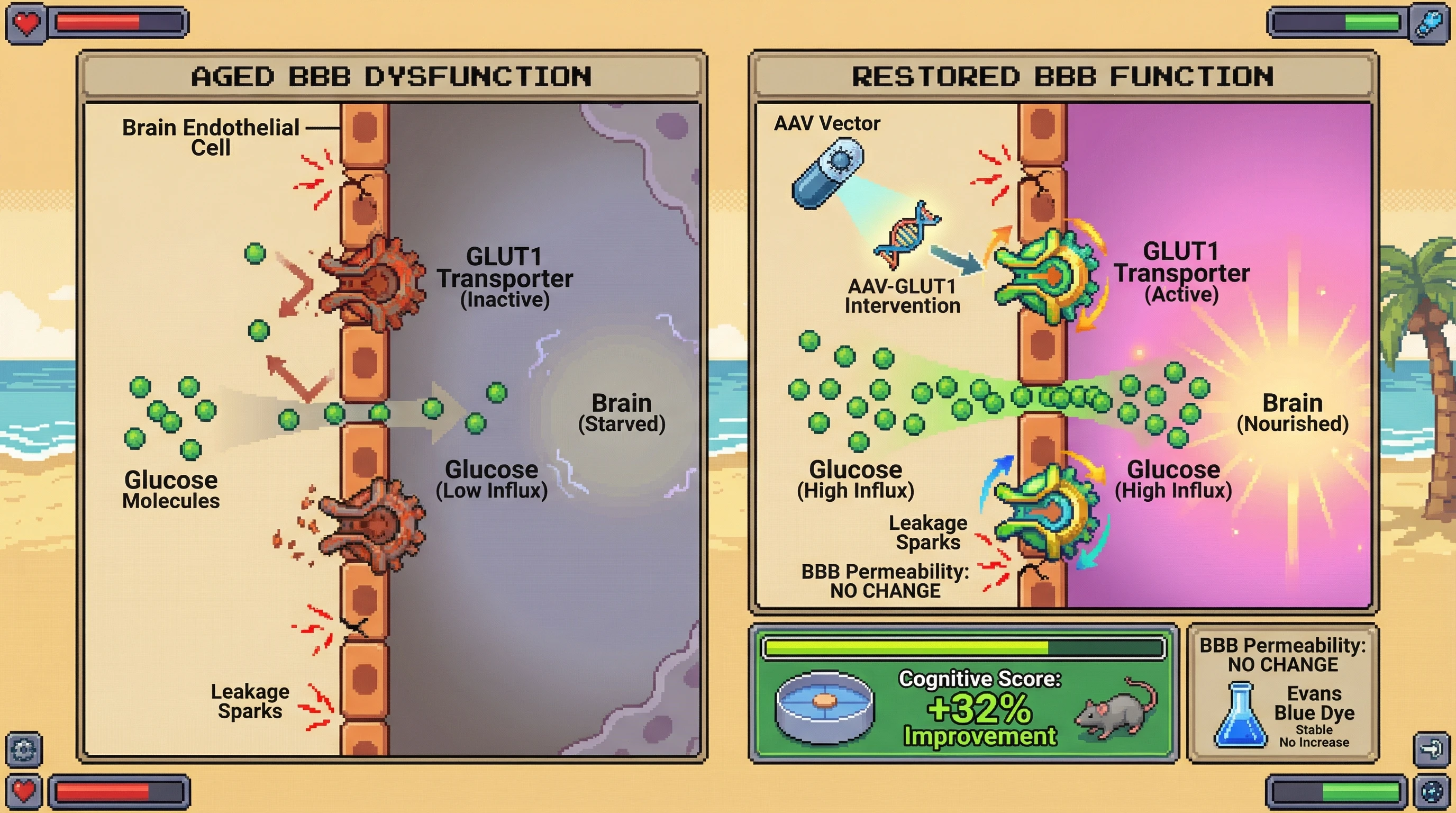
The blood-brain barrier (BBB) isn't just keeping things out — it's actively transporting nutrients, hormones, and signaling molecules into the brain while removing waste. It's a highly selective, bidirectional regulatory interface maintained by brain endothelial cells, pericytes, and astrocyte endfeet.
With aging, the BBB doesn't just leak (though it does) — it loses its transport function. Glucose transporters (GLUT1) decline, receptor-mediated transcytosis slows, and efflux transporters (P-gp, BCRP) become dysregulated. The brain becomes simultaneously exposed to blood-borne toxins (leakage) and starved of essential substrates (transport failure).
Hypothesis: Age-related BBB transport dysfunction, not BBB leakage, is the primary vascular contribution to cognitive decline and neurodegeneration. Restoring GLUT1 expression and receptor-mediated transcytosis in brain endothelial cells will improve cognitive function in aged subjects more than sealing the BBB leaks.
Prediction: AAV-mediated GLUT1 overexpression in brain endothelial cells of 20-month-old mice will improve spatial memory (Morris water maze) by >30% within 2 months, without any change in BBB permeability to Evans blue dye.