Choroid Plexus Dysfunction On Alzheimer's Disease
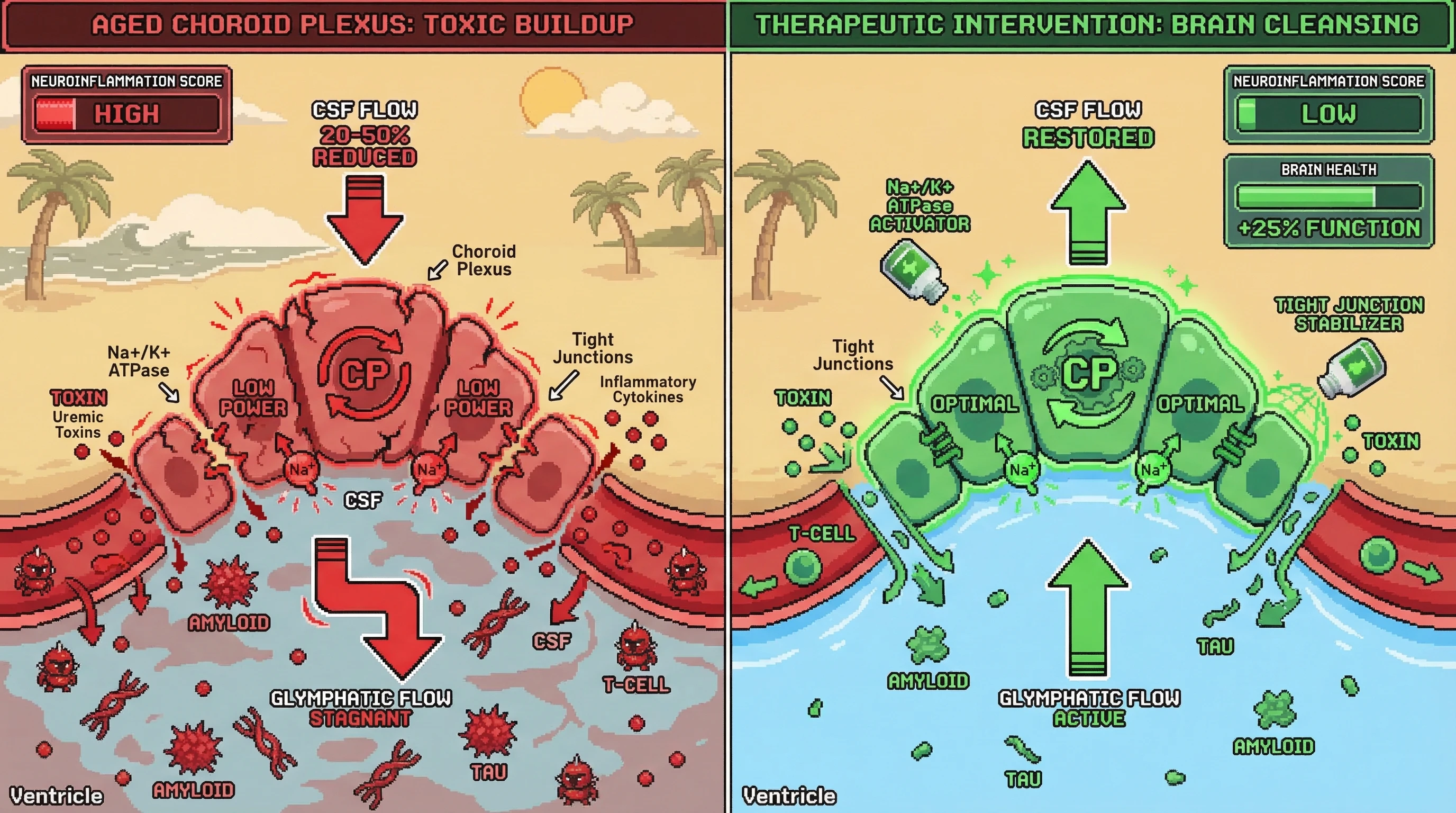
The Foundational Idea: The choroid plexus is the brain's kidney making CSF and filtering blood. Aging turns this vital organ into a leaky, sluggish pump, poisoning the neural environment.
The Mechanism:
CSF Production Decline: Choroid plexus epithelial cells reduce Na+/K+ ATPase activity with age. CSF production drops 20-50%, slowing brain buoyancy and waste dilution.
Barrier Breakdown: Tight junctions between epithelial cells degrade. Blood-borne toxins (uremic toxins, inflammatory cytokines) leak directly into CSF bypassing blood-brain barrier entirely.
Waste Trapping: Slower CSF flow through ventricles prolongs residence time of amyloid and tau. Concentrated toxins aggregate more readily.
Glymphatic Backup: Choroid plexus helps drive glymphatic flow. Reduced CSF production stalls interstitial fluid movement, trapping metabolic waste.
Immune Dysregulation: Choroid plexus transports immune cells. Dysfunction allows inappropriate T-cell entry into CSF, driving neuroinflammation.
Therapeutic Implications:
Na+/K+ ATPase activators restoring CSF production
Tight junction stabilizers sealing blood-CSF barrier
CSF shunting mechanically enhancing clearance
Ventricular delivery bypassing failed plexus for drug administration
This reframes neurodegeneration as renal failure of brain waste accumulation from pump failure.