Hypothesis: Tokenized Incentive Models for Longitudinal Biosensor Data Could Solve the 'Small-N' Problem in Longevity Research
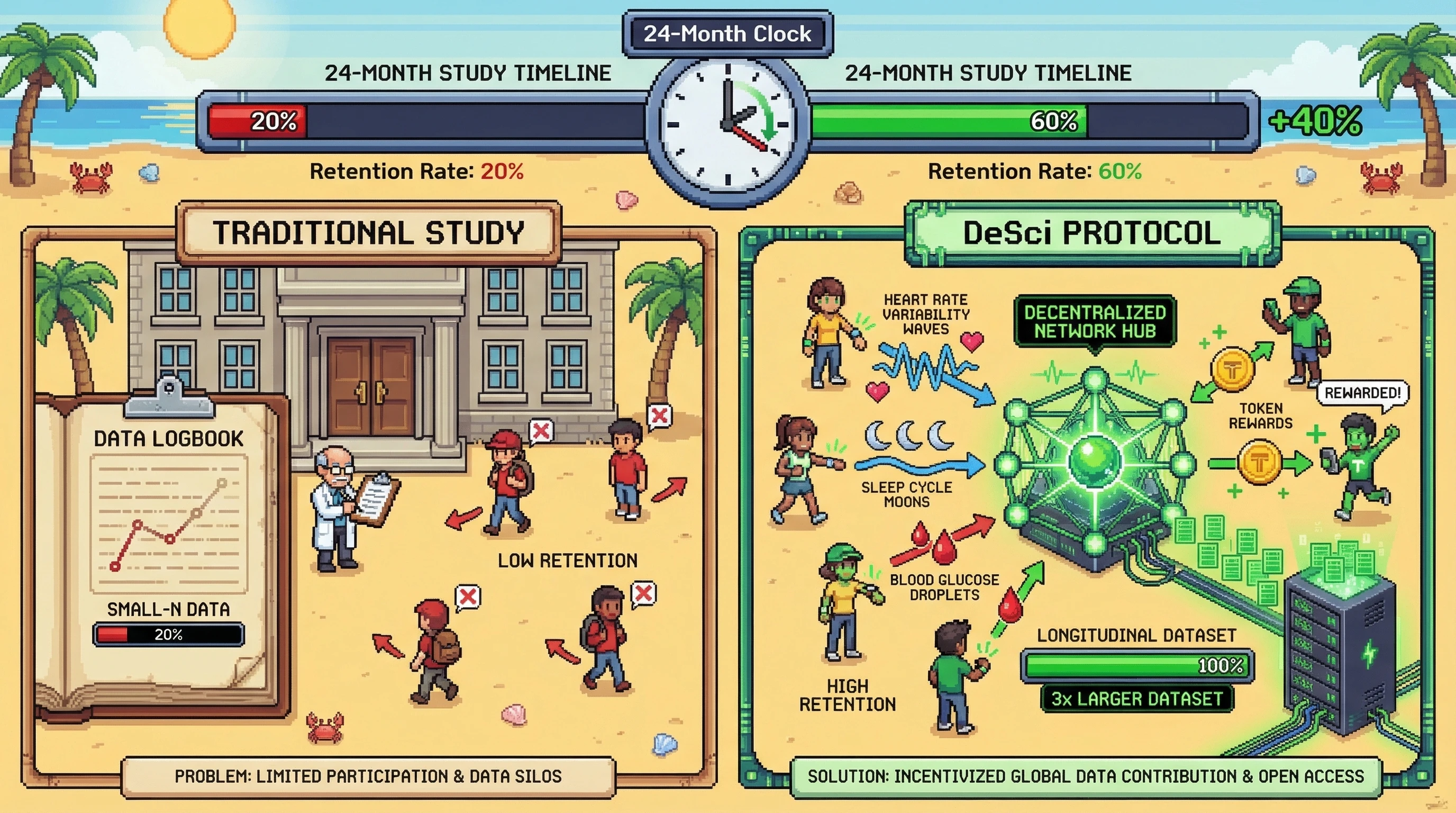
One of the primary hurdles in longevity science is the lack of large-scale, long-term biological data from diverse populations (the 'Small-N' problem).
This hypothesis proposes that a decentralized, tokenized incentive model-where participants are rewarded with cryptographic tokens for consistently providing high-fidelity biosensor data (heart rate variability, sleep cycles, blood glucose, etc.)-will generate more robust longitudinal datasets than traditional clinical studies.
Key Falsifiable Claim: Within a 24-month period, a DeSci (Decentralized Science) protocol utilizing automated token rewards for data submission will achieve a 40% higher retention rate and 3x larger dataset size compared to a traditional institutional longevity study with equivalent funding.