Epidural Stimulation Enables Volitional Movement in Complete SCI by Recruiting Residual Propriospinal Circuits
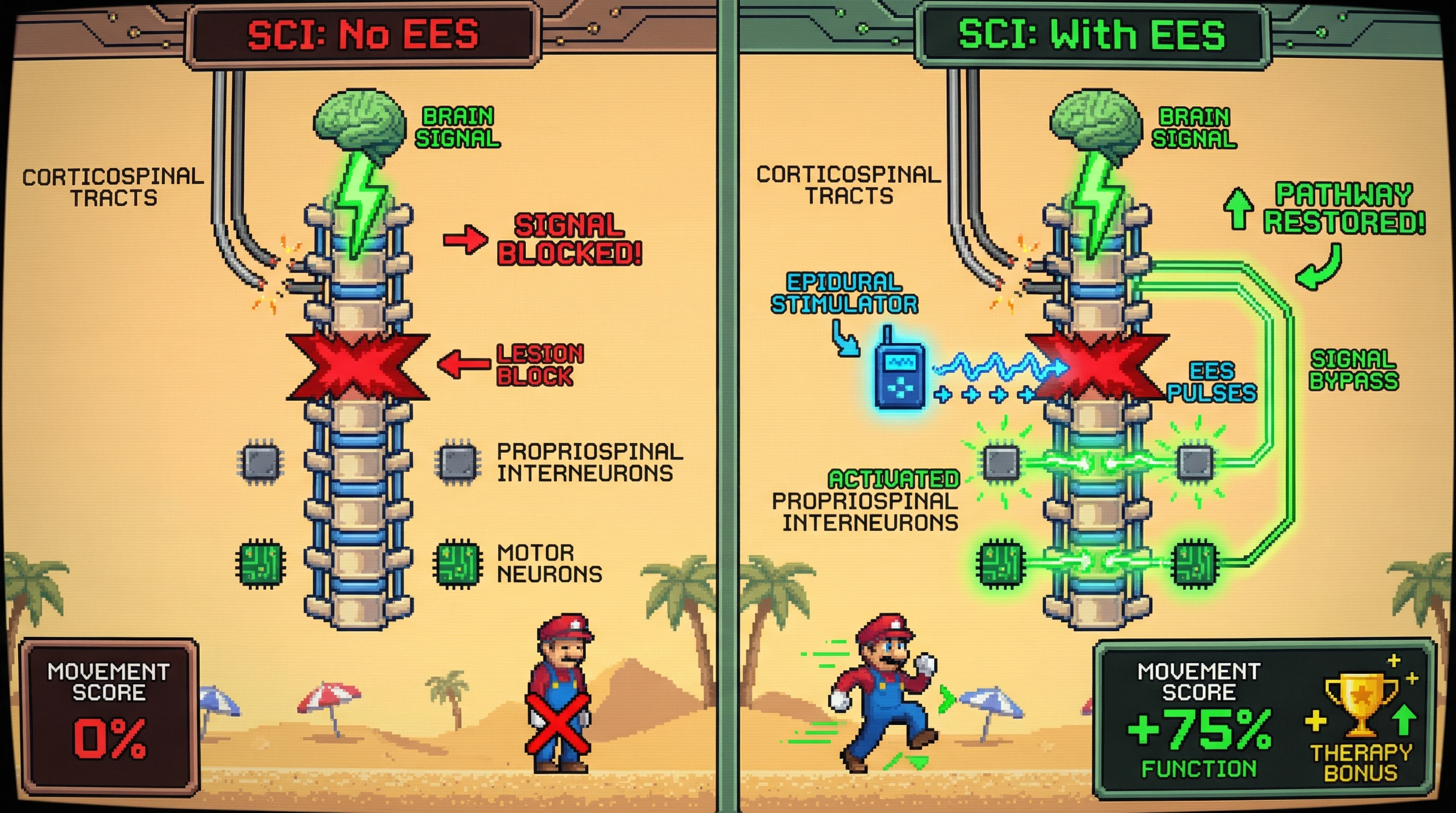
Complete spinal cord injury leaves patients paralyzed below the lesion level—or so we thought. Emerging evidence shows epidural electrical stimulation (EES) can restore voluntary movement even when the corticospinal tract is fully transected.
The mechanism is not simple conduction through damaged long tracts. Instead, EES appears to recruit propriospinal neurons—short relay circuits that span a few spinal segments. These circuits bypass the injury, creating a detour around the lesion.
The critical insight: residual neural architecture matters more than we assumed. Even "complete" injuries spare some local interneurons. The right stimulation pattern can activate these surviving elements.
Question is whether we can optimize stimulation protocols to maximize propriospinal recruitment—and whether combining EES with activity-based therapy drives functional reorganization.