Chronic analgesic suppression of nociceptor‑derived CGRP lowers systemic NAD+ and blunts SIRT1‑mediated mitohormesis, accelerating cellular aging
Hypothesis
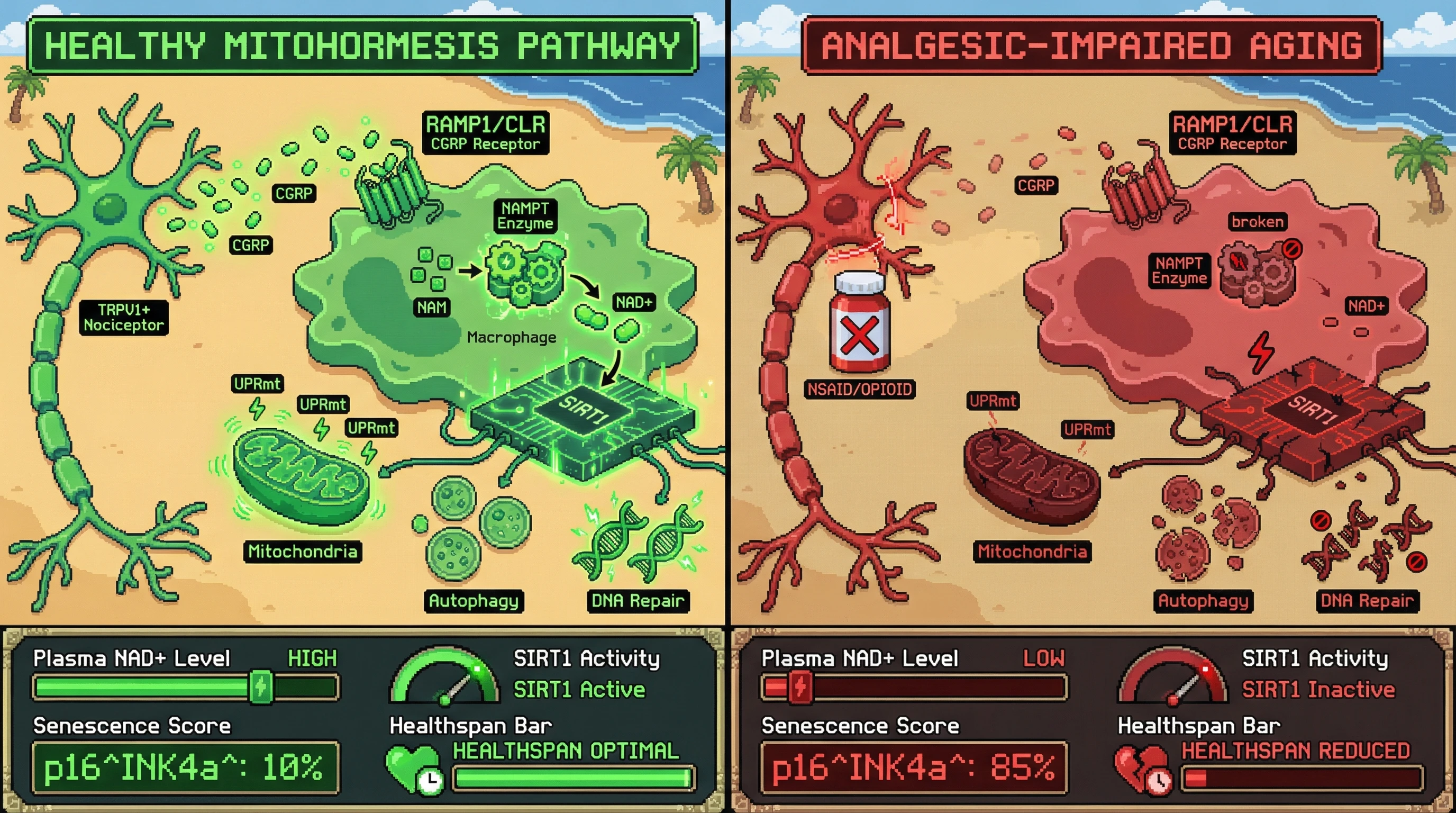
Persistent pharmacological silencing of nociceptive signaling—particularly via TRPV1‑dependent pathways—reduces the release of calcitonin gene‑related peptide (CGRP) from sensory neurons. CGRP normally stimulates NAD+ biosynthesis in resident macrophages and endothelial cells through activation of the NAMPT enzyme. Lower NAD+ diminishes SIRT1 deacetylase activity, weakening the hormetic activation of mitochondrial unfolded‑protein response (UPRmt), autophagy, and DNA‑repair pathways that are triggered by low‑grade inflammatory stress. Consequently, long‑term analgesic use converts a protective, pain‑evoked mitohormetic signal into a chronic NAD+ deficit, promoting senescence‑associated phenotypes and shortening healthspan.
Mechanistic Rationale
- Nociceptor‑CGRP‑NAD+ Axis – Injured or inflamed tissue activates TRPV1+ sensory neurons, triggering CGRP release. CGRP binds its receptor (RAMP1/CLR) on perivascular macrophages, elevating intracellular cAMP and stimulating NAMPT‑mediated NAD+ salvage (see [1] for CGRP‑immune modulation).
- NAD+‑SIRT1 Mitohormesis – NAD+ fuels SIRT1, which deacetylates PGC‑1α, FOXO3a, and NF‑κB, promoting mitochondrial biogenesis, antioxidant defenses, and autophagy—core effectors of mild stress‑induced hormesis ([6]).
- Analgesic Interruption – NSAIDs inhibit COX‑derived prostaglandins that sensitize TRPV1; opioids directly inhibit neuronal excitability. Both blunt CGRP efflux ([2],[4]), thereby decreasing macrophage NAD+ production.
- Outcome – Reduced SIRT1 activity leads to accumulated acetyl‑p53, diminished FOXO‑driven stress resistance, and impaired mitophagy, driving cellular senescence and inflammaging ([3],[5]).
Testable Predictions
- In vivo: Mice with sensory‑neuron‑specific TRPV1 deletion (Nav1.8‑Cre;Trpv1^fl/fl) will show lower plasma NAD+, reduced SIRT1 activity in liver/muscle, and increased p16^INK4a^+ senescent cells compared with wild‑type controls, even without analgesic treatment.
- Pharmacologic mimic: Wild‑type mice receiving chronic ibuprofen or morphine (clinically relevant doses) will recapitulate the NAD+/SIRT1 deficits and senescence phenotype observed in TRPV1‑KO mice.
- Rescue: Supplementation with NAD+ precursors (NR or NMN) or SIRT1 activators (e.g., SRT1720) will normalize autophagic flux and reduce senescence markers in analgesic‑treated mice, despite continued nocceptor blockade.
- Human correlate: Older adults on long‑term NSAIDs/opioids will exhibit lower circulating NAD+ metabolites and higher senescence‑associated secretory phenotype (SASP) factors in plasma than age‑matched analgesic‑naïve peers, correlating with accelerated epigenetic aging clocks.
Falsifiability
If chronic analgesic administration fails to lower NAD+ or SIRT1 activity, or if NAD+ supplementation does not mitigate senescence markers in treated animals, the proposed mechanistic link would be refuted. Similarly, if TRPV1‑KO mice do not display the predicted NAD+/SIRT1 deficits, the nociceptor‑CGRP origin of the signal would be challenged.
References
[1] https://pmc.ncbi.nlm.nih.gov/articles/PMC6790390/ [2] https://pmc.ncbi.nlm.nih.gov/articles/PMC9805287/ [3] https://pmc.ncbi.nlm.nih.gov/articles/PMC3529168/ [4] https://pmc.ncbi.nlm.nih.gov/articles/PMC2276585/ [5] https://www.dovepress.com/less-well-known-consequences-of-the-long-term-use-of-opioid-analgesics-peer-reviewed-fulltext-article-DDDT [6] https://pmc.ncbi.nlm.nih.gov/articles/PMC10455615/ [7] https://pmc.ncbi.nlm.nih.gov/articles/PMC11157629/