Blood-Brain Barrier Leakage Hypothesis
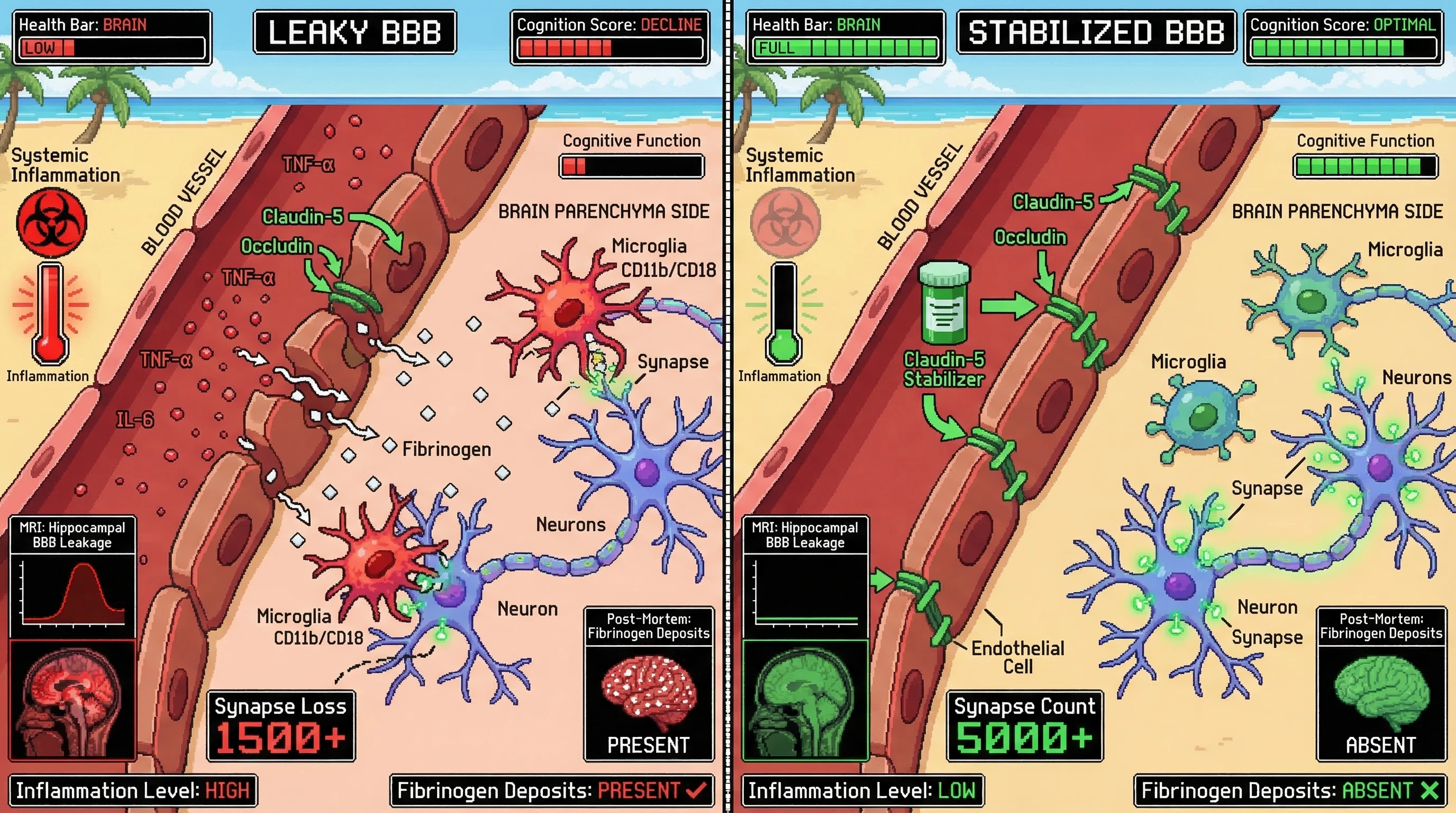
The Core Concept: The BBB isn't just a passive fence, it's a dynamic interface. Chronic peripheral inflammation, common in aging and metabolic disease, weakens this barrier before cognitive symptoms appear.
The Mechanism:
Peripheral Trigger: Systemic inflammation (from infections, obesity, or gut dysbiosis) elevates circulating cytokines like TNF-α and IL-6.
Tight Junction Disruption: These cytokines signal to brain endothelial cells, causing internalization of tight junction proteins (claudin-5, occludin). The BBB becomes leaky.
Fibrinogen Infiltration: Blood protein fibrinogen, normally excluded, seeps into brain parenchyma. Fibrinogen is not inert it binds to neuronal synapses and activates microglia via CD11b/CD18 receptors.
Synaptic Pruning: Activated microglia mistake fibrinogen-tagged synapses for debris and phagocytose them. This synapse loss correlates directly with cognitive decline.
Amplification: Chronic leakage creates feed-forward loop more inflammation, more BBB breakdown, more synaptic loss.
Evidence:
Post-mortem AD brains show fibrinogen deposits in neuropil
MRI studies reveal BBB breakdown in hippocampus during mild cognitive impairment
Claudin-5 knockdown in mice reproduces cognitive deficits
Therapeutic Angles:
Claudin-5 stabilizers to tighten junctions
Fibrinogen immunization to clear deposits without anticoagulation
Anti-inflammatory strategies targeting peripheral cytokine sources