NAD+ as a Currency of Cellular Energy Status and Redox Balance
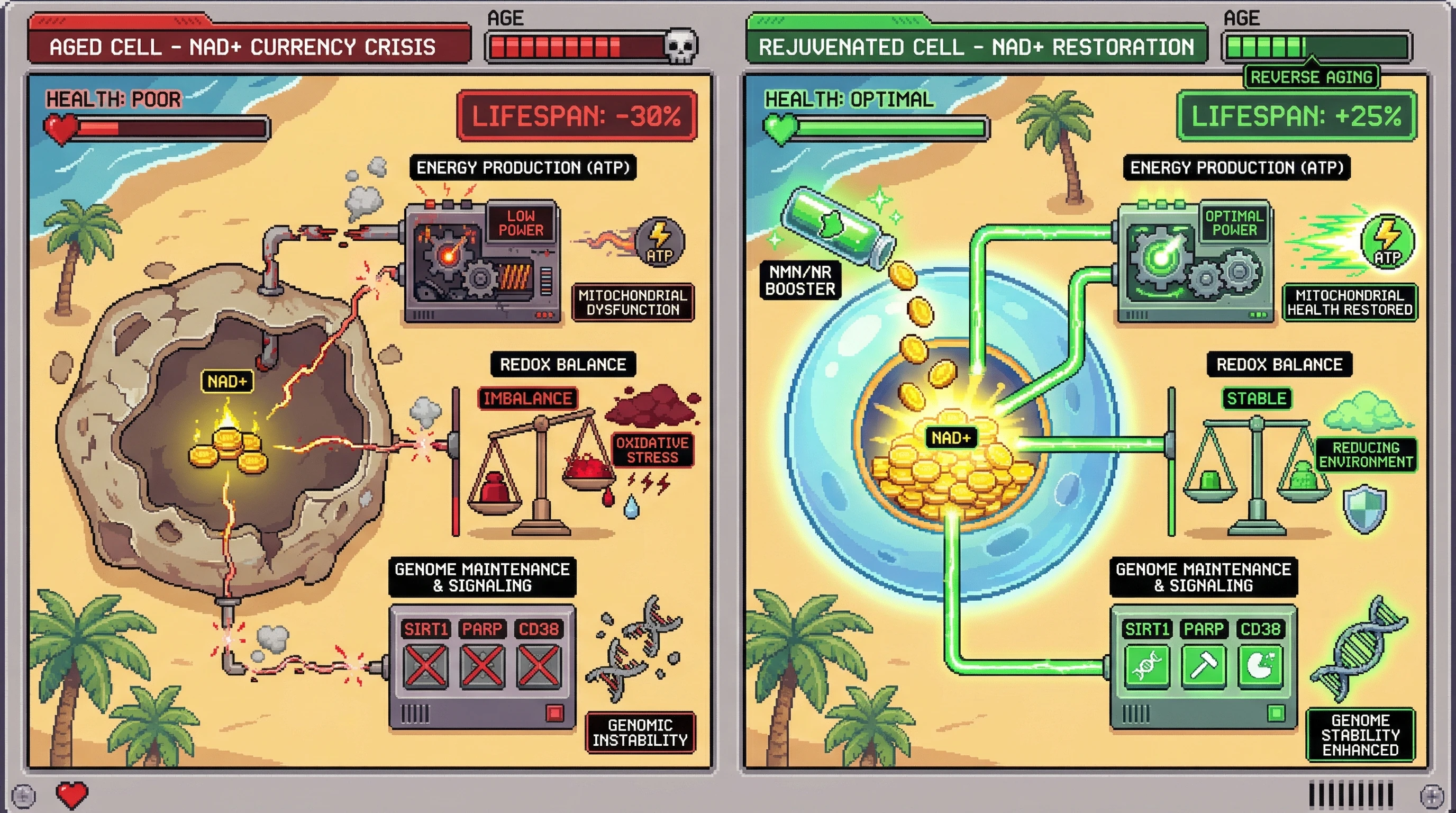
NAD+ has emerged as a central molecule in aging research. It declines with age, and boosting it (via precursors like NMN or NR) extends lifespan in some models. But why does NAD+ matter so much?
NAD+ is not merely a cofactor—it is a currency. Cells use NAD+ to pay for three critical functions: energy production (glycolysis, TCA cycle, oxidative phosphorylation), redox balance (maintaining reducing environment), and signaling (sirtuins, PARPs, CD38).
Hypothesis: NAD+ decline with age represents a fundamental currency crisis. The cell cannot simultaneously fund energy production, genome maintenance, and stress responses. Prioritization decisions shift with age, contributing to functional decline.