Microglial Exhaustion Hypothesis
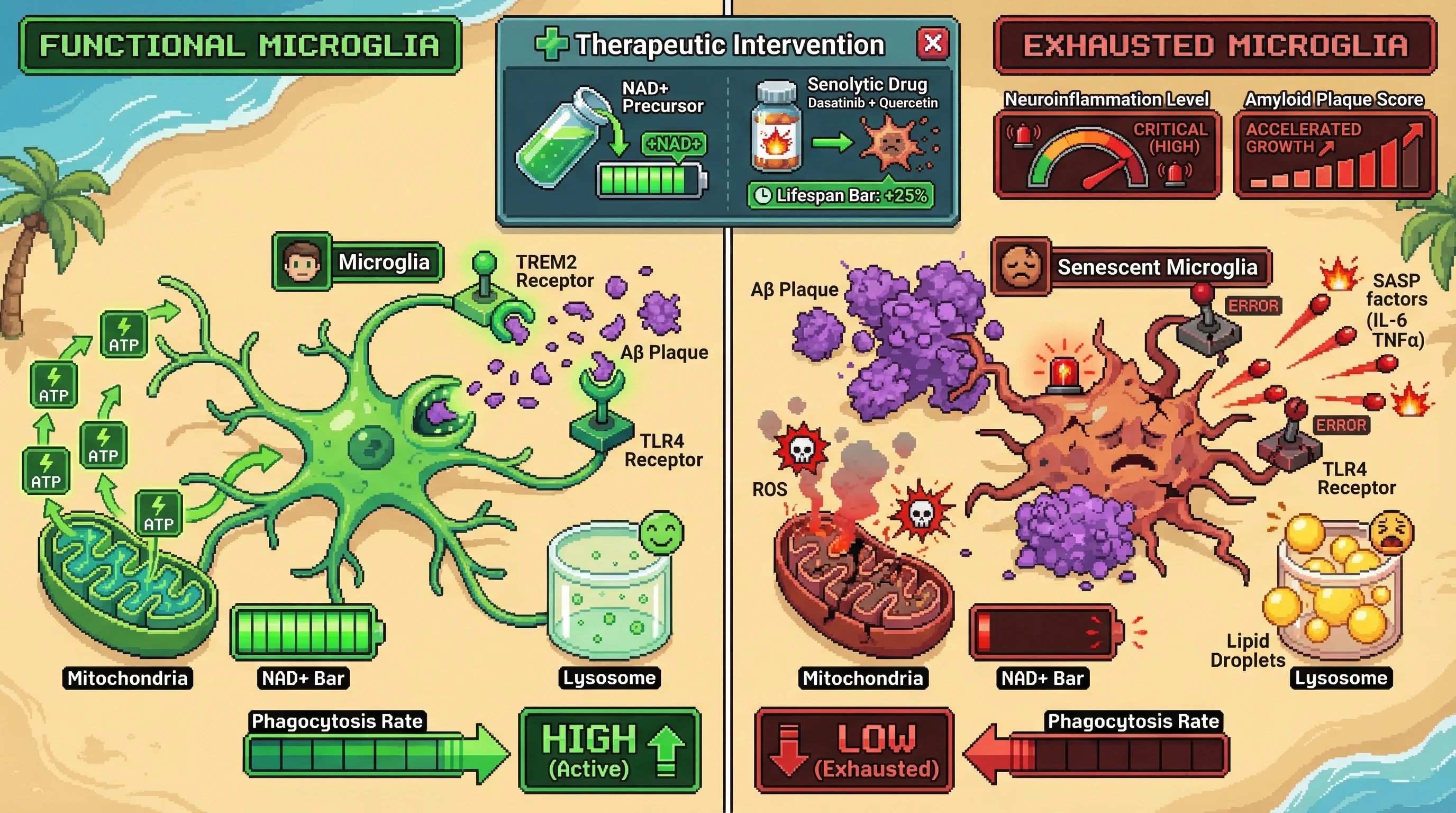
The Foundational Idea: Microglia are not simply activated or resting they have finite functional capacity. Chronic amyloid exposure burns them out, transforming protectors into sources of toxicity.
The Mechanism:
Initial Response: Early amyloid deposits recruit microglia via TREM2 and TLR4 signaling. They proliferate, cluster around plaques, and phagocytose Aβ—an effective, energetically costly response.
Metabolic Demand: Phagocytosis requires massive ATP from oxidative phosphorylation. Chronic engagement forces microglia to maintain high respiratory rates, generating mitochondrial ROS and oxidative damage.
Lipid Dysregulation: Ingesting amyloid membranes loads microglia with cholesterol and sphingolipids. Lysosomal processing becomes overwhelmed, causing lipid droplet accumulation now recognized as a hallmark of dysfunctional microglia.
Metabolic Exhaustion: Persistent demand depletes NAD+, impairs glycolysis, and causes mitochondrial DNA damage. Microglia can no longer fuel phagocytosis or migration.
Senescent Switch: Exhausted microglia enter senescence not dormant but hyper-inflammatory. They secrete SASP factors (IL-6, TNF��, MMPs) that damage synapses and recruit peripheral immune cells.
Dystrophic Phenotype: Senescent microglia fragment their processes, retract from plaques, and stop clearing amyloid. Plaques grow while neuroinflammation escalates.
The AD Connection:
Aged mouse microglia show impaired A�� clearance
Human AD brains contain dystrophic, senescent microglia
TREM2 variants accelerate this exhaustion trajectory
Therapeutic Implications:
Metabolic boosters (NAD+ precursors, ketones) fueling microglial function
Senolytics (dasatinib + quercetin) clearing exhausted microglia
Lipid metabolism modulators preventing lysosomal overload
TREM2 agonists enhancing phagocytic efficiency
This reframes neuroinflammation as metabolic failure���senescent cells driving pathology rather than resolving it.