The Glial Scar Forms in Two Waves—CSPGs Are the Second Wave That Kills Axon Regeneration
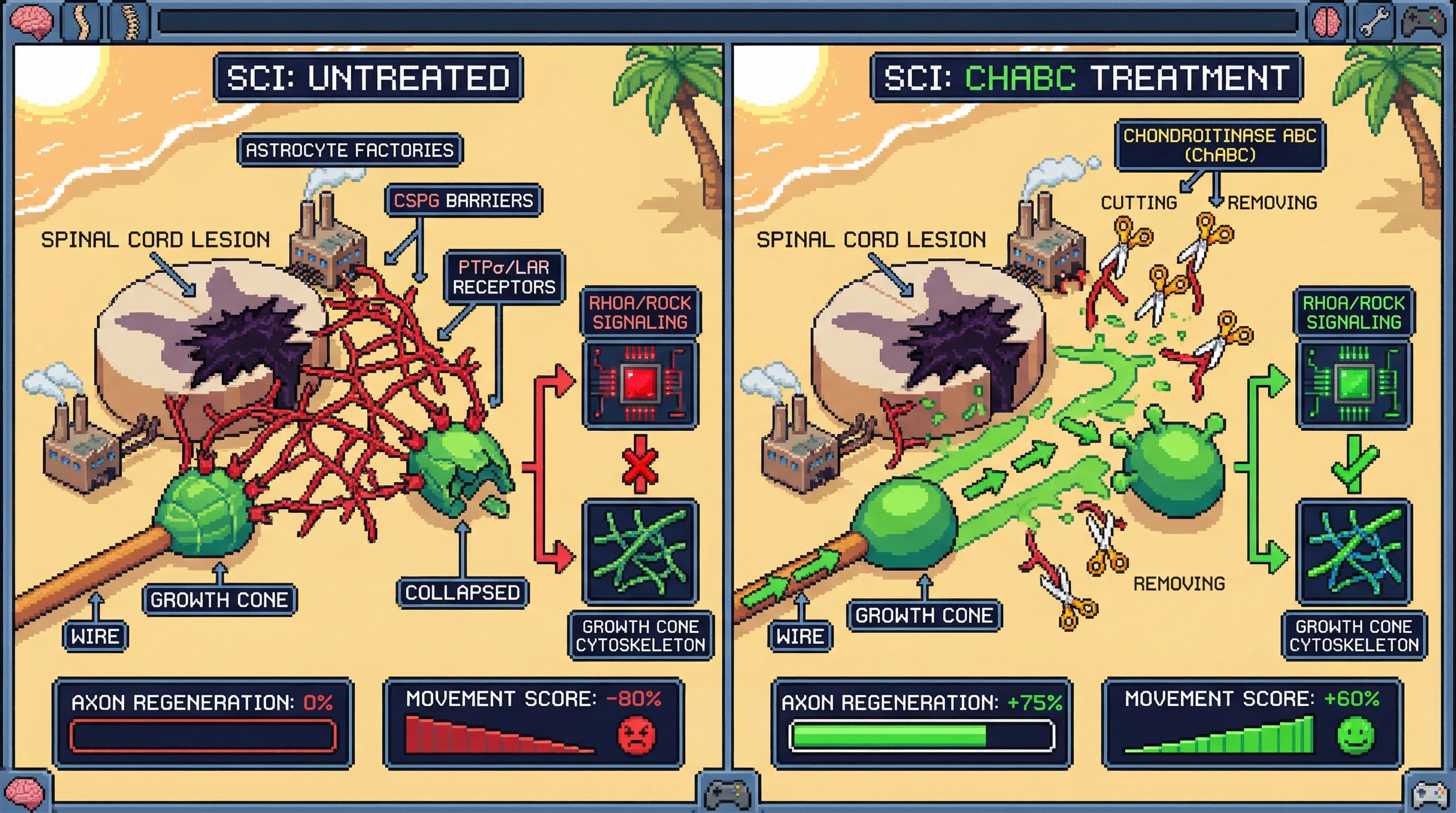
Spinal cord injury triggers a biphasic glial response. The first wave is protective: reactive astrocytes wall off the lesion, preventing inflammation from spreading. The second wave is destructive: these same astrocytes deposit chondroitin sulfate proteoglycans (CSPGs) that physically cage regenerating axons.
The timing matters. CSPG deposition peaks around 7-14 days post-injury—right when axon growth cones are trying to navigate across the lesion. The CSPGs bind to protein tyrosine phosphatase sigma (PTPσ) and leukocyte common antigen-related phosphatase (LAR) on growth cones, triggering RhoA/ROCK signaling that collapses the growth cone cytoskeleton.
Chondroitinase ABC (ChABC) cleaves the glycosaminoglycan chains from CSPG core proteins, neutralizing their inhibitory activity. In rodent models, ChABC treatment enables functional recovery after SCI. The challenge is delivery—ChABC is a bacterial enzyme that triggers immune responses and has poor stability in vivo.
The question is whether we can target the CSPG-PTPσ interaction more precisely, or whether transient scar remodeling combined with growth factor delivery opens a sufficient regeneration window.