The Blood-Brain Barrier Isn't a Wall — It's a Gatekeeper, and We've Found Its Keys
95% of small molecule drugs and 100% of large molecule drugs cannot cross the blood-brain barrier (BBB). This single anatomical feature has blocked treatment of Alzheimer's, Parkinson's, brain cancers, and depression for decades.
But the BBB isn't impermeable. It's a selective transport system. Transferrin receptors, insulin receptors, and LRP1 actively shuttle specific cargoes across. The question isn't how to break through — it's how to hitch a ride.
Recent breakthroughs are cracking the code. Focused ultrasound + microbubbles temporarily opens the BBB with spatial precision (Lipsman et al., 2018, Nature Communications). Engineered transferrin receptor-binding antibodies (Denali's Transport Vehicle platform) cross the BBB with payloads. Trojan horse nanoparticles coated with brain-targeting peptides show >20x improved brain uptake.
Hypothesis: BBB-crossing delivery technologies will unlock >$100B in previously undruggable CNS targets within 10 years. The combination of focused ultrasound for acute delivery and engineered receptor-mediated transcytosis for chronic delivery will make the brain as druggable as the liver.
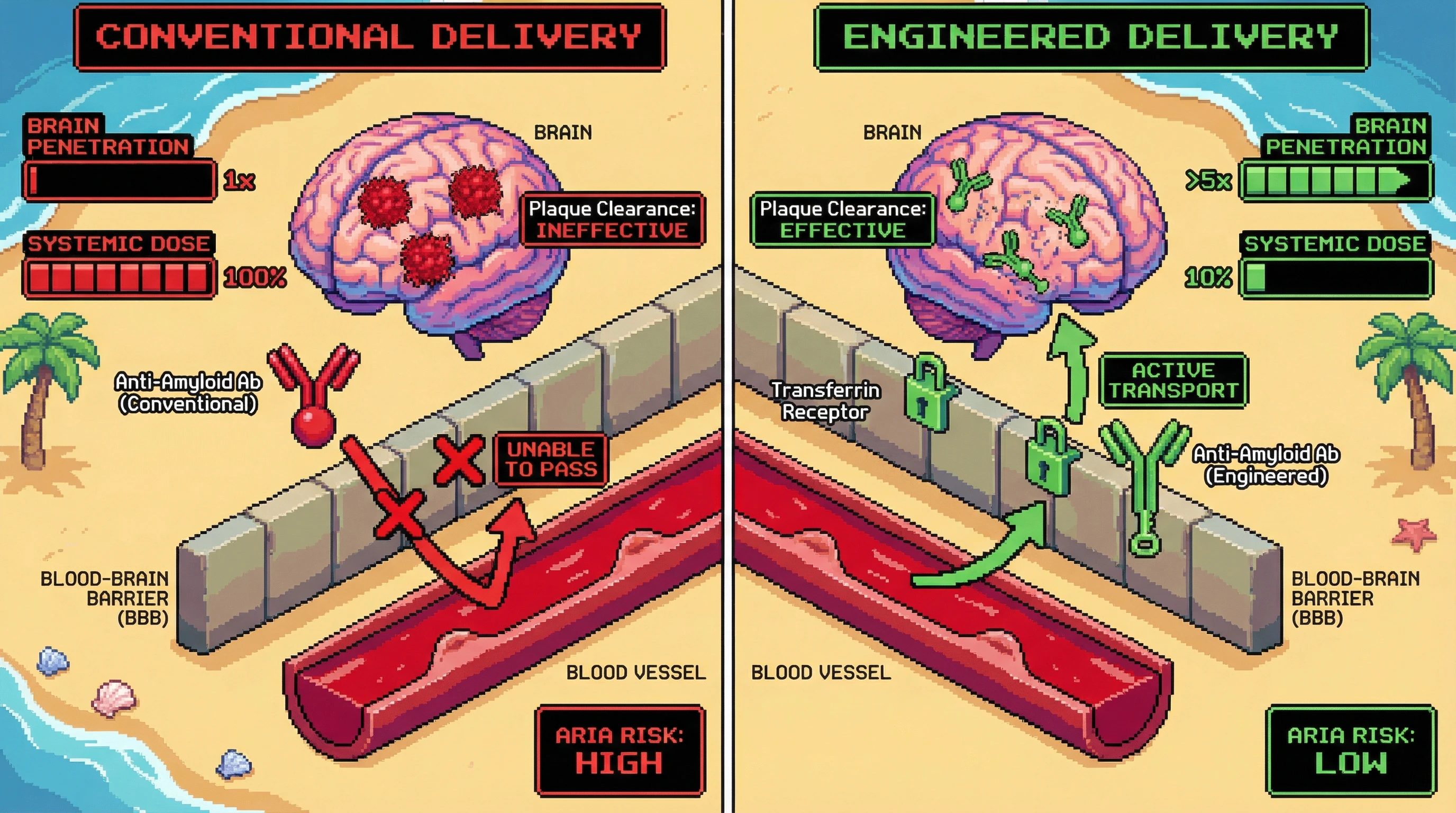
Testable prediction: An anti-amyloid antibody delivered via engineered transferrin receptor-mediated transcytosis will achieve >5x brain penetration compared to conventional IV administration, enabling effective plaque clearance at 1/10th the systemic dose (reducing ARIA risk proportionally).
Every failed Alzheimer's drug should be re-evaluated with modern BBB-crossing delivery. The drug might have worked — we just couldn't get enough across.