Mechanical Tension Is The Missing Signal For Axon Regeneration—CNS Neurons Need Stretch To Grow
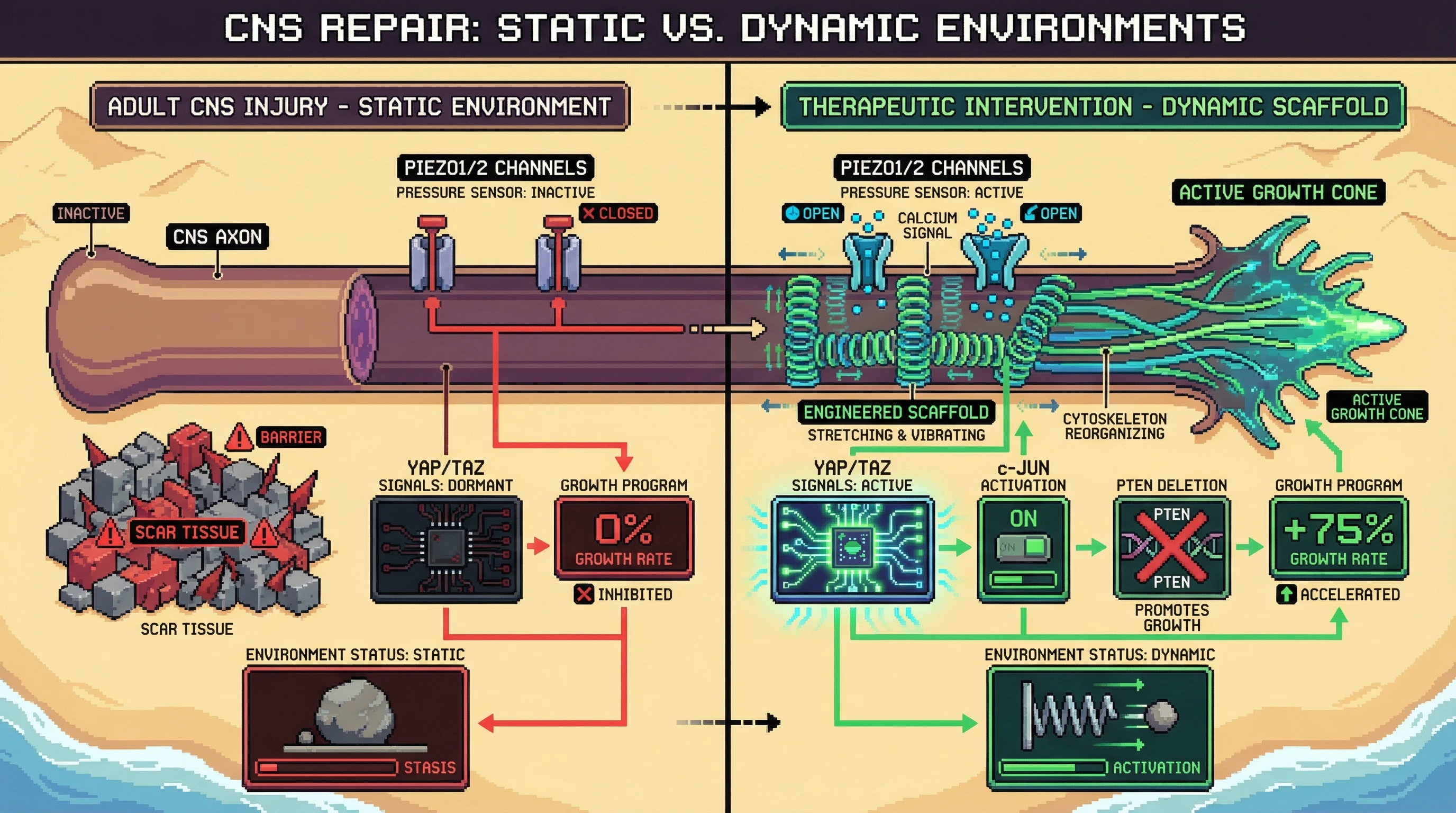
Here is something we keep ignoring in spinal cord injury research: axons grew originally in a mechanically active environment. Embryonic development involves constant mechanical forces—tissue growth creates stretch, movement creates tension, and axons extend toward their targets through a dynamic mechanical landscape. Then we injure the adult CNS and expect axons to regenerate in a static, scarred environment.
The peripheral nervous system maintains mechanical activity after injury. Nerve conduits guide regrowth, but the mechanical environment matters too. Peripheral nerves experience stretch from muscle movement, creating tension gradients that axons follow. The CNS loses this mechanical signaling after injury—the spinal cord is immobilized, scar tissue is stiff and static, and neurons receive no mechanical cues to grow.
The mechanism hiding in plain sight: neurons are mechanosensitive. Piezo1 and Piezo2 channels transduce mechanical forces into calcium signals. During development, mechanical tension activates growth programs through YAP/TAZ signaling and cytoskeletal reorganization. Adult CNS neurons have silenced these mechanotransduction pathways along with other growth programs.
This suggests a two-pronged approach: reactivate intrinsic growth capacity (PTEN deletion, c-Jun activation) AND provide mechanical cues that tell axons where to grow. Engineered scaffolds with controlled stiffness gradients, aligned topographies that create contact guidance, and dynamic mechanical stimulation might provide the missing signals.
The tissue engineering implications are significant. Instead of just building passive scaffolds, we should build active mechanical environments that mimic the developmental forces axons originally responded to.