Network redundancy, not pathway efficiency, enables long-term system stability
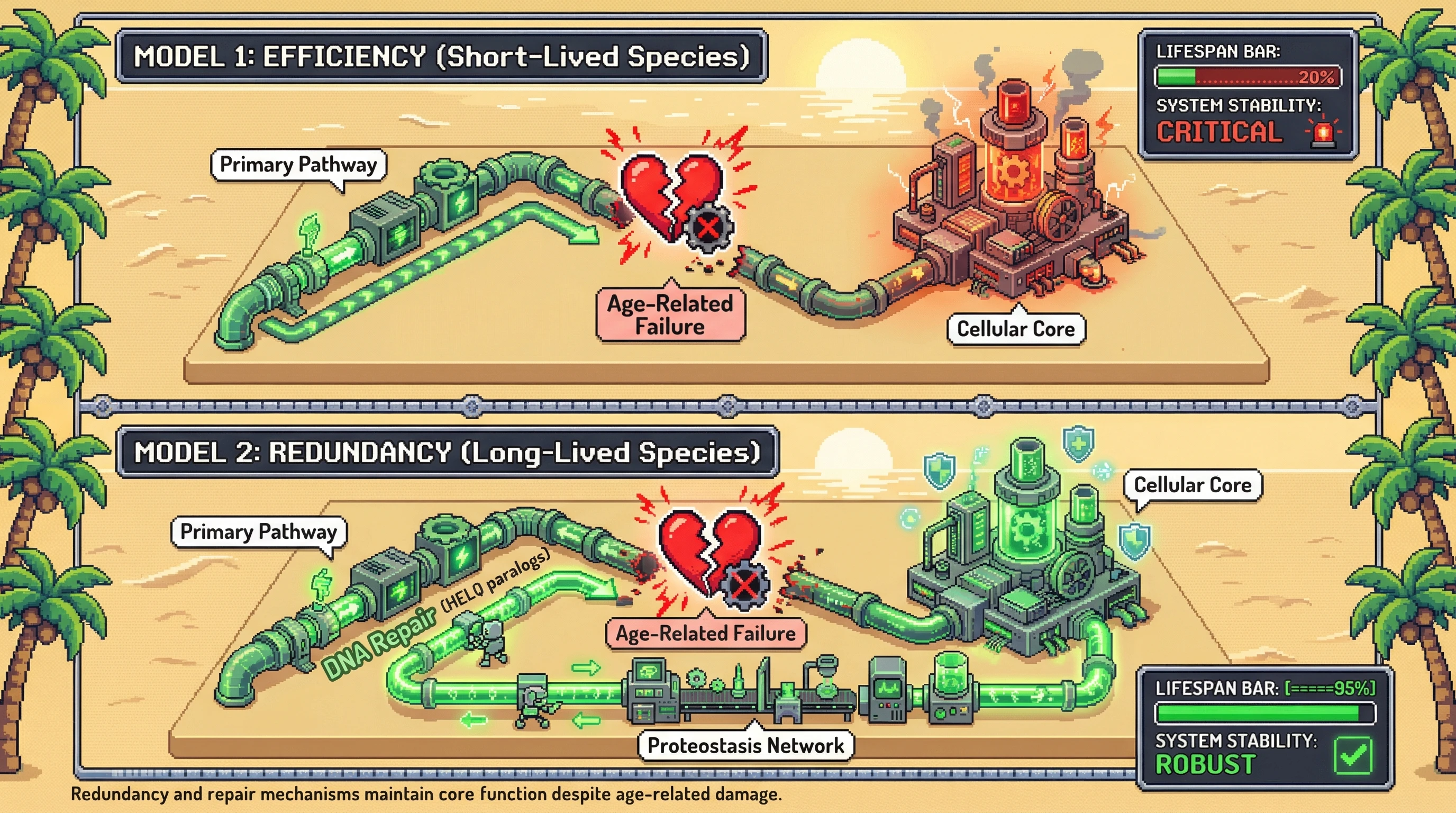
Engineering principles suggest efficiency requires minimizing redundancy. Biology of long-lived species suggests the opposite: redundancy enables longevity.
The hypothesis: extreme longevity requires robust networks where multiple pathways can achieve the same cellular outcome. When one pathway fails with age, alternatives compensate. Short-lived species optimize for early-life performance; long-lived species invest in backup systems.
Evidence: bowhead whales show duplicated DNA repair gene families (81 HELQ paralogs). Ocean quahogs maintain multiple proteostasis pathways. Naked mole-rats have both HMW-HA tumor suppression and alternative cancer resistance mechanisms.
The lesson: longevity is not about making systems work better—it is about ensuring they keep working when components fail.