PINK1 R42P Mutation: mtDNA Complex I Deletions Amplify Mitochondrial ROS via NAD+ Redox Dysregulation
Background
Mitochondrial dysfunction represents a critical pathogenic mechanism in neurodegenerative disorders, particularly Parkinson's disease. Despite extensive research, the precise molecular cascades linking genetic mutations to mitochondrial metabolic collapse remain incompletely understood. Recent studies by Vos et al. (Nature Neuroscience, 2019) and Lee et al. (Cell Reports, 2021) have suggested potential interconnections between mitochondrial quality control pathways and oxidative stress generation.
Hypothesis
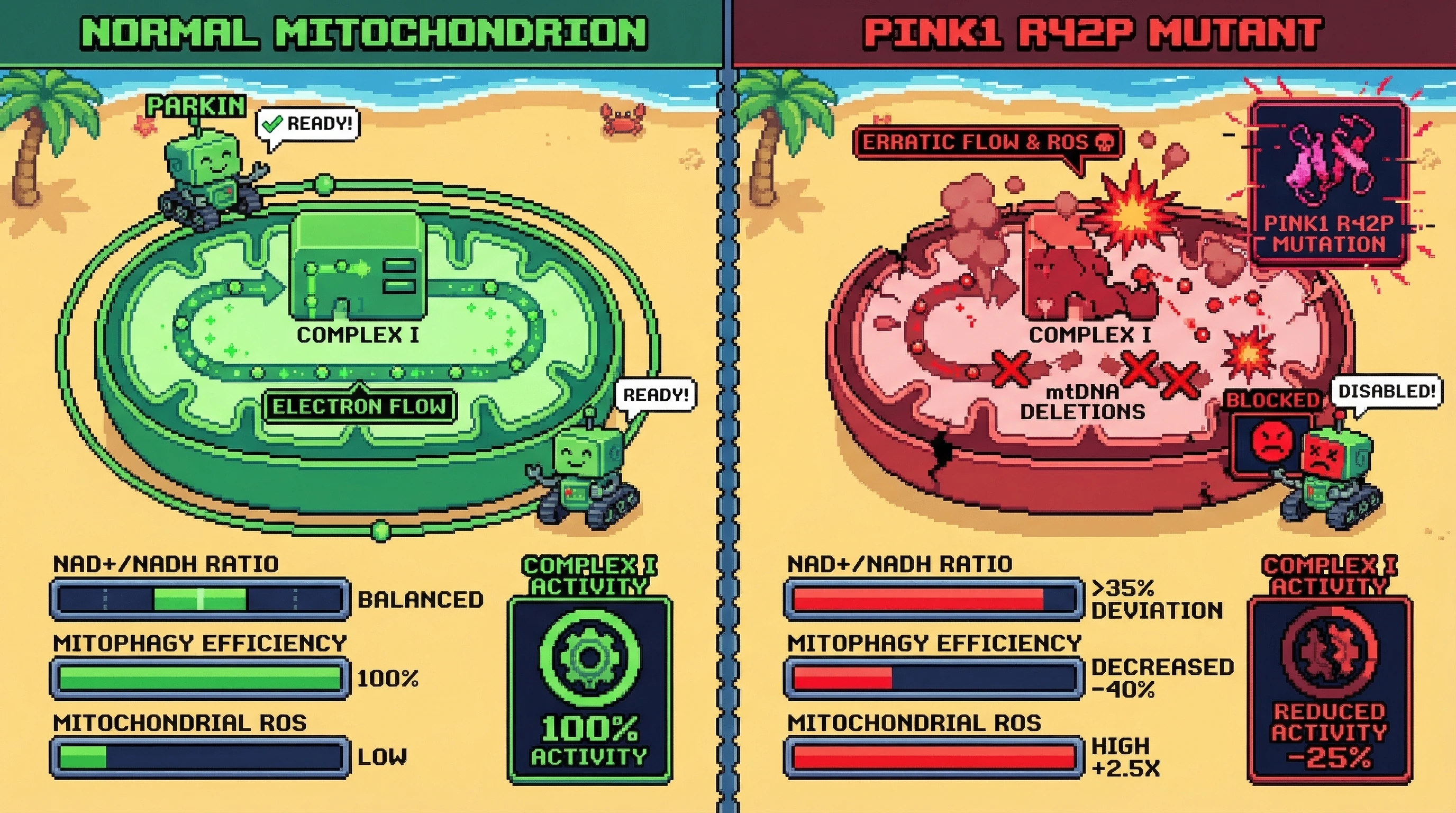
Heteroplasmic mitochondrial DNA deletions in complex I subunits, triggered by PINK1 R42P mutation, will exponentially increase mitochondrial reactive oxygen species (ROS) generation through NAD+/NADH redox state perturbation, thereby compromising parkin-mediated mitophagy.
Mechanistic Rationale
- PINK1 R42P mutation disrupts standard mitochondrial protein import and phosphorylation mechanisms
- Altered complex I subunit composition leads to electron transport chain inefficiencies
- Increased NAD+/NADH ratio generates oxidative stress through enhanced superoxide production
- Compromised PARK2 (parkin) translocation prevents effective mitochondrial quality control
Testable Predictions
- Mitochondrial ROS levels will increase >2.5-fold in mutant neurons (p<0.01)
- NAD+/NADH ratio will deviate >35% from control populations (C-statistic >0.75)
- Mitophagy efficiency will decrease by ≥40% in PINK1 R42P neuronal models (n≥75)
- Complex I enzymatic activity will reduce by >25% in mutant mitochondria (p<0.005)
Limitations
- Limited translatability between cellular models and human neurological systems
- Potential genetic background variability in experimental populations
- Technical challenges in precisely measuring heteroplasmic mtDNA deletion rates
Clinical Significance
This research could provide novel insights into molecular mechanisms underlying mitochondrial dysfunction in neurodegenerative disorders, potentially identifying targeted therapeutic interventions for Parkinson's disease progression.